
Onions · Variety guide
Allium cepa ‘Centurion’
Onion ‘Centurion’
This Allotment Pro editorial draft summarises the cited RHS cultivar profile and its linked crop guidance. Check the sources and adjust cultivation decisions for local conditions.Read the original RHS source
Overview
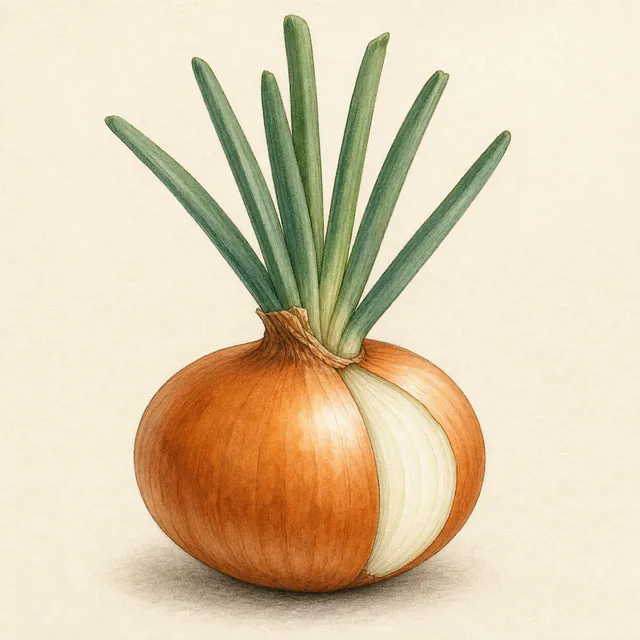
‘Centurion’ is an early-cropping onion with bronze-brown skins and creamy-white flesh. It is particularly useful where a reliable bulb is wanted for long-term storage. The RHS recommends it in its onion growing guide and records its Award of Garden Merit, recognising dependable garden performance.
Grow it from sets for the simplest and quickest crop, or from fresh seed when available. Like other storage onions, ‘Centurion’ needs strong leaf growth before lengthening days initiate bulb formation, followed by a dry ripening period before lifting.
Size
- Typical height
- 0.1–0.5 metre
- Typical spread
- 0.1–0.5 metre
- Time to maturity
- one growing season
Plant sets 5–15cm apart in rows 20–30cm apart. Use the wider end of the range for larger individual bulbs. Seed-raised plants can be set 5–10cm apart, or 15cm apart where maximum bulb size matters.
Growing conditions
- Suitable soils
- Chalk, clay, loam or sand where drainage is reliable
- Moisture
- Moist but well drained while growing; drier as bulbs ripen
- Preferred pH
- Neutral or alkaline
Improve the ground before planting with about one bucketful of garden compost or well-rotted manure per square metre. Onion roots are limited, so moisture retention matters during establishment, but waterlogged conditions promote decay.
Position and hardiness
- Light
- Full sun
- Aspect
- South- or west-facing is ideal
- Exposure
- Sheltered
- Hardiness
- H3
An open sunny position helps the foliage dry after rain and allows lifted bulbs to mature fully. Avoid frost pockets and waterlogged overwintering ground. Protect newly planted sets from birds until roots hold them firmly.
Colour and seasonal interest
Upright green cylindrical leaves develop through spring and early summer above swelling bulbs. Mature ‘Centurion’ onions have smooth, papery bronze-brown outer skins enclosing creamy-white flesh. Remove any flower stem promptly: a bolted plant diverts energy away from the bulb and will not store well.
Botanical details
- Family
- Amaryllidaceae
- Native to Great Britain and Ireland
- No
- Foliage
- Deciduous
- Habit
- Clump forming
- Name status
- Accepted
How to grow
Cultivation
Plant sets in early to mid-spring about 2cm deep with the pointed tip just visible. Space 5–15cm apart in rows 20–30cm apart, firm gently and water. Alternatively sow fresh seed 1.3cm deep from mid-winter to mid-spring, indoors in modules or outside once soil warms.
Keep rows weed-free and water during prolonged dry spells while roots and foliage establish. Stop watering after bulbs swell in mid-summer. Lift when foliage yellows and topples naturally, taking care not to bruise the bulbs. Dry for about two weeks with air circulating around them, then store in a light, cool, dry and ventilated place.
Propagation
Propagate by seed or onion sets. Sets are quickest; seed offers more choice but loses viability relatively rapidly.
Suggested locations
- Sunny vegetable bed
- Raised bed
- Allotment row
- Large container at least 45cm wide and deep
- Open, well-ventilated edible garden
Pruning
No pruning is required. Remove flower stems as soon as they appear and clear damaged foliage during ripening.
Pests
May be susceptible to onion fly, allium leaf miner, leek moth, slugs and snails. Birds may pull newly planted sets from loose soil.
Diseases
May be susceptible to onion downy mildew, onion white rot, neck rot and leek rust. Long allium rotation, free drainage, dry foliage and thorough curing reduce avoidable losses.