
Sweetcorn · Variety guide
Zea mays ‘Ovation’ AGM
Sweet corn ‘Ovation’
This Allotment Pro editorial draft summarises the cited RHS cultivar profile and its linked crop guidance. Check the sources and adjust cultivation decisions for local conditions.Read the original RHS source
Overview
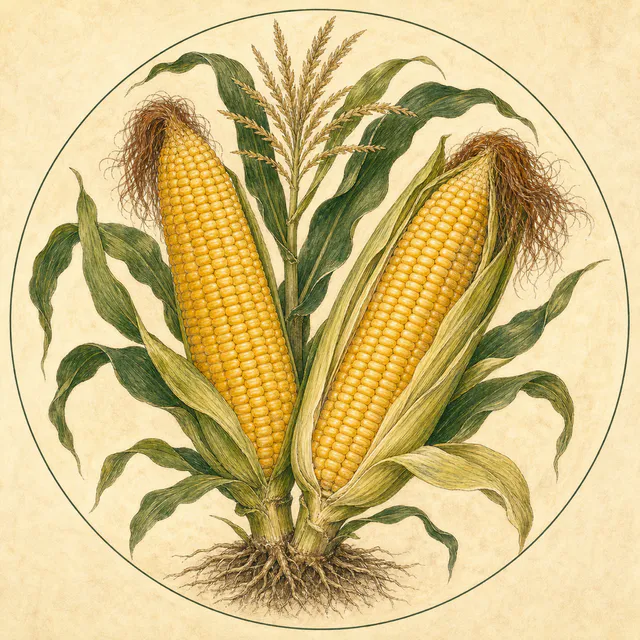
‘Ovation’ is an early- to mid-season supersweet sweetcorn producing large cobs 20–23cm long. The cobs fill to the tip with delicious sweet kernels. Plants are vigorous and consistent, giving an impressive upright allotment crop.
The cultivar holds the RHS Award of Garden Merit. It is sown indoors during April and May, planted outside in May after frost and harvested mainly from August to September. As a supersweet type, it should be isolated from other sweetcorn and maize cultivars so cross-pollination does not reduce its flavour.
Size
- Ultimate height
- 1.5–2.5 metres
- Ultimate spread
- 0.5–1 metre
- Time to maturity
- 1 year
- Habit
- Columnar and upright
Use a block rather than a single row. The cultivar’s consistent vigour and several surrounding pollen sources support even kernel fill right to the cob tips.
Growing conditions
- Suitable soils
- Chalk, clay, loam or sand
- Moisture
- Moist but well drained
- Preferred pH
- 5.5–7.0, within acid, neutral or alkaline soils
Enrich the ground with well-rotted organic matter before planting. Although the crop accepts several soil textures, it performs best where drainage and summer moisture are dependable.
Position and hardiness
- Light
- Full sun
- Aspect
- East-, south- or west-facing
- Exposure
- Sheltered
- Hardiness
- H2 — tolerant of low temperatures but not freezing, approximately 1–5°C
Plant in a warm sheltered position only after frost. Full sun is essential for this tall tender grass to ripen its large cobs.
Colour and seasonal interest
| Season | Foliage | Cobs and flowers |
|---|---|---|
| Spring | Green seedlings | — |
| Summer | Tall green leaves | Terminal tassels, silks and large green-husked cobs |
| Autumn | Declining after harvest | Mature 20–23cm cobs with golden sweet kernels |
| Winter | Deciduous and cleared | — |
Its principal identifiers are unusually large supersweet cobs, dense kernel fill extending to the tip, and a vigorous uniform stand.
Botanical details
- Family
- Poaceae
- Native to Great Britain and Ireland
- No
- Lifecycle
- Annual
- Foliage
- Deciduous
- Habit
- Columnar and upright
- Name status
- Accepted
- Award
- RHS Award of Garden Merit
How to grow
Cultivation
Grow in a sunny sheltered site in soil enriched with well-rotted organic matter. Keep this supersweet cultivar apart from other types to preserve sweetness. Supersweet seed can be temperamental, so follow the seed packet for exact depth and temperature. Harvest during August and September when browned silks and creamy kernel juice show the cob is ready.
Propagation
Sow under cover from mid-spring in pots or modules. Harden plants off and set them outside in May or June after frost. Alternatively direct-sow from late spring to early summer. Always use a grid for wind pollination.
Pruning
No pruning is required. Support or earth up plants where wind could loosen shallow roots.
Pests
Birds, slugs, mice and badgers may damage seed, seedlings or cobs. Indoor sowing and well-secured physical protection help prevent losses.
Diseases
Smuts may create large galls on cobs and stalks in hot weather. Remove affected material and do not eat damaged cobs.