
Aubergines · Variety guide
Solanum melongena ‘Bonica’
Aubergine ‘Bonica’
This Allotment Pro editorial draft summarises the cited RHS cultivar profile. Check the source and adjust cultivation decisions for local conditions.Read the original RHS source
Overview
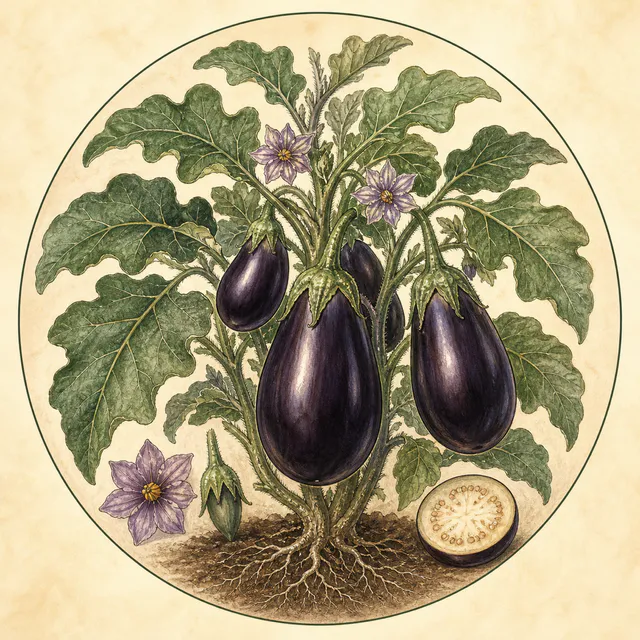
‘Bonica’ is a vigorous aubergine grown as an annual crop, although the species is a tropical perennial. It carries grey-green, softly downy foliage and small pale-purple flowers, followed by large, glossy, deep-purple fruits from late summer into autumn.
The plant reaches about 1.2 metres and suits protected cultivation particularly well. Its combination of early cropping and substantial dark fruit makes it a useful choice for an unheated glasshouse where the plant can receive sustained warmth and a long growing season.
Size
- Ultimate height
- 1–1.5 metres
- Ultimate spread
- 0.5–1 metre
- Time to ultimate size
- 1 year
This is the tallest of the four aubergines in the parent guide. Allow enough vertical space for a plant around 1.2 metres high and provide support before developing fruits make the shoots top-heavy.
Growing conditions
- Suitable soils
- Loam and sand
- Moisture
- Moist but well-drained or well-drained
- Soil pH
- Acid, alkaline or neutral
Grow in fertile soil or potting compost that holds enough moisture for fruit development while allowing excess water to drain. Regular watering is important, but continuously saturated roots are unsuitable.
Position and hardiness
- Light
- Full sun
- Aspect
- South- or west-facing
- Exposure
- Sheltered
- Hardiness
- H1c — suitable outdoors only during warm summer conditions and requiring temperatures above roughly 5°C
Choose a bright, warm position protected from cold winds. A greenhouse or tall growing frame is the dependable option; outdoor cultivation is best reserved for mild areas after all frost risk has passed.
Colour and seasonal interest
| Season | Flowers | Foliage | Fruit |
|---|---|---|---|
| Summer | Pale purple | Grey-green | Deep purple |
| Autumn | — | Grey-green | Deep purple |
The large fruit develops a glossy, very dark purple skin. An em dash indicates that no autumn flower colour is stated, not that flowers are impossible at that time.
Botanical details
- Family
- Solanaceae
- Native to Great Britain and Ireland
- No
- Foliage
- Deciduous
- Habit
- Bushy
- Name status
- Accepted
How to grow
Cultivation
Start from seed or buy young plants, then grow them on in a heated greenhouse or on a warm windowsill. Move plants to an unheated greenhouse or outdoors only after frost danger has passed. Water regularly and feed every 10–14 days with a balanced liquid fertiliser, changing to a high-potassium feed when the first fruits have set.
Propagation
Propagate from seed in warmth indoors. Give seedlings bright conditions as soon as they emerge and protect young plants from cold.
Suggested locations
- Greenhouses and tall growing frames
- Sheltered edible gardens
- Sunny courtyard or patio containers
Pruning
Pinch out the growing tip when the plant reaches about 30cm to encourage branching and a bushier fruiting framework.
Pests
‘Bonica’ may be susceptible to glasshouse whitefly, aphids and glasshouse red spider mite. Inspect leaf undersides and tender shoots regularly in protected cultivation.
Diseases
Possible diseases include honey fungus, although rarely, along with tomato leaf mould and tomato viruses. Maintain plant hygiene and remove unhealthy material promptly.