
Potatoes · Variety guide
Solanum tuberosum ‘Charlotte’
Potato ‘Charlotte’
This Allotment Pro editorial draft summarises the cited RHS cultivar profile and its linked crop guidance. Check the sources and adjust cultivation decisions for local conditions.Read the original RHS source
Overview
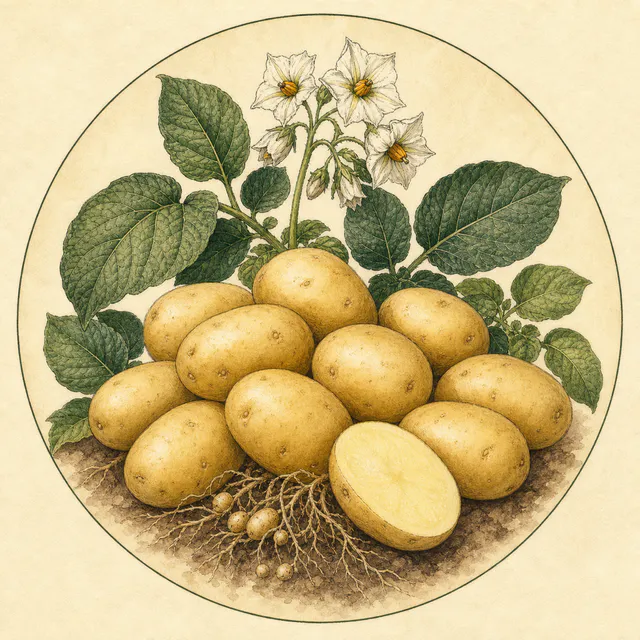
‘Charlotte’ is an AGM popular second-early salad potato producing good yields of uniform oval tubers. Their skin is smooth and yellow, enclosing creamy-yellow flesh with a waxy texture. The potatoes are delicious served hot or cold.
The profile records some resistance to blackleg and generally good disease resistance, including resistance to late blight and scab. Its uniform appearance, fine salad texture and container suitability make it a reliable early crop.
Size
- Ultimate height
- 0.5–1 metre
- Ultimate spread
- 0.1–0.5 metre
- Time to maturity
- one year
- Crop class
- second early salad potato
- Tuber form
- uniform oval tubers with smooth yellow skin and creamy-yellow waxy flesh
Space plants around 30cm apart in rows 60cm apart. Use one seed potato for each 30cm of container diameter.
Growing conditions
- Suitable soils
- Clay, loam or sand
- Moisture
- Moist but well drained
- Preferred pH
- Acid, neutral or alkaline
Use deep, fertile, moisture-retentive ground improved with well-rotted manure or compost. Water in dry periods to maintain even development and preserve the smooth tuber skins.
Position and hardiness
- Light
- Full shade or partial shade as listed on the exact profile; linked crop guidance recommends an open site with good light
- Aspect
- South- or west-facing
- Exposure
- Sheltered
- Hardiness
- H2
Protect early shoots from frost and choose a sheltered growing position. Earth up or cover foliage on freezing nights.
Colour and seasonal interest
Bushy clumps carry green deciduous foliage. The defining harvest is uniform smooth oval yellow potatoes with creamy-yellow flesh. The plate should avoid red skin, white skin, floury broken surfaces or long knobbly shapes.
Botanical details
- Family
- Solanaceae
- Native to Great Britain and Ireland
- No
- Foliage
- Deciduous
- Habit
- Bushy, clump forming
- Name status
- Accepted
How to grow
Cultivation
Chit certified seed potatoes rose-end uppermost in a cool, light and frost-free place. Plant second earlies in early to mid-April, setting tubers sprouts upwards in 15cm-deep trenches and covering carefully.
Earth up emerging stems repeatedly, beginning at around 23cm high, until the ridge reaches 20–30cm. In pots, begin half-full and add compost as the shoots rise. Keep the crop evenly watered.
Check tuber size from July and lift when potatoes reach a useful salad size. Insert the fork well away from the plant or tip out containers and collect by hand. Use promptly and serve hot or cold.
Propagation
Propagate vegetatively from certified seed potatoes, chitted before planting for an early start.
Suggested locations
- Allotment or vegetable bed
- Cottage or informal garden
- Raised or no-dig bed
- Large patio container
- Potato grow bag
Pruning
No pruning is required. Remove badly diseased foliage promptly and dispose of blighted material appropriately.
Pests
May be susceptible to cutworms, slugs, wireworms, leaf and bud eelworm and potato cyst nematodes. Rotate annually and inspect tubers during harvest.
Diseases
Shows some resistance to blackleg and generally good resistance including to late blight and scab. It may be susceptible to tuber rot, particularly dry rot, stem canker and, rarely, honey fungus.