
Carrots · Variety guide
Daucus carota ‘Adelaide’
Carrot ‘Adelaide’
This Allotment Pro editorial draft summarises the cited RHS cultivar profile. Check the source and adjust cultivation decisions for local conditions.Read the original RHS source
Overview
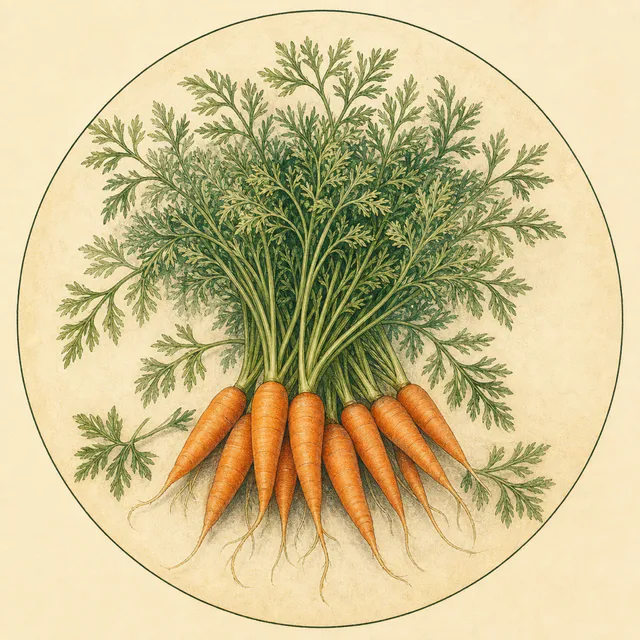
‘Adelaide’ is a biennial root vegetable cultivated as an annual. This early-maturing F1 baby carrot forms small, finger-shaped roots beneath bright green, feathery foliage. It can be sown beneath fleece from February, giving it a valuable head start over main-season cultivars.
The parent crop guide further characterises its smooth-skinned roots as sweet and crunchy. Its naturally small root form suits early lifting and makes it more practical than a long-rooted carrot in containers or shallower ground.
Size
- Ultimate height
- 0.1–0.5 metres
- Ultimate spread
- 0.1–0.5 metres
- Time to ultimate size
- 1 year
The leafy clump and root crop reach their useful size in the first growing season. ‘Adelaide’ is intended for harvesting young, before its natural biennial cycle proceeds to flowering.
Growing conditions
- Suitable soils
- Chalk, clay, loam and sand
- Moisture
- Well-drained
- Soil pH
- Acid, neutral or alkaline
‘Adelaide’ accepts all four common soil textures and the full stated pH range, provided drainage is sound. Break up heavy ground and remove stones so even its short finger roots remain smooth rather than forking.
Position and hardiness
- Light
- Full sun
- Aspect
- South- or west-facing
- Exposure
- Exposed or sheltered
- Hardiness
- H3 — hardy in coastal and relatively mild UK conditions, with protected February sowing used to establish this early annual crop
Choose an open sunny position. The profile permits both exposed and sheltered sites, although fleece protection is important for the earliest sowings and a fine, well-drained seedbed supports fast root development.
Colour and seasonal interest
The seasonal colour table contains no assigned entries. The profile specifically records bright green feathery foliage above small finger-shaped edible roots. The crop is normally lifted in its first season rather than retained for flowers or fruit.
Botanical details
- Family
- Apiaceae
- Native to Great Britain and Ireland
- No
- Foliage
- Deciduous
- Habit
- Clump-forming
- Name status
- Accepted
How to grow
Cultivation
Grow ‘Adelaide’ in an open, sunny position in deeply cultivated, well-drained soil. Remove stones and break down heavy clay to prevent roots from forking. The compact baby roots also suit containers filled with a clean, freely drained growing medium. For an early crop, sow beneath fleece from February.
Propagation
Propagate by seed, sown directly where the roots will develop. Avoid transplanting, which can distort the taproots.
Suggested locations
- Cottage and informal gardens
- Wildlife gardens
Pruning
No pruning is required.
Pests
‘Adelaide’ may be susceptible to carrot fly and slugs, while aphids may attack its foliage. Cover the crop with fine insect-proof mesh and protect emerging seedlings from molluscs.
Diseases
The profile records the cultivar as generally disease-free.