
Potatoes · Variety guide
Solanum tuberosum ‘Vivaldi’
Early potato ‘Vivaldi’
This Allotment Pro editorial draft summarises the cited RHS cultivar profile and its linked crop guidance. Check the sources and adjust cultivation decisions for local conditions.Read the original RHS source
Overview
‘Vivaldi’ is a PBR-protected AGM easy-to-grow, high-yielding early potato. It can be lifted young for baby potatoes or left in the ground longer to produce larger early-maincrop tubers. The smooth oval crop is pale golden and can be boiled, baked, mashed or roasted.
This flexible harvest window distinguishes ‘Vivaldi’: one planting can provide small early potatoes or larger summer bakers. Its compact habit also performs well in containers.
Size
- Ultimate height
- 0.5–1 metre
- Ultimate spread
- 0.1–0.5 metre
- Time to maturity
- one year
- Crop class
- early, with optional early-maincrop bulking
- Tuber form
- smooth oval pale-golden potatoes with creamy flesh
Plant chitted seed potatoes 30cm apart in drills, with about 60cm between early rows. Allow one tuber per 30cm of container diameter.
Growing conditions
- Suitable soils
- Clay, chalk, loam or sand
- Moisture
- Moist but well drained
- Preferred pH
- Acid, neutral or alkaline
Enrich the ground with organic manure or mature compost before planting. Keep moisture even as the high-yielding crop forms tubers, while ensuring excess water can drain freely.
Position and hardiness
- Light
- Full sun
- Aspect
- East-, south- or west-facing
- Exposure
- Sheltered
- Hardiness
- H2
Use a sunny, sheltered position and protect emerging shoots from late frost. Containers can be moved under cover when cold weather threatens.
Colour and seasonal interest
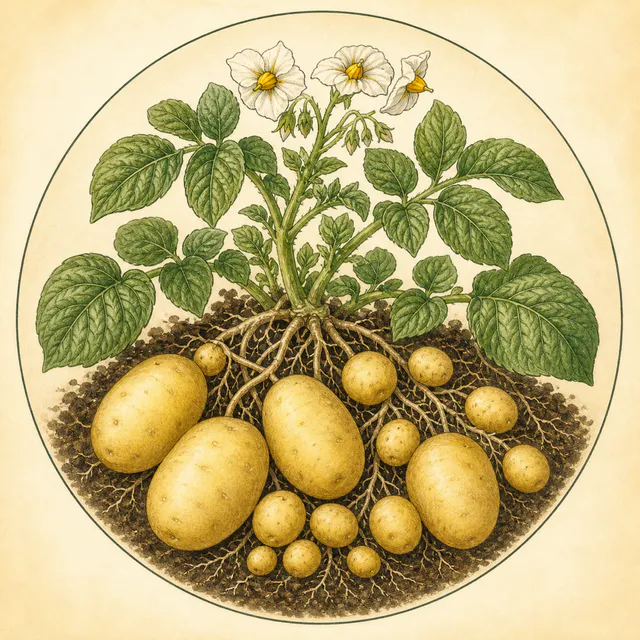
Bushy green deciduous foliage rises over the ridge in spring and summer. The tubers are smooth, oval and pale golden, with creamy flesh visible in a cut example. The illustration should avoid red skin, stark white skin, fingerling shapes or an excessive count of tiny salad tubers.
Botanical details
- Family
- Solanaceae
- Native to Great Britain and Ireland
- No
- Foliage
- Deciduous
- Habit
- Bushy
- Name status
- Accepted
How to grow
Cultivation
Chit certified seed potatoes rose-end uppermost in egg boxes or trays in a cool, light place. Plant when shoots are about 3cm long, spacing them 30cm apart with sprouts upwards. Cover carefully and water.
Earth up emerging shoots repeatedly to exclude light and prevent green tubers. Begin when stems are about 23cm high and build a final ridge 20–30cm tall. Water in dry weather, particularly in containers.
The profile gives a harvest interval of nine to twelve weeks from planting for the early crop. Lift at baby size or leave plants longer to bulk up into larger early-maincrop potatoes. Use a fork well away from the stems to avoid spearing the smooth tubers.
Propagation
Propagate vegetatively by chitting and planting certified seed potatoes.
Suggested locations
- Sunny allotment row
- Raised or no-dig vegetable bed
- Large patio container
- Potato grow bag
- Frost-free greenhouse container for an extra-early crop
Pruning
No pruning is required. Remove diseased foliage promptly and dispose of blighted material appropriately.
Pests
May be susceptible to cutworms, slugs, wireworms and potato cyst eelworm. Rotate annually and inspect tubers carefully during lifting.
Diseases
May be susceptible to potato blight, blackleg, scabs, tuber rots and, rarely, honey fungus. Use certified stock, sound drainage and good hygiene.