
Swedes · Variety guide
Brassica napus (Napobrassica Group) ‘Brora’ PBR AGM
Swede ‘Brora’
This Allotment Pro editorial draft summarises the cited RHS cultivar profile and its linked crop guidance. Check the sources and adjust cultivation decisions for local conditions.Read the original RHS source
Overview
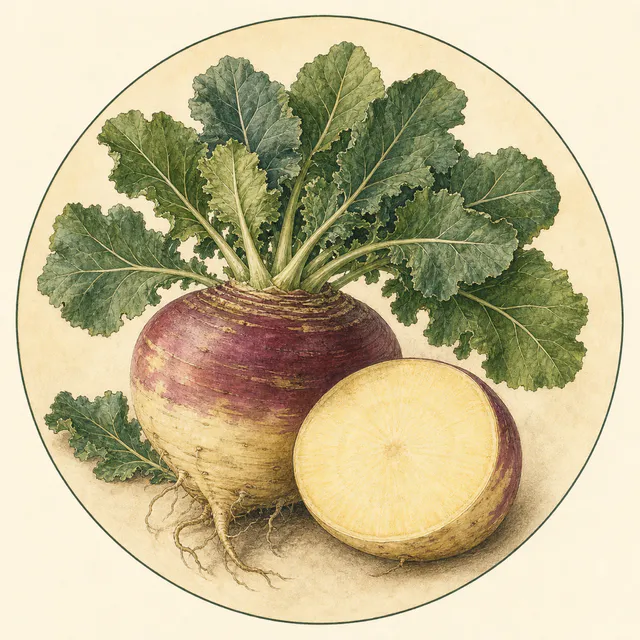
‘Brora’ is a swede cultivar with a reddish-purple upper skin, a cream-coloured base and fine-grained creamy-yellow flesh. The RHS profile specifically notes that the flesh has no bitterness. Roots are intended for harvesting from autumn through to the new year, making this a useful maincrop choice for the colder part of the allotment calendar.
This annual or biennial brassica is grown as a root vegetable. ‘Brora’ holds the RHS Award of Garden Merit and is protected by Plant Breeders’ Rights. Its clear two-tone root and dependable winter harvest window distinguish it from cultivars selected mainly for baby roots or very early lifting.
Size
- Ultimate height
- 0.1–0.5 metres
- Ultimate spread
- 0.1–0.5 metres
- Time to maturity
- 1 year
- Habit
- Clump-forming
The leafy crown stays relatively compact above the rounded storage root. Follow the profile’s 15cm final spacing so each plant has enough room to swell while maintaining an efficient row.
Growing conditions
- Suitable soils
- Loam or sand
- Moisture
- Moist but well drained, or well drained
- Soil pH
- Neutral or alkaline
Prepare a firm, non-acid seedbed in which roots can develop evenly. The soil should retain enough moisture for uninterrupted growth without remaining waterlogged. Remove large stones and incorporate organic matter ahead of sowing rather than placing fresh rich material directly beneath the crop.
Position and hardiness
- Light
- Full sun
- Aspect
- South- or west-facing
- Exposure
- Sheltered
- Hardiness
- H4 — hardy through most of the UK, tolerating approximately −10 to −5°C
Full sun supports steady root growth and the sheltered exposure reduces stress on the foliage. Although H4 hardiness suits a long outdoor harvest, protect roots in severe weather or lift and store them where winter soil is persistently wet.
Colour and seasonal interest
| Season | Foliage | Root |
|---|---|---|
| Spring | Green | Developing after early sowings |
| Summer | Green | Reddish-purple upper skin and cream base developing |
| Autumn | Green or harvested | Mature two-tone root with creamy-yellow flesh |
| Winter | Reduced or harvested | Harvestable through to the new year |
The cultivar’s defining edible feature is its rounded two-tone root: reddish purple above soil level, cream at the base, and fine-grained creamy-yellow flesh when cut.
Botanical details
- Family
- Brassicaceae
- Native to Great Britain and Ireland
- No
- Lifecycle
- Annual or biennial, grown as an annual vegetable
- Foliage
- Deciduous
- Habit
- Clump-forming
- Name status
- Accepted
- Award
- RHS Award of Garden Merit
- Plant Breeders’ Rights
- Yes
How to grow
Cultivation
Sow directly outdoors from April to June where the plants are to crop. Use well-firmed, non-acid soil in full sun. Sow thinly 1cm deep, leave 30cm between rows and thin the seedlings to 15cm apart.
Keep the soil evenly moist and weed carefully so the storage roots grow without a check. Harvest from autumn through to the new year. The parent swede guide gives further advice on mulching, mesh protection, root sizing and winter storage.
Propagation
Propagate by seed. Direct sowing avoids disturbing the developing taproot and is the method specified by the RHS profile.
Pruning
No pruning is required. Remove only badly damaged or diseased foliage where necessary.
Pests
Potential pests include birds, cabbage caterpillars, cabbage root fly, cabbage whitefly, cutworms, flea beetles, mealy cabbage aphid, slugs, snails and swede midge. Crop rotation, a well-secured insect-proof mesh and regular inspection help protect the long-season crop.
Diseases
The profile lists possible powdery mildew, downy mildew, club root and leaf spot. Firm neutral-to-alkaline soil, crop rotation, dependable moisture and good airflow reduce avoidable stress and disease pressure.