
Peas · Variety guide
Pisum sativum ‘Cascadia’
Sugarsnap pea ‘Cascadia’
This Allotment Pro editorial draft summarises the cited RHS cultivar profile and its linked crop guidance. Check the sources and adjust cultivation decisions for local conditions.Read the original RHS source
Overview
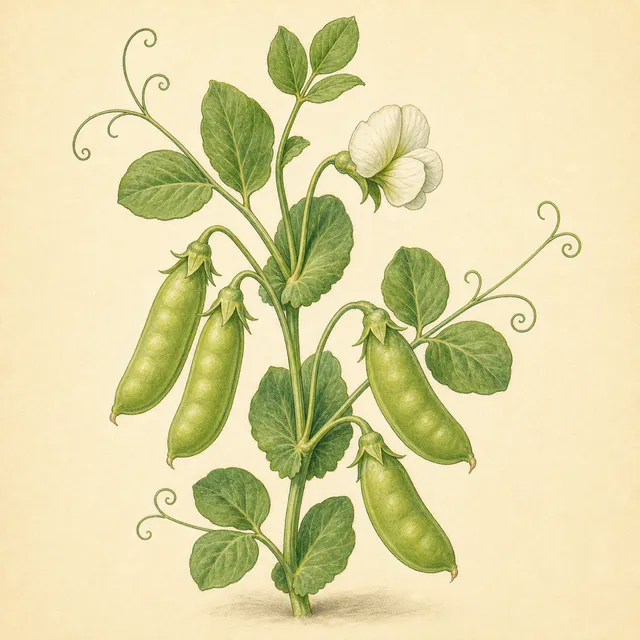
‘Cascadia’ is an AGM quick-maturing sugarsnap pea with a fairly compact climbing habit to about 1m. White flowers are followed by short, stout, light-green, thick-walled edible pods. Depending on sowing date, the tasty whole-pod crop runs from early summer to early autumn.
It is taller than dwarf ‘Sugar Ann’ but remains manageable on moderate supports, combining quick maturity with an extended seasonal window.
Size
- Ultimate height
- 0.5–1 metre; about 1m typical
- Ultimate spread
- 0.5–1 metre
- Time to maturity
- one year; quick maturing
- Pod form
- short, stout, light green and thick walled
Space seed about 7.5cm apart and provide pea sticks or netting to 1m. A sheltered position helps the full canopy remain upright.
Growing conditions
- Suitable soils
- Clay, loam or sand
- Moisture
- Moist but well drained, or well drained
- Preferred pH
- Neutral or alkaline
Grow in rich soil that holds adequate moisture while draining freely. Mulch after planting and water at flowering and pod swelling.
Position and hardiness
- Light
- Full sun or partial shade
- Aspect
- South- or west-facing
- Exposure
- Sheltered
- Hardiness
- H2
Sow once soil warms to about 10°C. Full sun supports the best crop, while light partial shade is tolerated.
Colour and seasonal interest
Green climbing stems carry rounded leaflets and curling tendrils. White flowers appear from late spring through summer, followed by short, thick, light-green pods with softly rounded sides and a crisp fleshy wall.
Botanical details
- Family
- Fabaceae
- Native to Great Britain and Ireland
- No
- Foliage
- Deciduous
- Habit
- Climbing
- Name status
- Unresolved
How to grow
Cultivation
Sow from early spring to early summer, about 5cm deep and 7.5cm apart, once soil is warm. Arrange a single or double row and install pea sticks or netting to about 1m. Protect young plants from mice, pigeons, slugs and snails.
Water thoroughly when flowers open and two weeks later. Pick short light-green pods frequently from early summer to early autumn while their thick walls are crisp and the peas remain tender.
Propagation
Propagate by seed, directly or in deep modules for earlier establishment.
Suggested locations
- Productive vegetable plot
- Supported raised bed
- Cottage or informal garden
- Large container
- Sunny edible border
Pruning
No pruning is required. Regular young-pod harvesting encourages further flowers.
Pests
May be susceptible to pea moth and pea and bean weevil, along with the usual seedling threats from mice, pigeons, slugs and snails.
Diseases
May be susceptible to powdery mildew. Maintain airflow, steady root moisture and crop rotation.