
Chard · Variety guide
Beta vulgaris subsp. cicla var. flavescens ‘Fordhook Giant’
Chard ‘Fordhook Giant’
This Allotment Pro editorial draft summarises the cited RHS cultivar profile. Check the source and adjust cultivation decisions for local conditions.Read the original RHS source
Overview
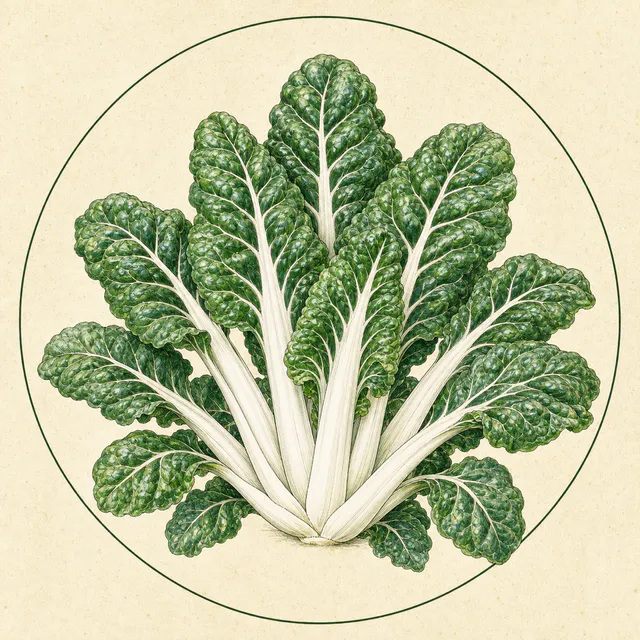
‘Fordhook Giant’ is a strong, vigorous and exceptionally productive Swiss chard with large dark-green puckered leaves, long crisp white stalks and a pronounced earthy flavour. This heritage cultivar was introduced in 1934. Sown in July, it can supply leaves through winter and continue cropping until March in suitable conditions.
The cultivar holds the RHS Award of Garden Merit. Its shiny green foliage and substantial succulent white petioles give it a classic silver-chard appearance, while its vigour and long harvest period make it particularly useful where dependable yield matters more than multicoloured stems.
Size
- Ultimate height
- 0.1–0.5 metre
- Ultimate spread
- 0.1–0.5 metre
- Time to ultimate size
- 1–2 years
Give plants enough space to develop broad rosettes and the long stalks suggested by the cultivar name. They are normally harvested during the first season and following winter, although chard is botanically biennial.
Growing conditions
- Suitable soils
- Clay and loam
- Moisture
- Moist but well-drained
- Soil pH
- Acid, neutral or alkaline
Grow in fertile soil improved with garden compost or well-rotted manure, preferably incorporated in autumn. The ground should hold moisture for continued leaf growth but drain freely during winter. Water thoroughly in dry conditions.
Position and hardiness
- Light
- Full sun or partial shade
- Exposure
- Sheltered
- Hardiness
- H3 — hardy in coastal and relatively mild parts of the UK, tolerating approximately -5°C to 1°C
An open sunny site promotes robust stalk and leaf development, while light shade is tolerated. Shelter helps prevent large mature leaves from tearing and supports winter cropping.
Colour and seasonal interest
The cultivar produces glossy dark-green, strongly puckered leaf blades carried on long, bright-white midribs and stalks. Its high-contrast green-and-white colouring is consistent rather than mixed, creating a bold architectural clump in vegetable beds and edible borders. July sowings can retain useful foliage into winter.
Botanical details
- Family
- Amaranthaceae
- Native to Great Britain and Ireland
- No
- Foliage
- Deciduous
- Habit
- Clump forming
- Name status
- Accepted
How to grow
Cultivation
Grow in fertile soil in full sun or partial shade. Add compost or well-rotted manure before the growing season and maintain steady moisture during dry periods. Sow a main crop in spring, or sow in July when winter and early-spring leaves are wanted. Thin or transplant plants so the large rosettes have good airflow.
Harvest outer leaves at their base when they are large enough, leaving the central growth to produce replacements. The thick crisp stalks can be cooked separately from the darker leaf blades. Regular picking encourages further growth and prevents ageing leaves from crowding the crown.
Propagation
Propagate by seed.
Pruning
No pruning is required. Remove mature outer leaves as a harvest and clear any damaged or decaying foliage.
Pests
May be susceptible to birds, cutworms, lettuce root maggot, root aphid, root-knot eelworm, slugs and snails. Protect seedlings and monitor the soil and crown for damage.
Diseases
Possible problems include grey mould, lettuce downy mildew, mosaic virus and ring spot. Maintain generous spacing, avoid prolonged wetness on foliage and remove affected material promptly.