
Celeriac · Variety guide
Apium graveolens var. rapaceum ‘Ibis’
Celeriac ‘Ibis’
This Allotment Pro editorial draft summarises the cited RHS cultivar profile. Check the source and adjust cultivation decisions for local conditions.Read the original RHS source
Overview
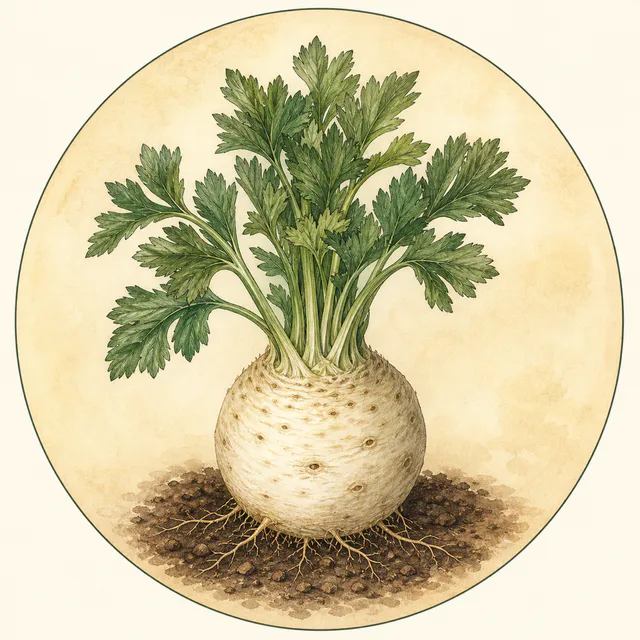
‘Ibis’ is a vigorous, fast-growing celeriac that forms smooth, round, white-skinned swollen stems with a nutty celery-like flavour. It resists bolting, stands well in the ground and stores reliably after lifting. Mature globes are ready for harvest from October onward beneath upright green foliage.
Size
- Ultimate height
- 0.1–0.5 metres
- Ultimate spread
- 0.1–0.5 metres
- Time to ultimate size
- 1 year
The fast-growing crop reaches maturity within one annual cycle.
Growing conditions
- Suitable soils
- Sand and loam
- Moisture
- Moist but well-drained
- Soil pH
- Acid, neutral or alkaline
Fertile soil rich in organic matter should remain steadily moist without becoming waterlogged.
Position and hardiness
- Light
- Full sun
- Aspect
- South- or west-facing
- Exposure
- Sheltered
- Hardiness
- H4 — hardy through an average UK winter
Plant in a warm sheltered site, while using its good standing ability for autumn and winter harvests.
Colour and seasonal interest
No seasonal colours are assigned. Its characteristic edible stem is a smooth, round, white-skinned globe beneath columnar green leaves.
Botanical details
- Family
- Apiaceae
- Native to Great Britain and Ireland
- No
- Foliage
- Deciduous
- Habit
- Columnar and upright
- Name status
- Accepted
- Potentially harmful
- Plant sap may harm skin in sunlight; wear gloves and protective clothing when handling
How to grow
Cultivation
Grow in full sun in fertile, well-drained but moisture-retentive soil enriched with plenty of organic matter. Sow indoors in March and transplant outside in May after cold weather has passed. Keep the crown at soil level and water consistently.
Propagation
Propagate by seed, normally started indoors.
Pruning
No pruning is required; remove only collapsed outer leaves during routine care.
Pests
Plants may be susceptible to carrot fly, celery leaf-mining fly, slugs and snails.
Diseases
Plants may be susceptible to celery leaf spot.