
Asparagus · Variety guide
Asparagus officinalis ‘Gijnlim’
Asparagus ‘Gijnlim’
This Allotment Pro editorial draft summarises the cited RHS cultivar profile. Check the source and adjust cultivation decisions for local conditions.Read the original RHS source
Overview
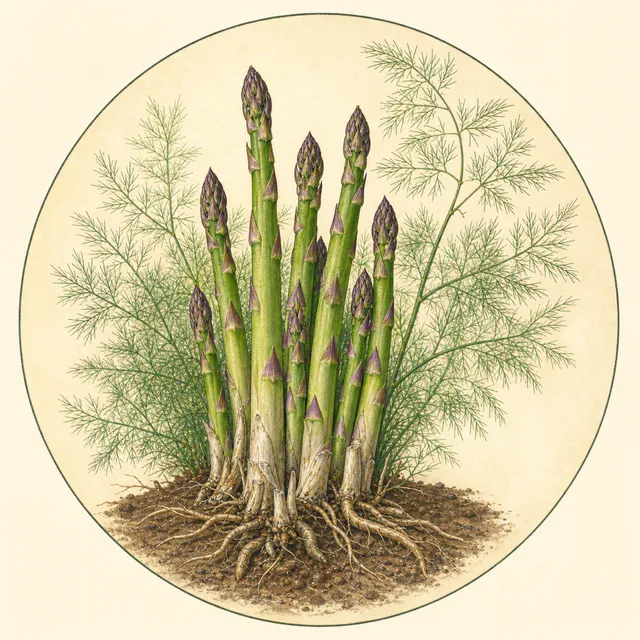
‘Gijnlim’ is an upright, all-male asparagus cultivar grown for edible bright-green spears with purple tips from spring into early summer. Once cutting finishes, its crowns produce tall, branched stems clothed in airy, feathery green foliage.
The cultivar has an RHS Award of Garden Merit and is also listed as a plant for pollinators. Its early crop, medium-thick spears and closed purple tips make it readily distinguishable at harvest time.
Size
- Ultimate height
- 1–1.5 metres
- Ultimate spread
- 0.1–0.5 metres
- Time to ultimate size
- 2–5 years
Allow vertical room for the summer stems to reach about 1.5 metres. Although the crown remains comparatively narrow, the branched fern-like growth spreads as it matures and may benefit from support.
Growing conditions
- Suitable soils
- Chalk, clay, loam and sand
- Moisture
- Well-drained
- Soil pH
- Alkaline or neutral
Choose a permanent bed with reliable drainage. Raised beds are suitable where the existing soil stays wet or is too heavy for healthy crown growth.
Position and hardiness
- Light
- Full sun
- Aspect
- South- or west-facing
- Exposure
- Sheltered
- Hardiness
- H4 — hardy through most of the UK, tolerating roughly −10°C to −5°C once established, although emerging spears remain frost-sensitive
Plant in a sunny, sheltered position and avoid frost pockets. The perennial crown can tolerate ordinary UK winters, but late frost can still injure its tender spring crop.
Colour and seasonal interest
| Season | Flowers | Foliage | Fruit |
|---|---|---|---|
| Spring | — | Green | — |
| Summer | — | Green | — |
| Autumn | — | Green | — |
The edible spring spears are bright green with purple tips, while the later feathery foliage remains green through autumn. An em dash means the RHS profile does not state a colour for that field and season.
Botanical details
- Family
- Asparagaceae
- Native to Great Britain and Ireland
- No
- Foliage
- Deciduous
- Habit
- Columnar upright and spreading branched
- Name status
- Accepted
How to grow
Cultivation
Plant crowns in well-drained soil or a raised bed and keep them out of frost pockets. Let young plants establish before harvesting, then leave the tall feathery growth intact after cutting so it can rebuild the crown.
Propagation
Propagate by crowns to preserve the named all-male cultivar. Seed propagation is possible but not advised because seedlings take longer to mature and may not remain male plants, which generally crop more strongly.
Suggested locations
- Wildlife gardens
- Sunny, sheltered edible gardens
- Free-draining raised vegetable beds
Pruning
Cut the foliage down to soil level in autumn after it has yellowed.
Pests
‘Gijnlim’ may be susceptible to asparagus beetle, slugs and snails. Check both emerging spears and summer foliage for feeding damage.
Diseases
Possible problems include foot and root rots and violet root rot. Free-draining soil is important for reducing conditions that favour crown and root decay.