
Chicory · Variety guide
Cichorium intybus ‘Leonardo’
Radicchio ‘Leonardo’
This Allotment Pro editorial draft summarises the cited RHS cultivar profile and linked RHS chicory guidance. Check the source and adjust cultivation decisions for local conditions.Read the original RHS source
Overview
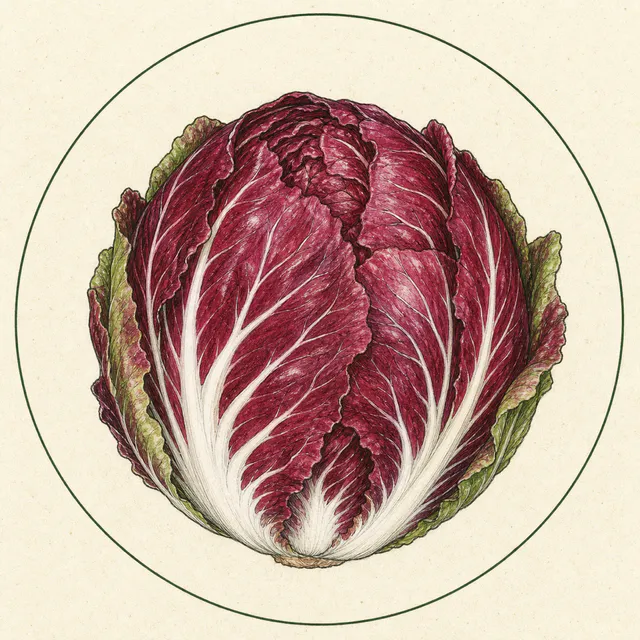
‘Leonardo’ is a heading radicchio grown for its crisp, bitter-sweet leaves. It develops a well-filled heart with strong internal red colour, and the red pigmentation becomes more pronounced as temperatures cool. Contrasting pale white ribs divide the rounded red leaves, making mature heads attractive both in the vegetable plot and on the plate.
The head is naturally self-blanching: outer leaves shield the centre from light so the heart remains more tender and less bitter. Leaves can be eaten raw, while roasting or grilling softens their flavour.
Size
- Growth form
- Compact rounded heading radicchio
- Typical garden spacing
- About 30cm (1ft) between plants
- Cropping period
- Grown as an annual leafy vegetable
Allow the full spacing so each plant can close into an even head and air can move around the outer foliage.
Growing conditions
- Soil
- Fertile and moisture-retentive but free draining
- Moisture
- Evenly moist during active growth
- Soil preparation
- Incorporate garden compost or well-rotted manure before sowing or planting
Interrupted water supply increases bitterness and encourages bolting. Mulch established plants to conserve moisture and suppress competing weeds.
Position and hardiness
- Light
- Full sun, with light summer shade tolerated
- Exposure
- Preferably sheltered
- Season
- Develops its best red colour in cooler late-season conditions
Avoid sowing outdoors while the ground is still cold, because chilling can trigger premature flowering. Harvest mature heads before severe frost or protect them with cloches or plastic-free fleece.
Colour and seasonal interest
Outer leaves begin green and the compact heart develops rich wine-red to burgundy colouring as nights become cooler. Broad white ribs create a strong marbled contrast across each rounded leaf. This temperature-dependent colour change is the cultivar’s defining visual characteristic.
Botanical details
- Family
- Asteraceae
- Species
- Cichorium intybus
- Native to Great Britain and Ireland
- No
- Habit
- Compact, leafy and heading
How to grow
Cultivation
Sow indoors in spring or outdoors once the soil is warm, and make later sowings for autumn heads. Plant or thin to approximately 30cm (1ft) apart in fertile prepared soil. Water thoroughly in dry weather and keep the bed weed free. The heart forms as outer leaves fold inward.
Cut mature heads from late summer into autumn. Leave a short stump after harvest and it may produce a smaller second head. Discard tough outer leaves and use the red self-blanched heart raw or cooked.
Propagation
Propagate by seed.
Pruning
No pruning is required. Remove damaged outer leaves and harvest the complete head when firm.
Pests
Slugs and snails may damage seedlings and folded heads, while aphids can hide in young growth. Inspect plants regularly and keep the surrounding ground clear of sheltering debris.
Diseases
Grey mould and powdery mildews may affect stressed or crowded plants. Maintain spacing, airflow and even watering, and remove decaying foliage promptly.