
Chicory · Variety guide
Cichorium intybus ‘Palla Rossa’
Radicchio ‘Palla Rossa’
This Allotment Pro editorial draft summarises the cited RHS cultivar profile and linked RHS chicory guidance. Check the source and adjust cultivation decisions for local conditions.Read the original RHS source
Overview
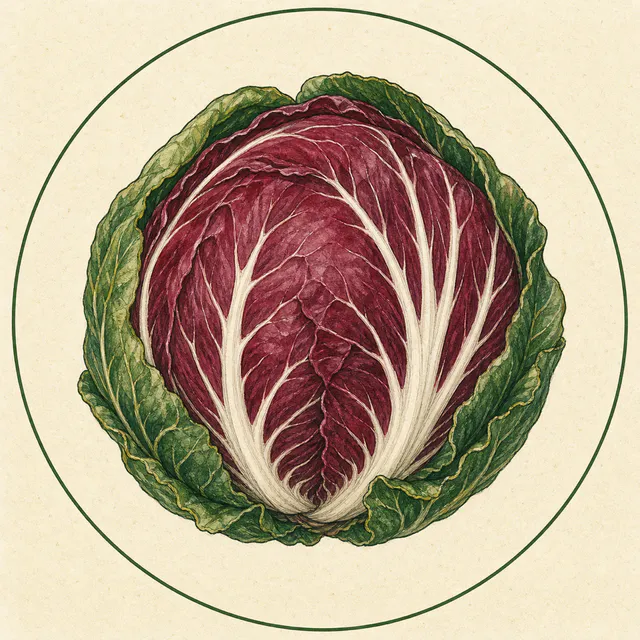
‘Palla Rossa’ is a heading radicchio that produces medium to large, dense rounded heads with well-filled red hearts. Plants are notably uniform, with dark-green outer leaves enclosing richly coloured inner foliage divided by crisp white ribs. The compact self-blanching heart is milder and more tender than leaves exposed to light.
The cultivar holds the RHS Award of Garden Merit and is listed as a leafy radicchio type. Cooler autumn nights intensify the red colouring. The heart can be shredded raw for salads or roasted and grilled, which mellows its characteristic bitter tang.
Size
- Growth form
- Dense, rounded medium-to-large head
- Typical garden spacing
- 25–30cm (10–12in) between plants
- Cropping cycle
- Grown as an annual leafy vegetable
Uniform spacing helps the crop develop evenly sized heads and keeps outer leaves ventilated. Closely crowded plants are less likely to close into substantial hearts.
Growing conditions
- Soil
- Fertile, rich and free draining
- Moisture
- Moist but well-drained
- Soil pH
- Acid, neutral or alkaline conditions are acceptable for chicory
Improve the bed with garden compost or well-rotted manure before planting. Maintain even moisture, as drought increases bitterness and bolting risk. A surface mulch helps stabilise summer moisture.
Position and hardiness
- Light
- Full sun, with light summer shade tolerated
- Exposure
- Sheltered where possible
- Hardiness
- H5 — hardy in most UK locations even in severe winters, approximately -15°C to -10°C
Although hardy, heads are best harvested before severe weather damages the edible leaves. Late-season cooling improves colour, while very early sowing into cold ground can trigger bolting.
Colour and seasonal interest
Dark-green outer foliage surrounds a firm round heart of saturated wine-red to purple-red leaves. Broad white midribs and branching veins give the head its characteristic high-contrast marbled appearance. The internal red becomes strongest during cool autumn conditions.
Botanical details
- Family
- Asteraceae
- Species
- Cichorium intybus
- Native to Great Britain and Ireland
- No
- Habit
- Compact, rounded and heading
- RHS recognition
- Award of Garden Merit
How to grow
Cultivation
Sow in warm soil from late spring into summer or raise seedlings in modules and transplant after hardening off. Set plants 25–30cm apart in fertile prepared ground. Water thoroughly in dry weather and keep weeds from competing with young plants.
Allow outer leaves to close naturally over the heart. Cut firm heads from late summer through autumn, preferably before hard frost. Leave a short stump after harvest and a smaller second head may form. Remove tough green outer leaves in the kitchen and use the red heart raw or cooked.
Propagation
Propagate by seed.
Pruning
No pruning is required. Remove damaged outer foliage and harvest the complete head at maturity.
Pests
Slugs and snails can damage seedlings and hide inside folded heads; aphids may gather in young leaves. Inspect plants frequently and protect new transplants.
Diseases
Grey mould and powdery mildews can affect crowded or stressed plants. Maintain spacing and airflow, water consistently and clear decaying foliage.