
Beans for drying · Variety guide
Phaseolus vulgaris ‘Borlotto Lingua di Fuoco’
Climbing French bean ‘Borlotto Lingua di Fuoco’
This Allotment Pro editorial draft summarises the cited RHS cultivar profile. Check the source and adjust cultivation decisions for local conditions.Read the original RHS source
Overview
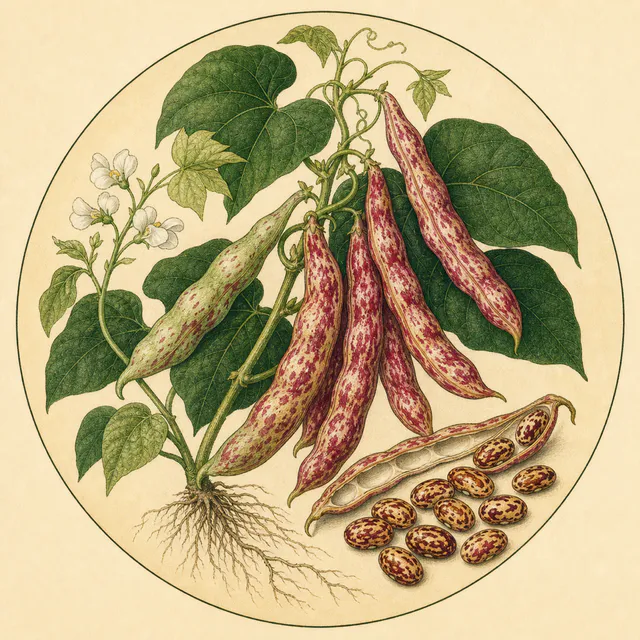
‘Borlotto Lingua di Fuoco’, also known by the synonym ‘Firetongue’, is an annual climbing borlotti bean. Its green leaves and white flowers are followed by plump pods that begin mottled green and mature to a dark pink. Inside, the ripe drying beans develop a characteristic mixture of yellow-brown, cream and dark-red markings.
The cultivar offers two harvest stages. Its immature pods can be picked and eaten whole, while pods left on the climbing plant can mature fully for their colourful seed beans. The tall habit needs a firm support but holds the developing pods above the ground, which is useful when the crop is being left to dry.
Size
- Ultimate height
- 1.5–2.5 metres
- Ultimate spread
- 0.5–1 metre
- Time to ultimate size
- 1 year
As an annual, the plant reaches its full dimensions within one growing season. Allow enough vertical space for a vigorous climbing bean and install its support before growth becomes difficult to handle.
Growing conditions
- Suitable soils
- Chalk, clay, loam and sand
- Moisture
- Moist but well-drained
- Soil pH
- Acid, alkaline or neutral
The profile permits a broad range of soil textures and pH values. What matters most is a fertile root run that retains moisture without becoming waterlogged, particularly while flowers are forming and pods are filling.
Position and hardiness
- Light
- Full sun
- Aspect
- East-, south- or west-facing
- Exposure
- Sheltered
- Hardiness
- H2 — tolerant of cool conditions down to about 1–5°C, but unable to withstand freezing
Choose a bright, warm and sheltered site, and keep plants protected from frost. The listed H2 rating reflects the cultivar’s tenderness rather than an ability to overwinter outdoors in typical UK conditions.
Colour and seasonal interest
| Season | Flowers | Foliage | Fruit |
|---|---|---|---|
| Spring | — | Green | — |
| Summer | White | Green | Green and pink |
| Autumn | — | — | — |
| Winter | — | — | — |
The visual progression of the pods is a key identifying feature: their green mottling deepens towards dark pink as the seed beans mature. An em dash means the RHS profile does not list a colour for that field and season, not that the feature is necessarily absent.
Botanical details
- Family
- Fabaceae
- Native to Great Britain and Ireland
- No
- Foliage
- Deciduous
- Habit
- Climbing
- Name status
- Accepted
How to grow
Cultivation
Train ‘Borlotto Lingua di Fuoco’ up a sturdy support in fertile, moisture-retentive but freely drained soil with good light. Keep the root area consistently moist during active growth. Young pods may be taken for eating whole, or left on the plant until the pods and their mottled beans have fully matured for drying.
Propagation
Propagate from seed. Provide warmth for germination and avoid planting tender young beans into an exposed position while frost remains a risk.
Suggested locations
- Cottage and informal gardens
- Climbing or wall-supported planting
- Edible crop beds
Pruning
No pruning is required. Guide the twining stems onto their support as they extend.
Pests
The cultivar may be susceptible to slugs and snails, especially while growth is young, and to blackfly or black bean aphid on tender shoots. Inspect plants regularly so damage and colonies are detected early.
Diseases
The profile notes possible susceptibility to runner and French bean rust. Maintain reasonable spacing and airflow, and monitor leaves for developing symptoms.