
Marrows · Variety guide
Cucurbita pepo ‘Long Green Trailing’
Marrow ‘Long Green Trailing’
This Allotment Pro editorial draft summarises the cited RHS cultivar profile. Check the source and adjust cultivation decisions for local conditions.Read the original RHS source
Overview
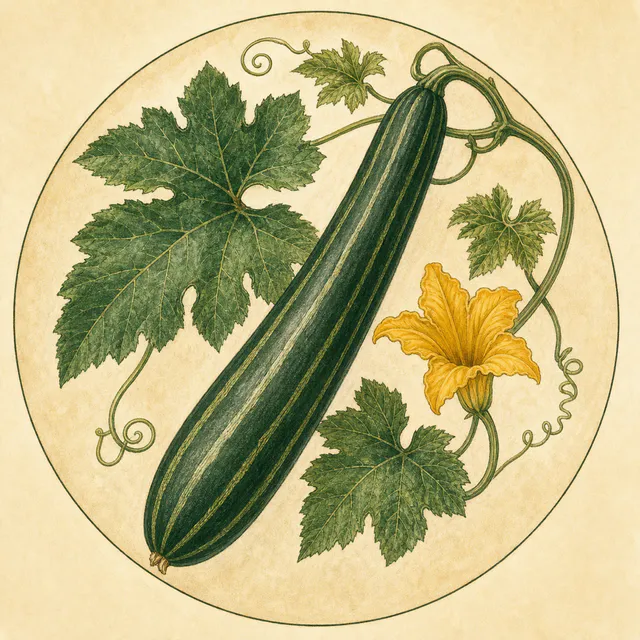
‘Long Green Trailing’ is a climbing or trailing form of Cucurbita pepo producing long, slim dark-green fruits with paler green lengthwise stripes. The mature plant can reach around 1.8m when trained upward, and its large fruits have the traditional elongated striped marrow appearance.
Sow from March to June for harvests from July to September. Germination can sometimes be difficult, but a successful plant can be trained against a sturdy frame, using vertical space where ground room is limited. The yellow flowers provide nectar and pollen for insects.
Size
- Ultimate height
- 1–1.5 metres on the RHS size scale, with stems described as reaching around 1.8m
- Ultimate spread
- 1–1.5 metres
- Time to ultimate size
- 1 year
Provide at least 1.5m of ground space if the stems trail, or install a strong support before planting for upward growth. Any frame must carry foliage and the considerable weight of maturing fruits.
Growing conditions
- Suitable soils
- Chalk, clay, loam or sand
- Moisture
- Moist but well-drained or well-drained
- Soil pH
- Acid, neutral or alkaline
Grow in rich fertile soil with free drainage and a dependable water supply. Improve the planting station with plenty of organic matter. Mulch to conserve moisture while keeping the crown itself clear and dry.
Position and hardiness
- Light
- Full sun
- Aspect
- South- or west-facing
- Exposure
- Sheltered
- Hardiness
- H2 — tolerant of low temperatures but not surviving prolonged freezing
Choose a warm sheltered site in full sun, especially when training the plant against a frame. Frost damages this tender annual, so harden seedlings off and plant outside only when conditions are reliably warm.
Colour and seasonal interest
Vigorous green climbing stems carry broad palmately lobed prickly leaves and golden-yellow star-shaped flowers. These develop into particularly long, slim dark-green fruits bearing narrower pale-green longitudinal stripes. Flowers appear in summer and the striped fruits mature from July into September.
Botanical details
- Family
- Cucurbitaceae
- Native to Great Britain and Ireland
- No
- Foliage
- Deciduous
- Habit
- Bushy and climbing
- Name status
- Unresolved
How to grow
Cultivation
Grow in rich fertile, well-drained soil in full sun. Sow seed in individual pots from mid- to late April for the most reliable start, about 1.5cm deep, although the wider profile window runs from March to June. Maintain steady warmth because germination can be erratic.
Harden off before June and transplant after frost beside a sturdy climbing frame or into a spacious trailing position. Tie stems loosely as they extend and support heavy fruits individually if trained above ground. Water well throughout the season and apply a high-potassium feed every 10–14 days once fruits begin forming. Harvest from July to September.
Propagation
Propagate by seed. Sow more than the minimum number needed if past germination has been unreliable, but retain only sound vigorous plants.
Suggested locations
- Sunny allotment edge
- Sturdy vegetable frame
- City or courtyard garden
- Large patio container with support
- Conservatory or greenhouse border
Pruning
No routine pruning is required. Guide and tie climbing stems as necessary, and remove only damaged or mildew-affected foliage.
Pests
May be susceptible to slugs and snails. Protect slow-emerging seedlings and inspect flowers and young fruits in damp weather.
Diseases
May be susceptible to grey mould and powdery mildew. Train growth openly, water at soil level and remove decaying or badly affected leaves promptly.