
Potatoes · Variety guide
Solanum tuberosum ‘Sharpe’s Express’
Potato ‘Sharpe’s Express’
This Allotment Pro editorial draft summarises the cited RHS cultivar profile and its linked crop guidance. Check the sources and adjust cultivation decisions for local conditions.Read the original RHS source
Overview
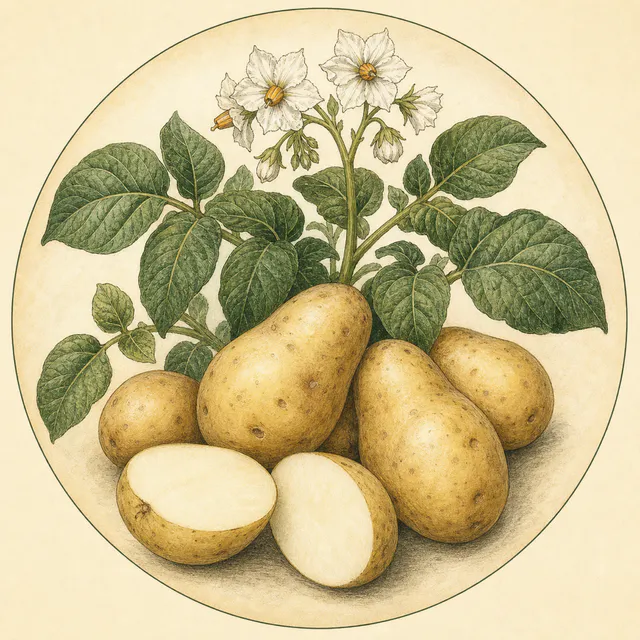
‘Sharpe’s Express’ is an AGM heirloom first-early potato introduced in 1900. Its smooth-skinned, slightly pear-shaped tubers have bright white flesh and a superb traditional new-potato flavour. Percy Thrower is reported to have regarded it as a favourite.
The crop is best boiled or steamed whole in its skin and served hot with butter or cold in salads. Its somewhat floury texture also makes it a capable small roasting potato. Early maturity and compact growth make it suitable for large containers as well as allotment rows.
Size
- Ultimate height
- 0.5–1 metre
- Ultimate spread
- 0.1–0.5 metre
- Time to maturity
- one year
- Crop class
- first early
- Tuber form
- smooth, slightly pear-shaped tubers with bright white flesh
Space plants about 30cm apart with 60cm between rows. In a container, allow one seed potato per 30cm of diameter so foliage, roots and developing tubers are not overcrowded.
Growing conditions
- Suitable soils
- Clay, loam or sand
- Moisture
- Moist but well drained
- Preferred pH
- Acid, neutral or alkaline
For a generous, good-quality crop, use deep fertile soil enriched with garden compost or well-rotted manure. The root zone should retain moisture yet drain freely. Water during dry periods, especially as tubers begin to swell and whenever the cultivar is grown in a pot.
Position and hardiness
- Light
- Full sun or partial shade
- Aspect
- South- or west-facing
- Exposure
- Sheltered
- Hardiness
- H2
Plant in an open position after the worst frosts, ideally with plenty of direct light. Young shoots remain frost tender, so protect new growth with earthing up, compost, cloches or another temporary covering on freezing nights.
Colour and seasonal interest
Green deciduous foliage forms a bushy clump, with purple flowers appearing in spring or summer. The edible crop has understated smooth pale skin and clean bright-white flesh. The slightly pear-shaped outline helps distinguish the variety from round or long salad potatoes.
Botanical details
- Family
- Solanaceae
- Native to Great Britain and Ireland
- No
- Foliage
- Deciduous
- Habit
- Bushy, clump forming
- Name status
- Accepted
How to grow
Cultivation
Chit certified seed tubers rose-end uppermost in a cool, bright and frost-free place. Plant around late March once soil conditions permit. Set them sprouts upwards in a trench about 15cm deep, cover with at least 2.5cm of soil and water without damaging the shoots.
Earth up when stems are around 23cm tall, leaving the top 10cm showing, and repeat until the ridge is 20–30cm high. Follow the same principle in containers by starting half-full and adding peat-free compost as shoots rise. Keep the crop evenly moist but never waterlogged.
Begin checking tuber size in early summer. First earlies are generally ready in June or July when flowers open or buds drop and tubers approach hen's-egg size. Lift carefully with a fork placed well away from the stems. Use promptly to enjoy the thin skins and fresh new-potato flavour.
Propagation
Propagate vegetatively using certified seed potatoes. Chitting is optional but helps an early crop get underway sooner.
Suggested locations
- Allotment row
- Sunny vegetable or raised bed
- No-dig bed
- Large patio pot
- Potato sack or grow bag
Pruning
No pruning is required. Remove seriously diseased foliage promptly and dispose of it appropriately rather than composting material infected by blight.
Pests
May be susceptible to cutworms, slugs, wireworms, leaf and bud eelworm and potato cyst nematodes. Use crop rotation and harvest mature tubers before autumn pest damage increases.
Diseases
May be susceptible to potato scab, blight, tuber rot, blackleg, viruses, stem canker and, rarely, honey fungus. Certified seed, annual rotation, good drainage and careful harvesting reduce avoidable losses.