
Squashes · Variety guide
Cucurbita pepo ‘Sunburst’ AGM
Squash ‘Sunburst’
This Allotment Pro editorial draft summarises the cited RHS cultivar profile and its linked crop guidance. Check the sources and adjust cultivation decisions for local conditions.Read the original RHS source
Overview
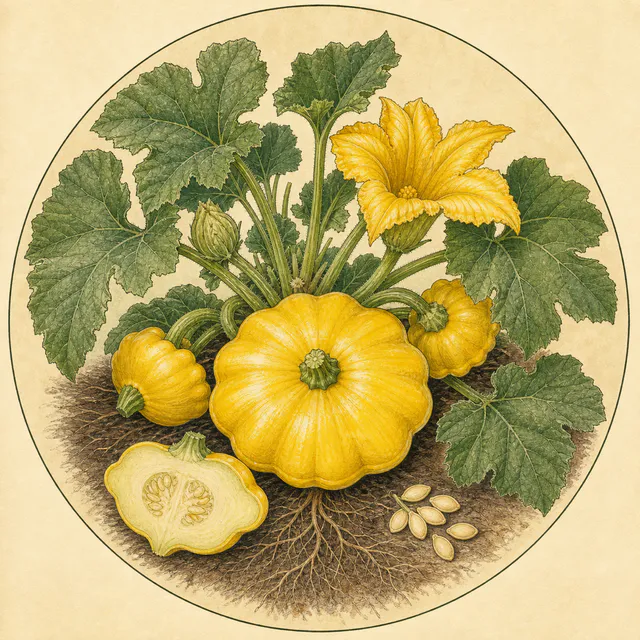
‘Sunburst’ is a summer patty-pan squash with bright-yellow glossy skin and tender flesh with a nutty flavour. Its fruits have the distinctive flattened, scallop-edged disc shape associated with patty pans. Picked young, they offer a buttery, melting texture; the profile specifically suggests steaming to retain that quality.
The plant forms a compact clump rather than a long trailing vine and is suitable for patio containers as well as open ground. It carries the RHS Award of Garden Merit and is listed as a Plants for Pollinators cultivar, supporting bees and other pollinating insects through its cucurbit flowers.
Size
- Ultimate height
- 0.1–0.5 metres
- Ultimate spread
- 1–1.5 metres
- Time to ultimate size
- 1 year
- Habit
- Clump-forming
Although low-growing, the broad clump still needs a useful area around its crown. One plant can occupy a large container if it receives sun, regular water and room for airflow.
Growing conditions
- Suitable soils
- Loam or sand
- Moisture
- Well drained, or moist but well drained
- Soil pH
- Neutral or acid
Grow in rich, fertile, freely draining soil. Incorporate mature organic matter before planting and maintain moisture as the plant flowers and fruits, without saturating the crown.
Position and hardiness
- Light
- Full sun
- Aspect
- South- or west-facing
- Exposure
- Sheltered
- Hardiness
- H2 — tolerant of low temperatures but not surviving being frozen
This tender summer crop needs warmth and shelter. Harden indoor-raised plants before transplanting and wait until frost danger has passed. Consistent sun encourages rapid fruit production and glossy yellow skins.
Colour and seasonal interest
| Season | Foliage | Fruit |
|---|---|---|
| Spring | Green | — |
| Summer | Green | Bright yellow |
| Autumn | Green | Bright yellow |
| Winter | — | — |
Glossy yellow scalloped fruits are the defining feature. Green palmately lobed foliage frames the crop, while golden cucurbit flowers provide seasonal pollinator value.
Botanical details
- Family
- Cucurbitaceae
- Native to Great Britain and Ireland
- No
- Lifecycle
- Annual or biennial
- Foliage
- Deciduous
- Habit
- Clump-forming
- Name status
- Accepted
- Award
- RHS Award of Garden Merit
- Wildlife value
- RHS Plants for Pollinators
How to grow
Cultivation
Start indoors from April, sowing one seed on its side about 1.5cm deep in each individual pot. Harden plants off before transplanting them to rich, fertile, well-drained soil in full sun. The exact profile also allows direct sowing from April to July when air temperature is above 18°C.
Follow the parent guide for bush spacing, containers, watering and high-potassium feeding. Pick the patty-pan fruits regularly while they are small, glossy and tender so the plant continues producing.
Propagation
Propagate by seed. Individual pots minimise root disturbance; direct sowing is suitable only when conditions are reliably warm.
Suggested locations
- Patio or large container
- Allotment or kitchen garden
- Wildlife garden
- Sunny edible border
Pruning
No pruning is required. Remove only damaged or decaying material and harvest fruits frequently.
Pests
Snails and slugs may damage seedlings and young foliage. Protect plants during establishment and inspect beneath the broad leaves.
Diseases
Grey mould and powdery mildew may occur. Give the clump room for airflow, water at soil level and remove decaying flowers or damaged tissue promptly.