
Soya Beans · Variety guide
Glycine max ‘Elena’ PBR
Soya bean ‘Elena’
This Allotment Pro editorial draft summarises the cited RHS cultivar profile and its linked crop guidance. Check the sources and adjust cultivation decisions for local conditions.Read the original RHS source
Overview
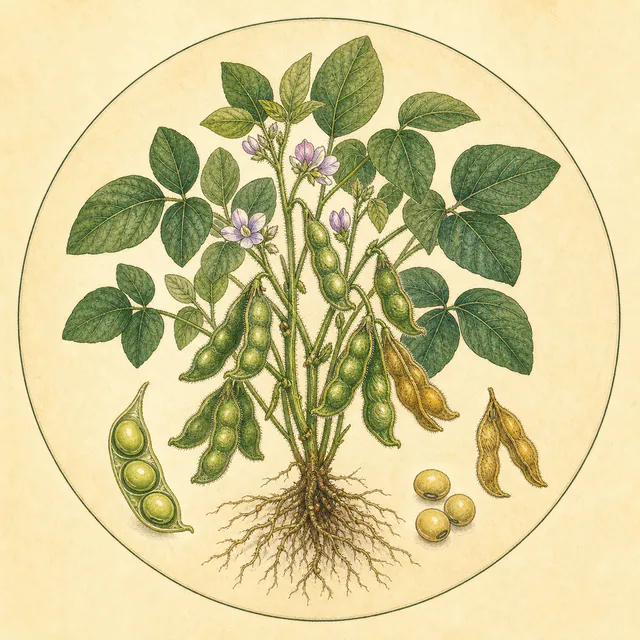
‘Elena’ is an upright, bushy annual soya bean bred specifically for the British climate. It is self-pollinating and combines green foliage with small sweet-pea-like flowers, followed by clusters of green hairy pods. Each pod contains about three or four beans.
Flowers appear from July to September in shades from white to purple-pink. Pods are ready from July through November as they yellow and the deciduous leaves begin to fall. This extended season and UK-focused breeding make ‘Elena’ a practical choice where summer warmth can be less predictable than in traditional soya-growing regions.
Size
- Maximum height
- 1.5–2.5 metres
- Maximum spread
- 0.5–1 metre
- Habit
- Columnar upright
The exact profile describes a substantially taller ultimate plant than the roughly 60cm commonly expected from many garden soya cultivars. Give ‘Elena’ enough room for its upright stems and be ready to support it in exposed or windy conditions.
Growing conditions
- Suitable soils
- Chalk, clay, loam or sand
- Moisture
- Moist but well drained
- Soil pH
- Acid, alkaline or neutral
Grow in humus-rich ground that retains moisture through flowering and pod filling but does not remain saturated. The broad soil tolerance is useful, although improving the bed with mature compost is particularly valuable on very free-draining sand or dense clay.
Position and hardiness
- Light
- Full sun
- Aspect
- South- or west-facing
- Exposure
- Sheltered
- Hardiness
- H3 — hardy in coastal and relatively mild parts of the UK except in severe winters
‘Elena’ is an annual warm-season crop rather than a plant to overwinter. Its H3 rating reinforces the need for a warm, protected growing season: sow under cover, harden plants carefully and wait until frost risk has passed before moving them outside.
Colour and seasonal interest
| Season | Flowers | Foliage | Fruit |
|---|---|---|---|
| Spring | — | Green young growth | — |
| Summer | White to purple-pink | Green | Green hairy pods |
| Autumn | Late flowers may persist | Green, then yellowing and falling | Green pods turning yellow |
| Winter | — | Deciduous | — |
The cultivar’s small flowers are visually modest, but their white-to-purple-pink range helps distinguish the flowering crop before its clustered, softly hairy pods become the main feature. Yellowing pods and dropping leaves indicate mature-bean harvest readiness.
Botanical details
- Family
- Fabaceae
- Native to Great Britain and Ireland
- No
- Lifecycle
- Annual
- Foliage
- Deciduous
- Habit
- Columnar upright
- Name status
- Accepted
- Plant Breeders’ Rights
- Yes
- Uses
- Edible fruit
How to grow
Cultivation
Sow under glass from April to May in moist, well-drained, humus-rich compost. Remove the cover once seedlings emerge so they receive good light and air movement. From late May, after frost risk has passed, harden plants off gradually before transferring them to a sheltered, sunny outdoor site.
Maintain even soil moisture, especially while flowers and pods are developing. Although the plant is upright, taller stems may need discreet support in windy places. Harvest mature beans when pods turn yellow and foliage starts to drop; pick green pods earlier if growing for edamame.
Propagation
Propagate by seed. Use healthy seed and warm conditions, and avoid damaging the root ball when planting out.
Suggested locations
- Allotment or kitchen garden
- Sheltered city or courtyard garden
- Cottage or informal garden
- Warm, sunny edible border
Pruning
No pruning is required. Remove only damaged growth and clear healthy annual stems after harvest, leaving roots in the soil where practical.
Pests
May be susceptible to caterpillars. Inspect foliage regularly and remove small infestations before extensive feeding damage develops.
Diseases
May be susceptible to bacterial blights, brown spot, anthracnose, downy and powdery mildews, soybean rust, root and stem rots, stem blights and virus diseases. Good airflow, clean seed, crop rotation, suitable drainage and soil-level watering reduce avoidable disease pressure.