
Chilli Peppers · Variety guide
Capsicum annuum var. annuum ‘Prairie Fire’
Chilli pepper ‘Prairie Fire’
This Allotment Pro editorial draft summarises the cited RHS cultivar profile. Check the source and adjust cultivation decisions for local conditions.Read the original RHS source
Overview
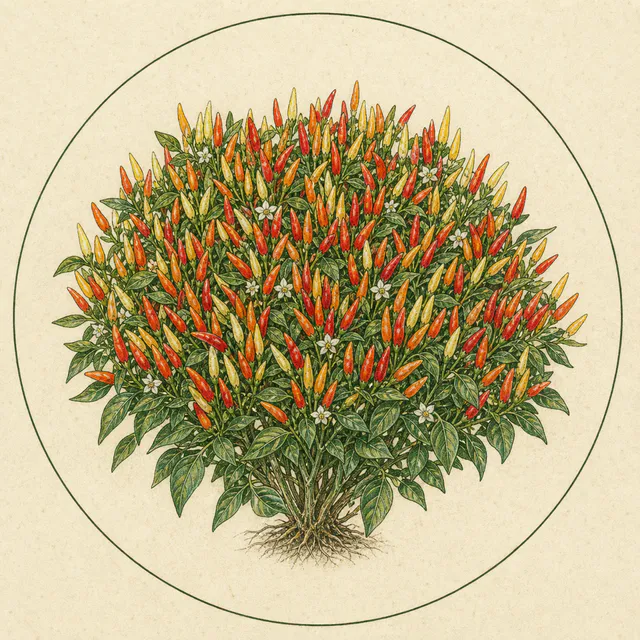
‘Prairie Fire’ is a very dwarf, compact chilli pepper, usually no more than about 30cm tall, smothered in exceptionally numerous small, hot fruits. The upright peppers change from creamy yellow through orange to bright red, producing a vivid flame-like display above the rounded plant.
Despite its ornamental scale, the fruits are edible and intensely hot; the cited crop recommendation describes heat reaching one million Scoville Heat Units. ‘Prairie Fire’ holds the RHS Award of Garden Merit and is particularly well suited to small containers and sunny windowsills.
Size
- Ultimate height
- 0.1–0.5 metre, typically around 30cm
- Ultimate spread
- 0.1–0.5 metre
- Time to ultimate size
- 1 year
Its naturally low mound needs no large support, though a container should be broad enough to keep the densely fruited plant stable.
Growing conditions
- Suitable soils
- Loam and sand
- Moisture
- Well-drained or moist but well-drained
- Soil pH
- Acid or neutral
Plant in fertile, free-draining compost and water regularly while allowing surplus water to escape. Apply high-potassium liquid feed after flowering to maintain the exceptional number of fruits.
Position and hardiness
- Light
- Full sun
- Aspect
- South- or west-facing
- Exposure
- Sheltered
- Hardiness
- H1C — suitable outdoors in summer at approximately 5–10°C, but not frost hardy
A warm greenhouse, conservatory or sunny windowsill provides dependable heat. Plants may stand outdoors in a hot sheltered place after frost risk, but must be protected from cold.
Colour and seasonal interest
Small white flowers give way to a dense crown of tiny upright peppers. Creamy yellow, glowing orange and scarlet-red fruits occur together, creating a multicoloured fiery effect without the purple stage characteristic of cultivars such as ‘Loco’.
Botanical details
- Family
- Solanaceae
- Native to Great Britain and Ireland
- No
- Foliage
- Deciduous
- Habit
- Bushy and compact
- Potentially harmful
- Fruits and sap may irritate skin or eyes; wear gloves and protective equipment when handling
- Synonym
- Capsicum annuum ‘Prairie Fire’
How to grow
Cultivation
Sow seed indoors with warmth from late winter to mid-spring. Prick seedlings into individual pots when large enough to handle, maintain bright light and pot on without over-sizing containers. Keep under glass or harden off after the last frost for a sheltered sunny position.
Water evenly, ventilate protected crops and begin high-potassium feeding when the first fruits set. Handle and prepare harvested chillies cautiously because of their exceptional heat, avoiding contact with eyes and sensitive skin.
Propagation
Propagate by seed.
Pruning
Pinch out the growing tip at about 20cm if additional branching is needed. The naturally dwarf plant otherwise requires only removal of damaged growth.
Pests
May be susceptible to glasshouse red spider mite and aphids. Inspect regularly, especially in warm dry protected conditions.
Diseases
May be affected by blossom end rot. Prevent large swings in compost moisture and avoid excessive feeding that disrupts calcium uptake.