
Salad Onions · Variety guide
Allium fistulosum ‘Photon’
Bunching onion ‘Photon’
This Allotment Pro editorial draft summarises the cited RHS cultivar profile and its linked crop guidance. Check the sources and adjust cultivation decisions for local conditions.Read the original RHS source
Overview
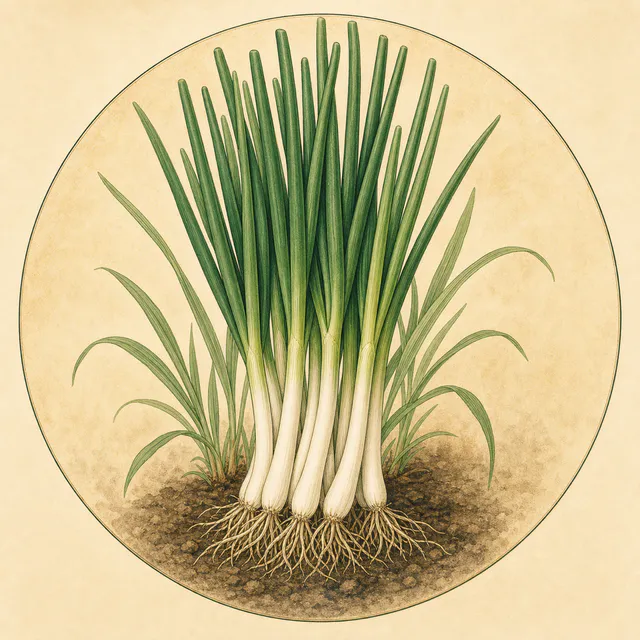
‘Photon’ is a bunching onion that forms clumps of elongated, straight white stems topped by hollow green leaves rather than rounded bulbs. Although botanically an evergreen perennial, it is also grown as an annual salad onion. Its unusually long cropping period can provide harvests from June through October without repeated succession sowings.
Plants left into a second year may send up stems bearing dense, spherical, greenish-white flower heads in early to midsummer. For the kitchen, pull younger plants whole or cut usable stems while they are tender and mild.
Size
- Ultimate height
- 0.1–0.5 metres, with flowering stems to about 60cm
- Ultimate spread
- 0.1–0.5 metres
- Time to ultimate size
- 1–2 years
- Habit
- Clump forming
Annual crops remain compact and upright. Allow more room where plants will be retained as perennial clumps or permitted to flower.
Growing conditions
- Suitable soils
- Chalk, loam or sand
- Moisture
- Moist but well drained, or well drained
- Soil pH
- Acid, alkaline or neutral
Choose fertile, freely drained soil and maintain steady moisture during active growth. Incorporating organic matter before sowing helps support the long harvest. In heavy clay that stays saturated through winter, grow ‘Photon’ in a container of free-draining compost instead.
Position and hardiness
- Light
- Full sun
- Aspect
- Any open aspect with good light
- Exposure
- Sheltered or exposed where drainage is reliable
- Hardiness
- H5 — hardy through a typical cold UK winter in suitable conditions
Full sun encourages sturdy, upright leaves and productive white stems. Its hardiness suits overwintering, but poor winter drainage can be more damaging than cold.
Colour and seasonal interest
| Season | Flowers | Foliage | Edible stems |
|---|---|---|---|
| Spring | — | Green | White and green |
| Summer | Greenish-white on second-year plants | Green | White and green |
| Autumn | — | Green | White and green |
| Winter | — | Green | — |
The edible crop has a clean two-tone appearance: long white shanks merge into upright, cylindrical green leaves. Second-year flowers are rounded, dense allium heads rather than the crop’s main feature.
Botanical details
- Family
- Amaryllidaceae
- Native to Great Britain and Ireland
- No
- Foliage
- Evergreen
- Habit
- Clump forming
- Name status
- Unresolved
How to grow
Cultivation
Grow in fertile, well-drained soil in full sun. Sow seed for an annual edible crop and keep plants watered during dry spells so stems remain tender. Pull or cut stems as required from June to October; the cultivar’s extended season reduces the need for repeated sowings. Containers are particularly useful on sites with wet, heavy winter soil.
Propagation
Propagate from seed.
Suggested locations
- Allotment or kitchen garden
- Cottage or informal garden
- Patio container
- Wildlife-friendly edible border
Pruning
No routine pruning is required. Remove old flower stems and tired foliage from overwintered clumps when necessary.
Pests
Slugs and snails may damage young growth, and allium leaf miner may affect leaves and stems. Inspect plants regularly and remove badly affected material.
Diseases
May be susceptible to onion white rot and onion downy mildew. Use clean ground, avoid waterlogging and crowding, and rotate allium crops where possible.