
Celery · Variety guide
Apium graveolens var. dulce ‘Loretta’
Celery ‘Loretta’
This Allotment Pro editorial draft summarises the cited RHS cultivar profile. Check the source and adjust cultivation decisions for local conditions.Read the original RHS source
Overview
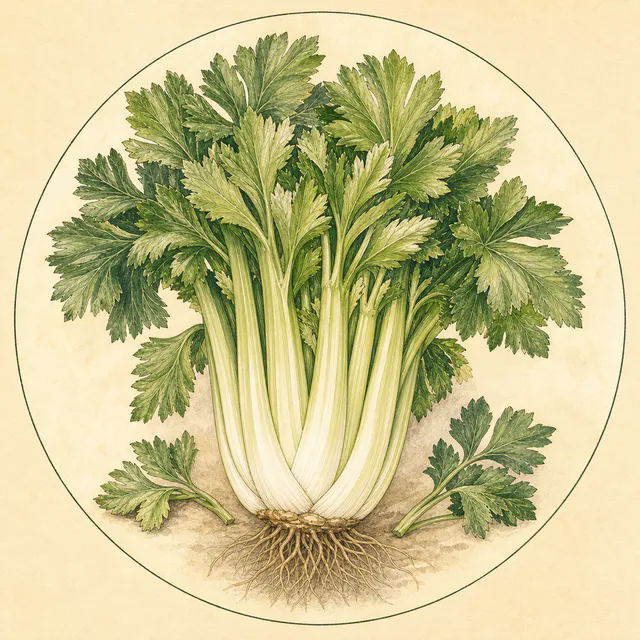
‘Loretta’ is a vigorous self-blanching celery, botanically biennial but normally cropped as an annual. Large, shiny, bright-green divided leaves rise above smooth, thick and fleshy leaf stalks that shade from pale green to white. The crunchy stems have a sweet flavour and the plant produces generous crops.
Size
- Ultimate height
- 0.1–0.5 metres
- Ultimate spread
- 0.1–0.5 metres
- Time to ultimate size
- 1 year
It reaches harvestable size within one growing season.
Growing conditions
- Suitable soils
- Clay and loam
- Moisture
- Moist but well-drained or poorly drained
- Soil pH
- Acid, neutral or alkaline
Keep the soil continuously moist to support thick, crisp stalk development.
Position and hardiness
- Light
- Full sun or partial shade
- Aspect
- East-, south- or west-facing
- Exposure
- Sheltered
- Hardiness
- H2 — tolerant of low temperatures but not surviving frost
Use a sheltered block and avoid exposing young plants or mature stalks to frost.
Colour and seasonal interest
No seasonal colour values are assigned. The crop has shiny bright-green divided foliage and smooth fleshy stalks graduating from pale green to white.
Botanical details
- Family
- Apiaceae
- Native to Great Britain and Ireland
- No
- Foliage
- Deciduous
- Habit
- Clump-forming
- Name status
- Accepted
- Potentially harmful
- Plant sap may harm skin in sunlight; wear gloves and protective clothing when handling
How to grow
Cultivation
Sow seed in containers in spring, pot seedlings on once large enough to handle, then plant outdoors in late spring or early summer. Set self-blanching plants in a close block so they shade one another. Keep them moist at all times and harvest from late summer to mid-autumn.
Propagation
Propagate by seed.
Pruning
No pruning is required.
Pests
Plants may be susceptible to slugs and snails.
Diseases
Plants may be susceptible to celery leaf spot.