
Celery · Variety guide
Apium graveolens var. dulce ‘Granada’
Celery ‘Granada’
This Allotment Pro editorial draft summarises the cited RHS cultivar profile. Check the source and adjust cultivation decisions for local conditions.Read the original RHS source
Overview
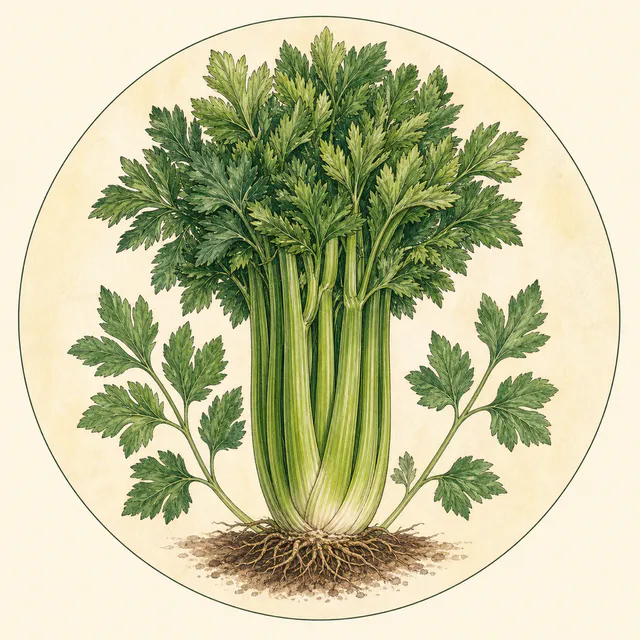
‘Granada’ is a strong, high-yielding green celery producing a compact columnar plant of tightly bunched upright stalks. Its close habit supports self-blanching, while good disease tolerance makes it a dependable choice for a substantial crop of green stems.
Size
- Ultimate height
- 0.1–0.5 metres
- Ultimate spread
- 0.1–0.5 metres
- Time to ultimate size
- 1 year
Plants complete their harvest cycle within one year.
Growing conditions
- Suitable soils
- Chalk, clay, loam and sand
- Moisture
- Moist but well-drained
- Soil pH
- Acid, neutral or alkaline
Maintain fertile soil and steady moisture to fill out the tightly grouped stalks.
Position and hardiness
- Light
- Full sun
- Aspect
- East-, south- or west-facing
- Exposure
- Sheltered
- Hardiness
- H2 — tolerant of low temperatures but not surviving frost
Harden plants carefully and use a sheltered site protected from late cold and autumn frost.
Colour and seasonal interest
No seasonal colour values are assigned. Its defining appearance is a dense, upright bunch of green celery stalks topped by divided green leaves.
Botanical details
- Family
- Apiaceae
- Native to Great Britain and Ireland
- No
- Foliage
- Deciduous
- Habit
- Columnar and upright
- Name status
- Accepted
- Potentially harmful
- Plant sap may harm skin in sunlight; wear gloves and protective clothing when handling
How to grow
Cultivation
Harden plants before moving them outdoors in May. Space them 25cm apart so neighbouring growth aids self-blanching. Keep the soil well watered and apply a high-nitrogen fertiliser once the plants have established.
Propagation
Propagate by seed.
Suggested locations
Suitable for cottage and informal gardens as well as productive plots.
Pruning
No pruning is required.
Pests
Plants may be susceptible to slugs and snails.
Diseases
The cultivar is generally disease-free and the profile notes good disease tolerance.