
Chilli Peppers · Variety guide
Capsicum annuum ‘Hungarian Hot Wax’
Chilli pepper ‘Hungarian Hot Wax’
This Allotment Pro editorial draft summarises the cited RHS cultivar profile. Check the source and adjust cultivation decisions for local conditions.Read the original RHS source
Overview
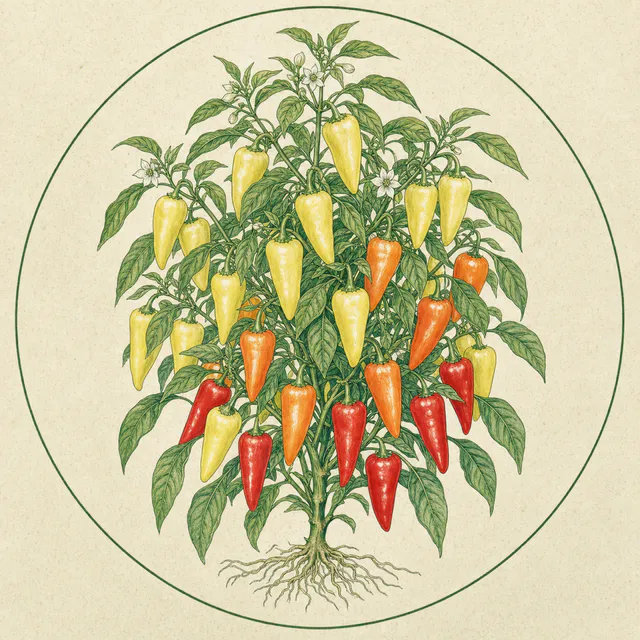
‘Hungarian Hot Wax’ is an early, bushy chilli pepper valued for excellent yields of substantial conical fruits. The peppers grow to about 10cm long and pass conspicuously from pale yellow through orange to red as they mature, so several colours may decorate one plant at once.
The flesh has a medium-hot flavour with a citrus hint, rated around 5,000–15,000 Scoville Heat Units. The cultivar performed as a consistent, healthy plant in trial, held its good-sized crop well and holds the RHS Award of Garden Merit.
Size
- Ultimate height
- 0.5–1 metre
- Ultimate spread
- 0.1–0.5 metre
- Trial size
- Approximately 85cm high by 60cm wide
- Time to ultimate size
- 1 year
Its branching framework is compact enough for a large container, but the weight of numerous 10cm fruits may justify discreet support.
Growing conditions
- Suitable soils
- Loam and sand
- Moisture
- Well-drained or moist but well-drained
- Soil pH
- Acid or neutral
Use fertile, free-draining soil or compost and water consistently without leaving roots saturated. Once flowering begins, apply a high-potassium liquid feed regularly to support fruit set and ripening.
Position and hardiness
- Light
- Full sun
- Aspect
- South- or west-facing
- Exposure
- Sheltered
- Hardiness
- H1C — suitable outdoors in summer at approximately 5–10°C, but not frost hardy
Grow under glass for the most reliable crop. Plants can move outdoors to a hot sheltered position only after frost risk has passed and should be returned to protection before cold autumn nights.
Colour and seasonal interest
White flowers appear among narrow lance-shaped green leaves. The smooth, thick conical fruits begin waxy yellow, become warm orange and finally ripen red. This simultaneous three-colour display is the cultivar’s clearest ornamental signature.
Botanical details
- Family
- Solanaceae
- Native to Great Britain and Ireland
- No
- Foliage
- Deciduous
- Habit
- Bushy
- Potentially harmful
- Fruits and sap may irritate skin or eyes; wear gloves and protective equipment when handling
How to grow
Cultivation
Sow seed with warmth indoors from late winter to mid-spring. Move seedlings into individual pots once large enough to handle and keep them in strong light. Pot on gradually, or harden plants off after the last frost for a sheltered outdoor position.
Maintain even moisture and good ventilation. Feed with a high-potassium fertiliser after fruit set. Harvest yellow fruits for their distinctive colour and flavour, or leave them to develop through orange to fully ripe red.
Propagation
Propagate by seed.
Pruning
Pinch out the growing tip when plants reach about 20cm to encourage a well-branched bush. Remove only damaged or congested growth later.
Pests
May be susceptible to aphids, glasshouse whitefly and glasshouse red spider mite. Inspect shoot tips and leaf undersides frequently.
Diseases
May be susceptible to viruses, fungal wilt, anthracnose and powdery mildew. Use clean pots and tools, ventilate well and remove affected material promptly.