
Chilli Peppers · Variety guide
Capsicum annuum ‘Apache’
Chilli pepper ‘Apache’
This Allotment Pro editorial draft summarises the cited RHS cultivar profile. Check the source and adjust cultivation decisions for local conditions.Read the original RHS source
Overview
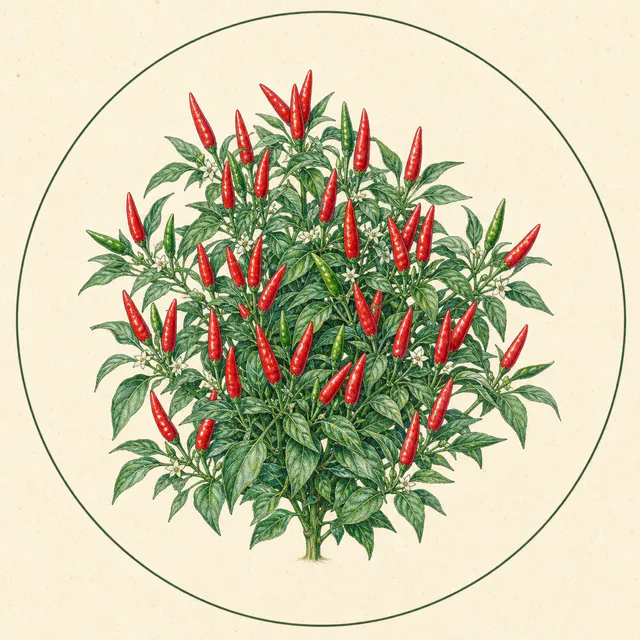
‘Apache’ is a compact, bushy F1 chilli pepper carrying many white summer flowers followed by abundant medium-to-hot fruits. The slender conical chillies reach about 7cm long, begin green and ripen to a bright glossy red. At roughly 80,000 Scoville Heat Units, they provide substantial heat from a plant small enough for a sunny windowsill, patio pot or greenhouse bench.
The cultivar holds the RHS Award of Garden Merit. Trial plants have shown a strong compact habit and an unusually heavy crop for their size, with fruit displayed clearly throughout the plant.
Size
- Ultimate height
- 0.1–0.5 metre
- Ultimate spread
- 0.1–0.5 metre
- Time to ultimate size
- 1 year
Its restrained size makes ‘Apache’ useful where taller chilli cultivars would be difficult to support. A single plant fits a 22cm (9in) final container.
Growing conditions
- Suitable soils
- Loam and sand
- Moisture
- Well-drained or moist but well-drained
- Soil pH
- Acid or neutral
Use fertile soil or peat-free multi-purpose compost that drains freely while retaining steady moisture. Water regularly once plants are in active growth and feed with high-potassium liquid fertiliser after the first fruit has set.
Position and hardiness
- Light
- Full sun
- Aspect
- South- or west-facing
- Exposure
- Sheltered
- Hardiness
- H1C — suitable outdoors in summer at approximately 5–10°C, but not frost hardy
Grow on a sunny windowsill, in a greenhouse or outdoors only after frost risk has passed and nights remain reliably warm. A sheltered sun-baked position helps the heavy fruit crop ripen red.
Colour and seasonal interest
Green foliage and stems carry small white flowers in summer. Fruits appear green, then turn vivid bright red through summer and autumn. The numerous evenly distributed chillies make the compact plant particularly ornamental at peak ripeness.
Botanical details
- Family
- Solanaceae
- Native to Great Britain and Ireland
- No
- Foliage
- Deciduous
- Habit
- Bushy
- Name status
- Accepted
- Potentially harmful
- Fruits and sap may irritate skin or eyes; wear gloves and protective equipment when handling
How to grow
Cultivation
Sow indoors from late winter to mid-spring at about 21°C (70°F), then keep emerged seedlings warm and in strong light. Pot on gradually. Grow inside on a sunny windowsill or in a greenhouse, or harden plants off and move them outside after all frost danger has passed. Use containers, peat-free growing bags or fertile open ground in a sunny sheltered position.
Water evenly and apply a high-potassium liquid feed once fruit has set. Pick green fruits for maximum overall yield, or allow later chillies to become bright red and hotter on the plant.
Propagation
Propagate by seed.
Pruning
Pinching is not essential. If required, pinch the growing tip when the plant is well established to encourage an even bushier framework.
Pests
May be susceptible to aphids, glasshouse whitefly and glasshouse red spider mite. Check leaf undersides regularly, particularly indoors.
Diseases
May be susceptible to virus diseases, fungal wilt, anthracnose and powdery mildews. Maintain hygiene, airflow and steady watering.