
Squashes · Variety guide
Cucurbita maxima ‘Crown Prince’ AGM
Squash ‘Crown Prince’
This Allotment Pro editorial draft summarises the cited RHS cultivar profile and its linked crop guidance. Check the sources and adjust cultivation decisions for local conditions.Read the original RHS source
Overview
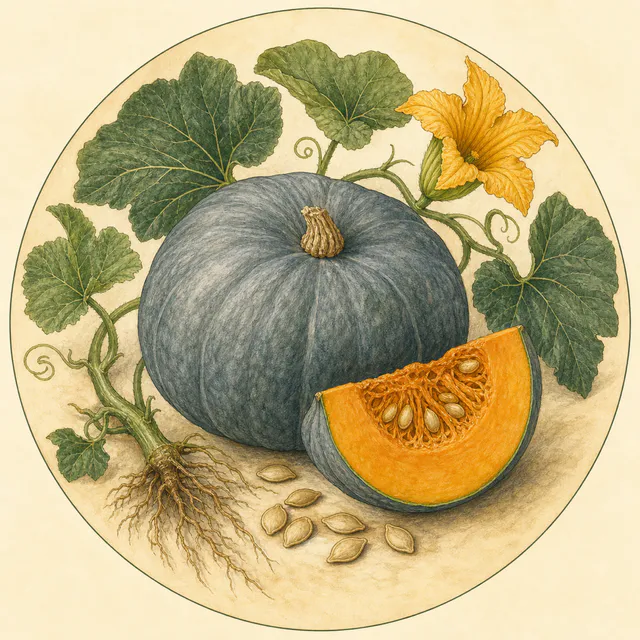
‘Crown Prince’ is a trailing winter squash producing large, rounded fruits with distinctive blue-grey skin. Each mature fruit generally weighs 2–4kg and contains bright-orange flesh with a sweet, nutty flavour. The long vines can reach about 3m, so this is a cultivar for generous ground space or very strong training supports rather than a compact container.
Sow in spring for harvest from summer into autumn. Mature fruits combine a flattened round form, muted blue-grey rind and vivid flesh, making the cultivar easy to distinguish at harvest and useful for winter storage. The RHS profile also records Cucurbita moschata ‘Crown Prince’ as a synonym while accepting the title under Cucurbita maxima.
Size
- Ultimate height
- 2.5–4 metres
- Ultimate spread
- 2.5–4 metres
- Time to ultimate size
- 1 year
- Habit
- Trailing
The quoted dimensions describe the reach of a vigorous annual vine rather than an upright plant. Allocate a wide growing area, guide stems around the plot, or use a structure capable of supporting both foliage and heavy fruits.
Growing conditions
- Suitable soils
- Loam or sand
- Moisture
- Moist but well drained, or well drained
- Soil pH
- Acid or neutral
Grow in rich, fertile soil that holds enough moisture for rapid summer growth but drains freely. Incorporate mature organic matter before planting and water regularly once flowering and fruit swelling begin. Avoid waterlogged ground around the crown.
Position and hardiness
- Light
- Full sun
- Aspect
- South- or west-facing
- Exposure
- Sheltered
- Hardiness
- H2 — tolerant of low temperatures but not surviving being frozen
This tender annual needs the warmest available growing position. Harden plants off before setting them outside in June, after frost risk has passed, and harvest all fruits before autumn frost. Full sun helps the large winter squashes ripen and develop storage-quality skins.
Colour and seasonal interest
| Season | Flowers | Foliage | Fruit |
|---|---|---|---|
| Spring | — | Young green growth | — |
| Summer | Yellow | Green | Developing blue-grey fruit |
| Autumn | — | Fading green | Blue, grey and silver skin; bright-orange flesh |
| Winter | — | — | Stored mature fruit |
Golden-yellow cucurbit flowers precede the striking muted fruits. The contrast between the blue-grey exterior and orange flesh is the cultivar’s strongest visual identifier.
Botanical details
- Family
- Cucurbitaceae
- Native to Great Britain and Ireland
- No
- Lifecycle
- Annual or biennial
- Foliage
- Deciduous
- Habit
- Trailing
- Name status
- Accepted
- Award
- RHS Award of Garden Merit
How to grow
Cultivation
Start indoors from mid- to late April. Sow one seed on its side about 1.5cm deep in each individual pot. Keep seedlings warm and bright, then harden them off before transplanting to their final sunny position in June. Follow the parent squash guide for rich planting pockets, trailing-plant spacing, watering and feeding.
Allow the vines to trail or train them carefully around the allotted area. Place a board or tile beneath swelling fruits to keep their skins away from damp soil. Leave fruits to ripen fully in sun, then cut them before frost with a generous section of stem attached.
Propagation
Propagate by seed. Individual pots minimise root disturbance when planting out.
Suggested locations
- Allotment or kitchen garden
- Cottage or informal garden
- Large sunny border
- Strong arch or pergola where heavy fruits can be supported
Pruning
The exact profile says no pruning is required. Where space is limited, the parent guide allows stray trailing stems to be redirected or shortened without routinely pruning the whole plant.
Pests
Slugs and snails may damage seedlings and young growth. Protect newly planted squash and check beneath dense foliage and nearby shelter.
Diseases
Grey mould and powdery mildew may occur. Preserve airflow, water at soil level and remove decaying flowers or damaged tissue promptly.