
Florence Fennel · Variety guide
Foeniculum vulgare var. azoricum ‘Rondo’
Fennel (Florence) ‘Rondo’
This Allotment Pro editorial draft summarises the cited RHS cultivar profile. Check the source and adjust cultivation decisions for local conditions.Read the original RHS source
Overview
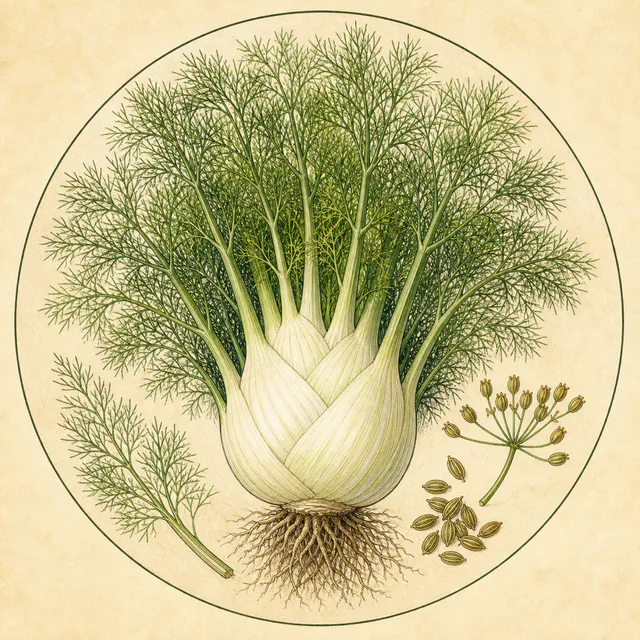
‘Rondo’ is an aniseed-flavoured Florence fennel grown for swollen, overlapping leaf bases that form a bulb-like structure in its first year. It is a quick-growing early cropper, valued for producing uniform bulbs and suitable for growing under cover. Feathery foliage gives the plant an airy appearance above its substantial pale base.
Plants left beyond the vegetable harvest may produce flat, delicate umbels of small yellow flowers in their second year. The RHS profile displays the Award of Garden Merit and recognises the plant as useful to pollinating insects.
Size
- Ultimate height
- 1–1.5 metres
- Ultimate spread
- 0.5–1 metre
- Time to ultimate size
- 1 year
Although the edible base is compact, the foliage can become tall and broad if allowed to grow on. Give plants suitable headroom when using protected cultivation.
Growing conditions
- Suitable soils
- Clay or loam
- Moisture
- Moist but well-drained
- Soil pH
- Acid, neutral or alkaline
Prepare fertile soil that retains moisture while draining freely. Even growth is important for forming the cultivar’s uniform swollen bases.
Position and hardiness
- Light
- Full sun or partial shade
- Aspect
- South-, east- or west-facing
- Exposure
- Sheltered
- Hardiness
- H2 — tolerant of low temperatures but unable to survive freezing
A sheltered position supplies the warmth required by this early cultivar. Under-cover growing can bring the crop forward, but ventilation and consistent watering remain important.
Colour and seasonal interest
Green feathery foliage appears through the growing season above white swollen stems in summer and autumn. If the plant remains for a second year, small yellow flowers are carried in flat umbels. Harvest-year plants are distinguished chiefly by their uniform pale bulb-like bases.
Botanical details
- Family
- Apiaceae
- Native to Great Britain and Ireland
- No
- Foliage
- Deciduous
- Habit
- Clump forming
- Name status
- Accepted
How to grow
Cultivation
Grow in moist but well-drained soil in full sun. Maintain regular moisture and harvest the swollen bases at vegetable maturity. Do not allow unwanted seedlings to establish if plants are retained to flower.
Propagation
Propagate by seed.
Suggested locations
- Wildlife garden
- Protected edible garden
- Sunny vegetable plot
Pruning
No pruning is required. Harvest plants when mature.
Pests
May be susceptible to slugs and snails, particularly while young. Protect seedlings and inspect sheltered ground around the developing base.
Diseases
The cultivar is generally disease-free. Free drainage and suitable spacing support healthy growth under cover or outdoors.