
Celery · Variety guide
Apium graveolens var. dulce ‘Tall Utah 52/70’
Celery ‘Tall Utah 52/70’
This Allotment Pro editorial draft summarises the cited RHS cultivar profile. Check the source and adjust cultivation decisions for local conditions.Read the original RHS source
Overview
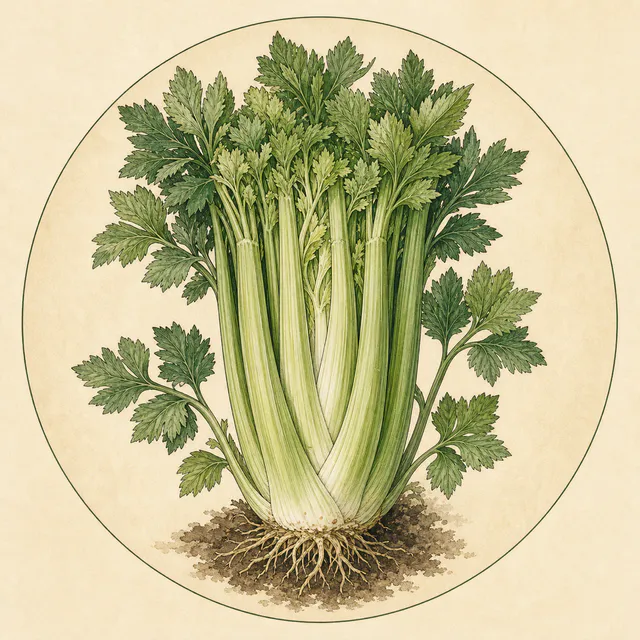
‘Tall Utah 52/70’ is a tall celery cultivar with tightly folded hearts and a columnar upright habit. It produces high yields of thick, crisp, stringless pale-green stalks. The self-blanching crop does not require traditional earthing up, simplifying its summer care.
Size
- Ultimate height
- 0.1–0.5 metres
- Ultimate spread
- 0.1–0.5 metres
- Time to ultimate size
- 1 year
These are the size values assigned by the exact profile, despite the cultivar’s “Tall” name and description.
Growing conditions
- Suitable soils
- Clay, loam and sand
- Moisture
- Well-drained or moist but well-drained
- Soil pH
- Acid, neutral or alkaline
Fertile ground should drain freely while remaining consistently moist during stalk growth.
Position and hardiness
- Light
- Full sun
- Aspect
- South- or west-facing
- Exposure
- Sheltered
- Hardiness
- H2 — tolerant of low temperatures but not surviving frost
Protect young plants from chilling and harvest before damaging frost.
Colour and seasonal interest
No seasonal colours are assigned. The defining visual traits are a densely folded heart and thick upright stalks in a clear pale green.
Botanical details
- Family
- Apiaceae
- Native to Great Britain and Ireland
- No
- Foliage
- Deciduous
- Habit
- Columnar and upright
- Name status
- Unresolved
- Potentially harmful
- Plant sap may harm skin in sunlight; wear gloves and protective clothing when handling
How to grow
Cultivation
Grow in full sun in fertile, moist but well-drained soil. Sow indoors between March and April in trays or modules, then transplant seedlings to final positions once large enough to handle and temperatures are mild. Low temperatures can cause bolting. Traditional earthing up is not required.
Propagation
Propagate by seed.
Pruning
No pruning is required.
Pests
Plants may be susceptible to celery leaf-mining fly, slugs and snails.
Diseases
Plants may be susceptible to celery leaf spot.