
Chilli Peppers · Variety guide
Capsicum annuum (Longum Group) ‘Fuego’
Chilli pepper ‘Fuego’
This Allotment Pro editorial draft summarises the cited RHS cultivar profile and linked RHS trial evidence. Check the source and adjust cultivation decisions for local conditions.Read the original RHS source
Overview
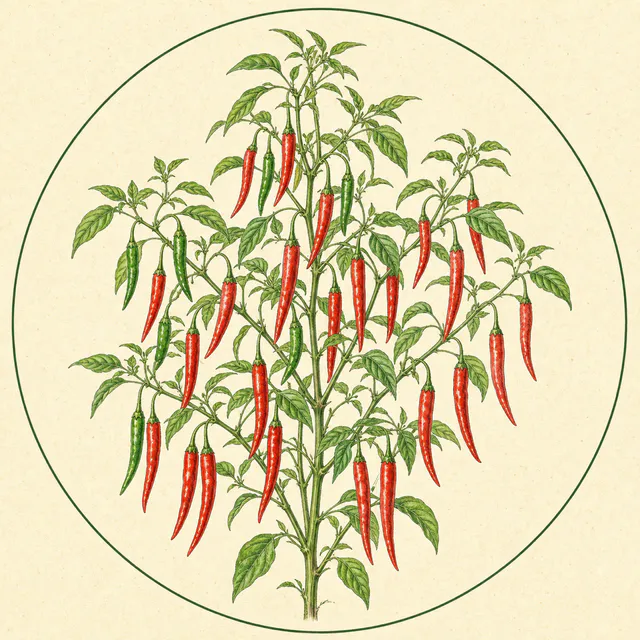
‘Fuego’ is a cayenne-type chilli pepper producing plentiful, evenly sized long tapering fruits. Chillies are held on long stalks with useful spacing between them, helping the vigorous plant carry its crop cleanly. Fruits ripen from green to glossy red and reach about 30,000–50,000 Scoville Heat Units.
The cultivar holds the RHS Award of Garden Merit and is more tolerant of cool conditions than many chillies. RHS trial plants remained strong under a heavy crop and reached about 95cm tall by 55cm wide.
Size
- Ultimate height
- 0.5–1 metre
- Ultimate spread
- 0.1–0.5 metre
- Trial size
- Approximately 95cm high by 55cm wide
- Time to ultimate size
- 1 year
This is a taller cultivar than compact patio chillies and benefits from canes before fruit weight bends the branches.
Growing conditions
- Suitable soils
- Loam and sand
- Moisture
- Well-drained or moist but well-drained
- Soil pH
- Acid or neutral
Use fertile soil or peat-free compost that holds even moisture without becoming saturated. Feed with a high-potassium liquid fertiliser after fruit set to support the long developing chillies.
Position and hardiness
- Light
- Full sun
- Aspect
- South- or west-facing
- Exposure
- Sheltered
- Hardiness
- H1C — suitable outdoors in summer at approximately 5–10°C, but not frost hardy
Although comparatively cold tolerant, ‘Fuego’ crops best in a greenhouse or polytunnel. Move it outdoors only after frost risk has passed and night temperatures are reliably warm.
Colour and seasonal interest
White summer flowers are followed by slender dark-green cayenne fruits that lengthen and turn vivid red as they mature. The well-spaced hanging chillies create a clean, open display rather than dense upright clusters.
Botanical details
- Family
- Solanaceae
- Group
- Longum Group
- Native to Great Britain and Ireland
- No
- Foliage
- Deciduous
- Habit
- Upright and bushy
- Potentially harmful
- Fruits and sap may irritate skin or eyes; wear gloves and protective equipment when handling
How to grow
Cultivation
Sow indoors from late winter to mid-spring at about 21°C (70°F). Move emerged seedlings into strong light at 16–18°C (60–64°F) and pot on as roots fill each container. Grow in a sunny greenhouse, polytunnel or conservatory, or harden off for a sheltered outdoor site after all danger of frost.
Water evenly, ventilate in temperatures above 30°C (86°F), and feed weekly with high-potassium fertiliser after flowering. Support the tall branches with canes. Pick green fruit for maximum total yield or allow later chillies to become fully red and hotter.
Propagation
Propagate by seed.
Pruning
Pinching is optional and may delay fruiting. Remove only damaged shoots and tie the brittle fruiting branches to supports.
Pests
May be susceptible to aphids, glasshouse whitefly and glasshouse red spider mite. Inspect foliage frequently under cover.
Diseases
May be affected by virus diseases, fungal wilt, anthracnose or powdery mildews. Maintain good hygiene, airflow and steady watering.