
Squashes · Variety guide
Cucurbita pepo ‘Sunbeam’ AGM
Courgette ‘Sunbeam’
This Allotment Pro editorial draft summarises the cited RHS cultivar profile and its linked crop guidance. Check the sources and adjust cultivation decisions for local conditions.Read the original RHS source
Overview
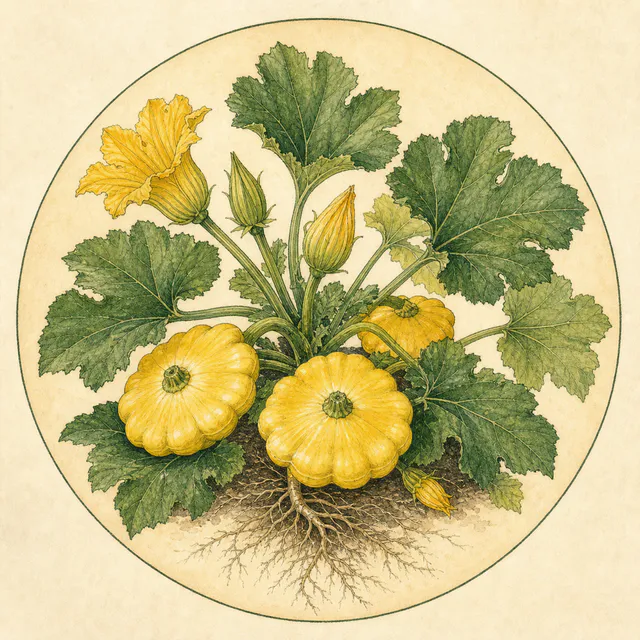
‘Sunbeam’ is a non-trailing summer squash with green leaves and yellow flowers. These develop into yellow patty-pan fruits that should be harvested and eaten young, before the pips develop. The compact, spreading-branched habit distinguishes it from trailing winter squash and makes it useful in containers.
The literal cultivar source redirects to the current RHS plant-ID profile titled Cucurbita pepo ‘Sunbeam’, where the common name is courgette ‘Sunbeam’. The profile shows both the RHS Award of Garden Merit and Plants for Pollinators status.
Size
- Ultimate height
- 0.1–0.5 metres
- Ultimate spread
- 0.5–1 metre
- Time to ultimate size
- 1 year
- Habit
- Spreading and branched
This low, compact form fits a large pot or a smaller open-ground growing site. Leave enough space around the foliage for airflow and easy frequent picking.
Growing conditions
- Suitable soils
- Loam, sand, chalk or clay
- Moisture
- Moist but well drained
- Soil pH
- Acid, neutral or alkaline
Grow in rich, fertile, well-drained ground. Add mature organic matter before planting and maintain even moisture during flowering and repeated fruit production.
Position and hardiness
- Light
- Full sun
- Aspect
- South-, west-, east- or north-facing
- Exposure
- Sheltered
- Hardiness
- H1c — suitable outdoors in summer at approximately 5–10°C or warmer, but not frost hardy
Plant outside only after frost risk and choose a warm sheltered position. The broad aspect range does not replace the profile’s full-sun requirement.
Colour and seasonal interest
| Season | Flowers | Foliage | Fruit |
|---|---|---|---|
| Spring | — | Young green growth | — |
| Summer | Yellow | Green | Yellow patty pans |
| Autumn | Yellow where growth continues | Green | Yellow patty pans |
| Winter | — | — | — |
The most useful identifiers are the compact green clump, golden flowers and small yellow scallop-edged fruits. Flowers also offer nectar and pollen to visiting insects.
Botanical details
- Family
- Cucurbitaceae
- Native to Great Britain and Ireland
- No
- Lifecycle
- Annual or biennial
- Foliage
- Deciduous
- Habit
- Spreading and branched
- Name status
- Accepted
- Award
- RHS Award of Garden Merit
- Wildlife value
- RHS Plants for Pollinators
How to grow
Cultivation
Grow in rich, fertile, well-drained soil in full sun. Start seed indoors using the parent squash guide’s warm sowing method, harden plants off and transplant only after frost risk. Set one plant in a large container or give the open-ground clump sufficient room.
Water consistently at soil level and feed container crops once fruits begin swelling. Harvest yellow patty pans frequently while small and tender, before seeds harden, to encourage further production.
Propagation
Propagate by seed. Individual pots minimise disturbance to tender roots before planting out.
Suggested locations
- Patio or large container
- Wildlife garden
- Allotment or kitchen garden
- Sunny edible border
Pruning
No pruning is required. Remove only damaged or decaying tissue and pick fruit regularly.
Pests
Slugs and snails may damage seedlings and young foliage. Protect new plants and inspect under the spreading canopy.
Diseases
Grey mould and powdery mildew may occur. Avoid crowding, water near the soil and remove decaying flowers or damaged tissue.