
Swedes · Variety guide
Brassica napus (Napobrassica Group) ‘Gowrie’ PBR AGM
Swede ‘Gowrie’
This Allotment Pro editorial draft summarises the cited RHS cultivar profile and its linked crop guidance. Check the sources and adjust cultivation decisions for local conditions.Read the original RHS source
Overview
‘Gowrie’ is a hardy biennial grown as an annual root vegetable. It is an easy-to-grow purple-skinned swede with superior taste, very strong winter hardiness and long holding ability in the ground. High resistance to powdery mildew helps its foliage remain productive during the long growing season.
This clump-forming cultivar holds the RHS Award of Garden Merit and Plant Breeders’ Rights. Its combination of cold tolerance, long harvest window and disease resistance makes it particularly useful for winter cropping.
Size
- Ultimate height
- 0.1–0.5 metres
- Ultimate spread
- 0.1–0.5 metres
- Time to ultimate size
- 1 year
- Habit
- Clump-forming
The leafy crown remains compact above the swollen root. Use the profile’s 25cm final spacing so roots have room to round out and foliage can dry after rain.
Growing conditions
- Suitable soils
- Sand or loam
- Moisture
- Well drained
- Soil pH
- Neutral or alkaline
Grow in firm, non-acid soil. Prepare ground with organic matter well before sowing, remove large stones and compact the seedbed so roots develop evenly.
Position and hardiness
- Light
- Full sun
- Aspect
- South- or west-facing
- Exposure
- Sheltered
- Hardiness
- H4 — hardy through most of the UK, tolerating approximately −10 to −5°C
‘Gowrie’ is described as very winter hardy and can hold well in the ground. Full sun and shelter support steady root growth, while winter protection remains sensible in severe weather or wet soil.
Colour and seasonal interest
| Season | Foliage | Root |
|---|---|---|
| Spring | — | — |
| Summer | Green | Developing purple and cream root |
| Autumn | Green | Mature purple-skinned root |
| Winter | Reduced or harvested | Held mature root |
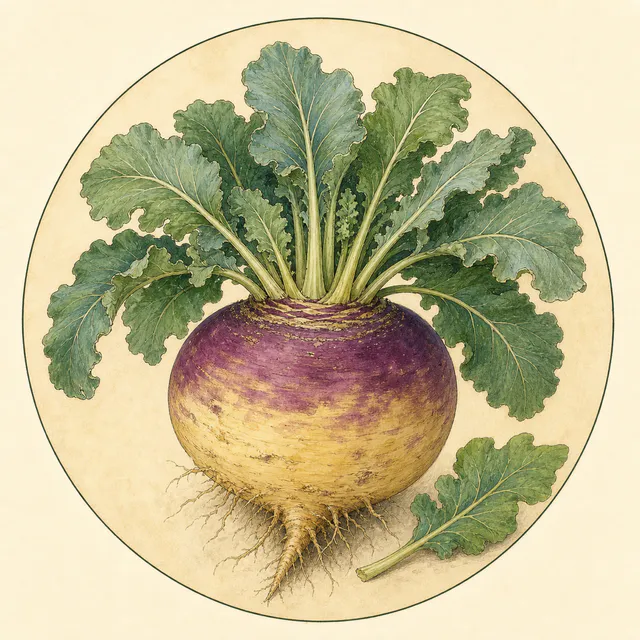
The crop’s chief identifier is its large rounded swede root with a purple upper skin and creamy lower portion, beneath a green brassica crown.
Botanical details
- Family
- Brassicaceae
- Native to Great Britain and Ireland
- No
- Lifecycle
- Biennial grown as an annual
- Foliage
- Deciduous
- Habit
- Clump-forming
- Name status
- Accepted
- Award
- RHS Award of Garden Merit
- Plant Breeders’ Rights
- Yes
How to grow
Cultivation
Sow outdoors from May to July where plants will crop. Sow thinly 1.5cm deep in well-compacted non-acid soil, leaving 45cm between rows. Thin seedlings to 25cm apart. Make additional succession sowings to extend the winter harvest.
Keep the soil evenly moist and weed carefully around developing roots. The parent guide provides further advice on mulching, mesh protection, harvest sizing and overwinter storage.
Propagation
Propagate by seed. Direct sowing avoids disturbance to the developing root.
Pruning
No pruning is required. Remove only badly damaged or diseased leaves.
Pests
Potential pests include cabbage caterpillars, cabbage root fly, cabbage whitefly, flea beetles, cutworms, swede midge, slugs, snails, mealy cabbage aphid and birds. Use crop rotation, insect-proof mesh and regular inspection.
Diseases
The profile lists possible black rot, club root and leaf spot, while noting high resistance to powdery mildew. Maintain rotation, suitable soil pH and good drainage; resistance does not guarantee immunity under severe pressure.