
Runner Beans · Variety guide
Phaseolus coccineus ‘Enorma Elite’ AGM
Runner bean ‘Enorma Elite’
This Allotment Pro editorial draft summarises the cited RHS cultivar profile and its linked crop guidance. Check the sources and adjust cultivation decisions for local conditions.Read the original RHS source
Overview
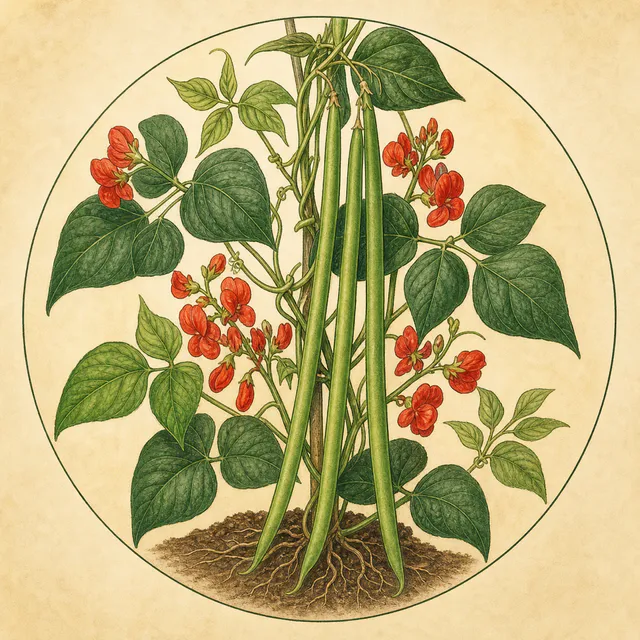
‘Enorma Elite’ is an RHS award-winning climbing runner bean that crops heavily with fine-textured green beans. Its smooth, straight, slender pods may reach 50cm under exhibition growing, making it a notable local-show cultivar as well as a productive kitchen crop. Scarlet flowers are attractive to bees and other pollinating insects.
The accepted cultivar grows rapidly to full size in one season. Harvesting the pods younger than their maximum exhibition length gives the best tenderness for cooking, while regular picking sustains further flowering.
Size
- Ultimate height
- 1.5–2.5 metres
- Ultimate spread
- 0.1–0.5 metres
- Time to ultimate size
- One year
- Potential pod length
- Up to 50cm
- Habit
- Climbing
Erect a sturdy support about 2.5m high before planting. Give the very long pods clear hanging space and easy access so they can develop straight and be picked without damage.
Growing conditions
- Suitable soils
- Chalk, clay, loam or sand enriched with organic matter
- Moisture
- Moist but well drained
- Preferred pH
- Acid, alkaline or neutral
Prepare the site with plenty of well-rotted compost or manure. Maintain even root moisture from flowering onward, especially while the long pods are swelling. Mulching warmed soil reduces water stress and supports a fine, smooth pod texture.
Position and hardiness
- Light
- Full sun
- Aspect
- Any aspect with adequate direct sun
- Exposure
- Exposed or sheltered, with a securely anchored frame
- Hardiness
- H3; nevertheless grown as a frost-tender annual crop
Wait until frost risk has passed before planting outside. Harden seedlings gradually and choose a site where the tall support will remain stable. A sunny open position promotes strong growth and abundant flowers.
Colour and seasonal interest
Green trifoliate foliage covers the climbing vine. Clusters of vivid scarlet-red flowers appear in summer and autumn, followed by numerous very long, smooth, straight green pods. The combination of red flowers and exceptionally slender exhibition-length beans is the cultivar’s clearest visual identity.
Botanical details
- Family
- Fabaceae
- Native to Great Britain and Ireland
- No
- Foliage
- Deciduous
- Habit
- Climbing
- Name status
- Accepted
- RHS recognition
- Award of Garden Merit and Plants for Pollinators
How to grow
Cultivation
Sow 5cm deep indoors from mid-April, or outdoors once frost has passed and soil is at least 12°C. Plant beside a strong cane or net frame in fertile moisture-retentive soil. Guide shoots onto the support, water frequently when flowers and pods develop, and feed container plants every two weeks with a high-potassium fertiliser after first bloom.
Pinch the leader at the top of the support. Pick kitchen beans around 20–25cm while they snap cleanly, or grow carefully selected straight pods longer for showing. Harvest every two or three days to maintain production.
Propagation
Propagate from seed. Raise one seedling per small pot, harden it off and plant outdoors in late May or early June. Protect direct sowings from cold wet ground and animal damage.
Suggested locations
- Allotment exhibition bean frame
- Productive kitchen garden
- Cottage or informal garden
- Wildlife-friendly edible garden
- Sunny wall-side support
Pruning
No formal pruning is required. Pinch out the top after it reaches the support’s full height and remove spent growth after the season.
Pests
Slugs and snails can damage seedlings, while blackfly may colonise tender shoots. Protect plants during establishment and monitor growing tips.
Diseases
May be susceptible to runner and French bean rust. Maintain airflow, practise rotation and avoid leaving foliage wet overnight.