
Salad Leaves · Variety guide
Spinacia oleracea ‘Apollo’ AGM
Spinach ‘Apollo’ AGM
This Allotment Pro editorial draft summarises the cited RHS cultivar profile and its linked crop guidance. Check the sources and adjust cultivation decisions for local conditions.Read the original RHS source
Overview
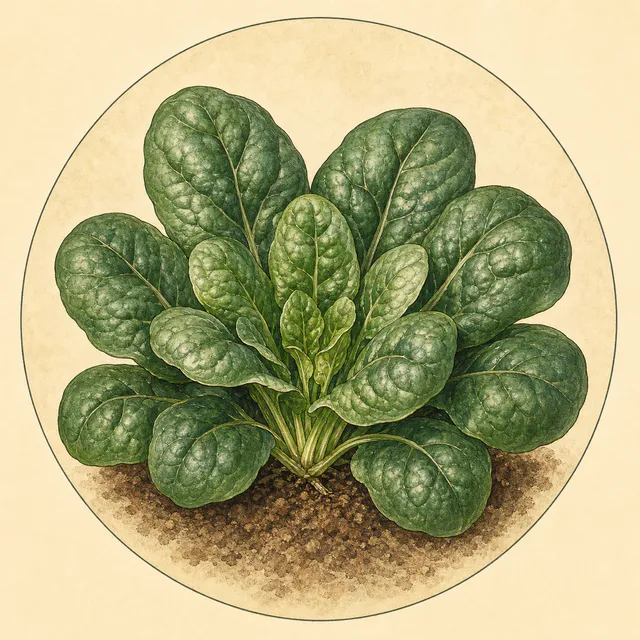
‘Apollo’ is an award-winning spinach with good yields of thick, juicy, rounded leaves. The medium-textured foliage is slightly blistered and develops from medium to dark green. It grows comparatively slowly, is slow to bolt and shows some resistance to spinach downy mildew, making it dependable for both young salad leaves and larger cooked greens.
Botanically a leafy biennial, it is harvested during its first year before flowering. Repeat picking of outer foliage can extend the crop while the central clump remains active.
Size
- Ultimate height
- 0.1–0.5 metre
- Ultimate spread
- 0.1–0.5 metre
- Time to ultimate size
- One year
- Habit
- Clump forming
- Life cycle
- Biennial harvested in its first year
Grow close for a quick baby-leaf cut or allow wider spacing for substantial rounded mature leaves. Its moderate growth rate helps the rosette remain useful without racing immediately to seed.
Growing conditions
- Suitable soils
- Chalk, clay, loam or sand
- Moisture
- Moist but well drained
- Preferred pH
- Acid, alkaline or neutral
Spinach performs best in fertile ground rich in organic matter with a steady moisture supply. Prepare the soil with mature compost and water before drought stress develops. Uneven moisture encourages poor texture and premature flowering.
Position and hardiness
- Light
- Full sun or partial shade
- Aspect
- East-, south- or west-facing
- Exposure
- Sheltered
- Hardiness
- H2, tolerant of cool conditions but not freezing
Give winter and early crops a sunny position. In summer, light shade keeps plants cooler and further reduces bolting risk. Sow early crops from February beneath biodegradable fleece or cloches, and protect tender growth from frost.
Colour and seasonal interest
Rounded oval leaves form a compact green clump. Their surfaces are slightly blistered rather than fully smooth, with a substantial juicy texture and colour ranging from mid-green to deep green. Young leaves are tender enough for salads; larger foliage remains useful cooked.
The cultivar is not grown for flowers. Remove or replace plants once the central stem elongates, as leaf quality declines during bolting.
Botanical details
- Family
- Amaranthaceae
- Native to Great Britain and Ireland
- No
- Foliage
- Deciduous
- Habit
- Clump forming
- Name status
- Accepted
- RHS recognition
- Award of Garden Merit
How to grow
Cultivation
Sow from February under fleece or cloches through to the end of May, making small succession batches. Use fertile moisture-retentive soil and maintain even water. Thin crowded seedlings, eating suitable thinnings as baby leaves. Give summer crops light shade and keep weeds from competing with the shallow roots.
Pick a few outer leaves from each plant and preserve the centre for regrowth, or harvest a young stand as a cut-and-come-again crop. ‘Apollo’ is slow to bolt and partially resistant to downy mildew, but airflow, morning watering and prompt removal of old leaves remain important.
Propagation
Propagate from seed. Sow directly or in modules, keeping the compost moist but not saturated. Harden indoor-raised plants before setting them outdoors.
Suggested locations
- Mixed salad-leaf bed
- Patio container or windowbox
- Fertile allotment row
- Protected early crop
- Lightly shaded summer bed
Pruning
No pruning is required. Outer-leaf picking is a harvest method. Remove an emerging flower stem or replace the plant once bolting begins.
Pests
Generally pest free, though slugs may damage young leaves and pigeons may graze exposed plants. Protect seedlings and inspect beneath the clump.
Diseases
May be susceptible to spinach downy mildew, although ‘Apollo’ shows some resistance. Maintain spacing, ventilation and rotation, and remove affected leaves promptly.