
Courgettes · Variety guide
Cucurbita pepo ‘Astia’
Courgette ‘Astia’
This Allotment Pro editorial draft summarises the cited RHS cultivar profile. Check the source and adjust cultivation decisions for local conditions.Read the original RHS source
Overview
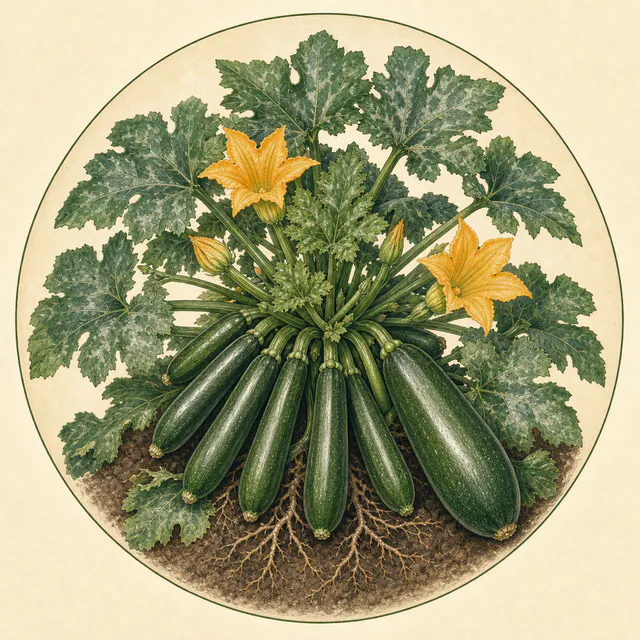
‘Astia’ is a compact courgette selected for large containers as well as productive beds. It bears heavy crops of straight, uniform dark-green fruits. These may be picked young as courgettes or allowed to mature into marrows, giving the grower two useful harvest stages from the same plant.
Yellow flowers provide summer and autumn interest and offer pollen and nectar to insects. The RHS profile displays both the Award of Garden Merit and Plants for Pollinators status.
Size
- Ultimate height
- 0.5–1 metre
- Ultimate spread
- 1–1.5 metres
- Time to ultimate size
- 1 year
The cultivar is described as compact in relation to its cropping habit, but its mature bushy, partly trailing growth still needs a large container and generous floor area.
Growing conditions
- Suitable soils
- Chalk, clay, loam and sand
- Moisture
- Moist but well-drained
- Soil pH
- Acid, neutral or alkaline
‘Astia’ tolerates a broad soil range. Enrich ground with compost or well-rotted manure, or use a large tub of peat-free multipurpose compost or a peat-free growing bag. Maintain moisture without allowing roots to remain waterlogged.
Position and hardiness
- Light
- Full sun
- Aspect
- South- or west-facing
- Exposure
- Sheltered
- Hardiness
- H2 — tolerant of cool conditions around 1–5°C but unable to survive freezing
Treat as a tender annual. Put containers in a sunny sheltered place and wait until frost risk has passed before moving plants outdoors permanently.
Colour and seasonal interest
Spring foliage combines green with grey-silver tones. Yellow flowers appear in summer and autumn among green and grey-silver leaves, followed by uniform dark-green fruits. Leaving selected fruits longer transforms the slim courgettes into larger marrows.
Botanical details
- Family
- Cucurbitaceae
- Native to Great Britain and Ireland
- No
- Foliage
- Deciduous
- Habit
- Bushy and trailing
- Name status
- Accepted
How to grow
Cultivation
Start seeds indoors from mid-April, or sow outdoors only after all frost risk has passed. Grow in compost-enriched soil, a peat-free growing bag or a large tub of peat-free multipurpose compost. Keep plants well watered.
Once the first fruits swell, feed every 10–14 days with a high-potash liquid fertiliser. Harvest regularly for slim, uniform courgettes; reserve only selected fruits for marrow size so continued production is not unnecessarily slowed.
Propagation
Propagate by seed.
Suggested locations
- Patio and large container plants
- Wildlife gardens
- Sunny vegetable beds
Pruning
No pruning is required. Remove only badly damaged or diseased material.
Pests
May be susceptible to slugs and snails.
Diseases
Grey mould may affect fruits. Courgette foliage is susceptible to powdery mildew, although ‘Astia’ has some resistance. Maintain airflow and avoid wetting leaves.