
Courgettes · Variety guide
Cucurbita pepo ‘Tuscany’
Courgette ‘Tuscany’
This Allotment Pro editorial draft summarises the cited RHS cultivar profile. Check the source and adjust cultivation decisions for local conditions.Read the original RHS source
Overview
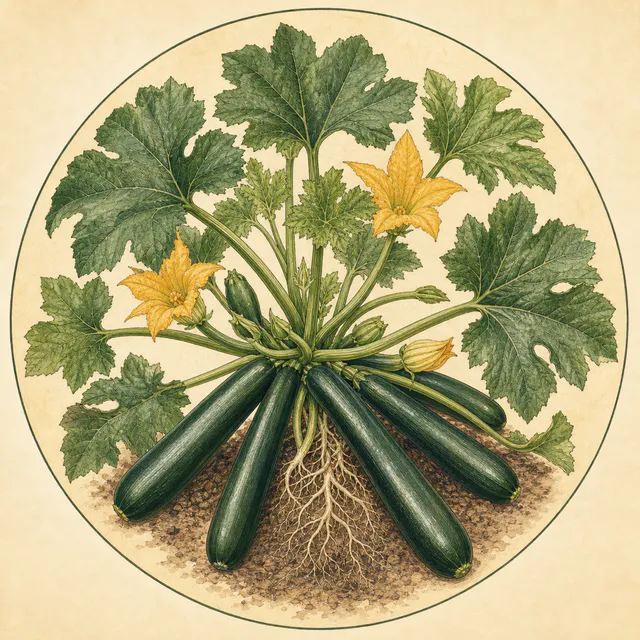
‘Tuscany’ is a vigorous courgette well suited to cooler climates. It produces high yields of slender, straight, dark-green fruits with excellent flavour, making it useful where summer conditions are less reliably warm. The parent RHS growing guide also highlights its spineless stems and suitability for cooler or exposed locations.
Harvest runs from July to October. Strong resistance to powdery mildew helps the foliage remain productive later in the season. Its yellow flowers support pollinating insects, and the RHS profile displays both the Award of Garden Merit and Plants for Pollinators status.
Size
- Ultimate height
- 0.1–0.5 metre
- Ultimate spread
- 0.5–1 metre
- Time to ultimate size
- 1 year
The low bush forms a wider summer clump. Provide sufficient room for harvesting and airflow around the productive foliage.
Growing conditions
- Suitable soils
- Sand and loam
- Moisture
- Well-drained or moist but well-drained
- Soil pH
- Acid or neutral
Plant into rich, fertile soil with good drainage and reliable moisture. Organic matter supports vigorous growth and the high yield expected through the long harvest period.
Position and hardiness
- Light
- Full sun
- Aspect
- West- or south-facing
- Exposure
- Sheltered
- Hardiness
- H2 — tolerant of cool conditions around 1–5°C but unable to survive freezing
Although better suited than many courgettes to cooler climates, ‘Tuscany’ remains frost-tender. Choose full sun and transplant only after frost risk has passed.
Colour and seasonal interest
Green foliage appears in spring. Yellow summer flowers are followed by long, slender dark-green courgettes. Green fruits and foliage can remain productive into autumn, supporting the stated July-to-October harvest.
Botanical details
- Family
- Cucurbitaceae
- Native to Great Britain and Ireland
- No
- Foliage
- Deciduous
- Habit
- Clump-forming and bushy
- Name status
- Accepted
How to grow
Cultivation
Grow in rich, fertile, well-drained soil in full sun. Start seeds indoors from March to May, sowing each on its side about 1.5cm deep in an individual pot. Harden seedlings off before June and transplant after frost.
Water consistently at soil level. Pick the slender dark-green fruits regularly from July to October while skins are tender; repeated harvesting promotes continued setting and keeps fruits at their best flavour.
Propagation
Propagate by seed.
Suggested locations
- Patio and container plants
- Wildlife gardens
- Cooler or moderately exposed vegetable plots
Pruning
No pruning is required. Regular harvesting extends cropping; remove only damaged or diseased leaves.
Pests
May be susceptible to slugs and snails, especially during establishment.
Diseases
Grey mould may occur. ‘Tuscany’ shows strong resistance to powdery mildew, a key cultivar advantage, though spacing and root-level watering remain worthwhile.