
Asparagus · Variety guide
Asparagus officinalis ‘Pacific 2000’
Asparagus ‘Pacific 2000’
This Allotment Pro editorial draft summarises the cited RHS cultivar profile. Check the source and adjust cultivation decisions for local conditions.Read the original RHS source
Overview
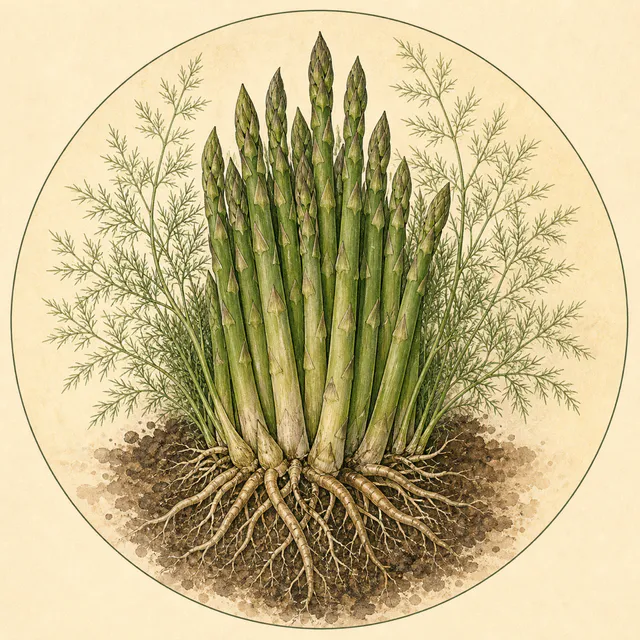
‘Pacific 2000’ is a vigorous, all-male asparagus cultivar producing heavy yields of thick, upright and evenly shaped mid-green spears. Bred in New Zealand, it is particularly valued for its superior flavour and tender, stringless texture.
The plant is a suckering, deciduous perennial whose edible spring growth is followed by taller green summer foliage. The RHS also lists the cultivar as a plant for pollinators.
Size
- Ultimate height
- 1–1.5 metres
- Ultimate spread
- 0.1–0.5 metres
- Time to ultimate size
- 2–5 years
Allow enough height for mature summer stems up to about 1.5 metres. The crown remains comparatively narrow, but its suckering habit lets the clump broaden within the stated spread as it establishes.
Growing conditions
- Suitable soils
- Sand, loam, chalk and clay
- Moisture
- Well-drained
- Soil pH
- Alkaline or neutral
Plant in moderately fertile soil with reliable drainage. Although the cultivar accepts several soil textures, waterlogged ground is unsuitable for its perennial crown.
Position and hardiness
- Light
- Full sun
- Aspect
- South-facing
- Exposure
- Sheltered
- Hardiness
- H5 — hardy in most parts of the UK even during severe winters, tolerating approximately −15°C to −10°C once established
Choose a sunny, sheltered permanent bed. The established crown is notably hardy, but a warm aspect supports the strong spear growth for which the cultivar is grown.
Colour and seasonal interest
| Season | Flowers | Foliage | Fruit |
|---|---|---|---|
| Spring | — | Green | — |
| Summer | — | Green | — |
| Autumn | — | Green | — |
The main edible display is the crop of uniform mid-green spears, followed by green summer and autumn foliage. An em dash means the RHS profile does not state a colour for that field and season.
Botanical details
- Family
- Asparagaceae
- Native to Great Britain and Ireland
- No
- Foliage
- Deciduous
- Habit
- Suckering
- Name status
- Accepted
How to grow
Cultivation
Grow in moderately fertile, well-drained soil in full sun. Plant one-year-old crowns or sow seed directly between March and April. Do not harvest during the first year, take only a half harvest in the second, then begin full harvesting in the third year.
Propagation
Propagate by crowns to preserve the named all-male cultivar. Seed propagation is possible but not advised because seedlings take longer to mature and may not remain male plants, which generally crop more strongly.
Suggested locations
- Wildlife gardens
- Sunny, sheltered edible gardens
- Free-draining permanent vegetable beds
Pruning
Cut few spears, if any, during the first two years so the plant can build strength. Once the foliage yellows, cut it back to 2.5cm (1in) above the soil.
Pests
‘Pacific 2000’ may be susceptible to asparagus beetle, slugs and snails. Inspect emerging spears and later foliage for feeding damage.
Diseases
The cultivar may be susceptible to foot and root rot. Reliable drainage helps reduce the conditions that favour these diseases.