
Pak Choi · Variety guide
Brassica rapa (Chinensis Group) ‘Choko F1’
Pak choi ‘Choko’
This Allotment Pro editorial draft summarises the cited RHS cultivar profile and its linked crop guidance. Check the sources and adjust cultivation decisions for local conditions.Read the original RHS source
Overview
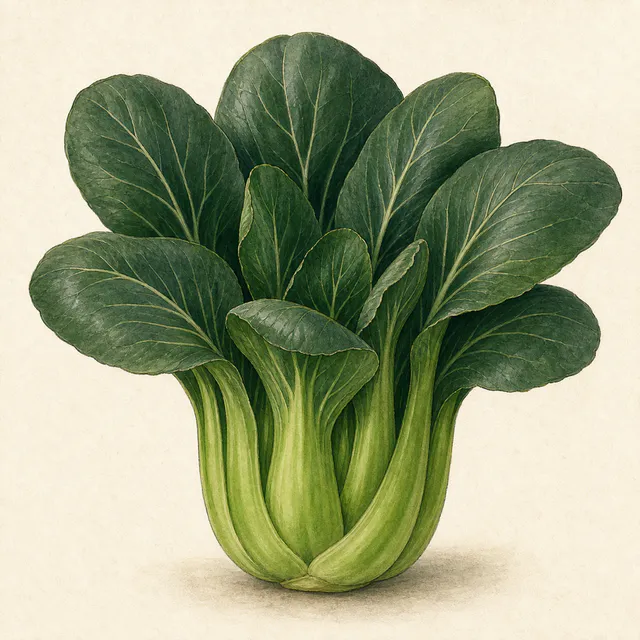
‘Choko F1’ is an easy-to-grow hybrid pak choi with tender green stems and mild-flavoured dark-green leaves. It can be harvested young for salads or allowed to form crisp mature heads for late-summer and autumn cooking. Its tolerance of warmer conditions makes it useful for summer sowings when ordinary pak choi may bolt.
The RHS describes it botanically as a perennial grown as an annual vegetable. In practice, complete the crop within one season and harvest before flowering reduces leaf quality.
Size
- Ultimate height
- 0.1–0.5 metre
- Ultimate spread
- 0.1–0.5 metre
- Time to ultimate size
- one year
Space plants 8–10cm apart for baby leaves, 20cm for semi-mature rosettes or 25–30cm for full heads. Mature plants usually reach 30–45cm tall.
Growing conditions
- Suitable soils
- Chalk, loam or sand
- Moisture
- Well drained, while kept evenly moist during active growth
- Preferred pH
- Neutral or alkaline
Prepare fertile soil with mature organic matter. Do not let the shallow roots dry out, even though drainage must remain free, because drought can trigger flowering and toughen stalks.
Position and hardiness
- Light
- Full sun; light summer shade is useful during heat
- Aspect
- South- or west-facing
- Exposure
- Sheltered
- Hardiness
- H3
A warm sheltered plot suits direct sowing, but moisture must remain steady. Protect early seedlings from cold snaps and use light shade during very hot weather.
Colour and seasonal interest
The columnar upright head combines tender green succulent stems with broad dark-green leaf blades. It remains entirely green, distinguishing it from white-stemmed ‘Ivory’ and purple-red ‘Red Choi’. Harvest before flower stems extend.
Botanical details
- Family
- Brassicaceae
- Native to Great Britain and Ireland
- No
- Foliage
- Deciduous
- Habit
- Columnar upright
- Name status
- Unresolved
How to grow
Cultivation
Direct sow from May to August in fertile, moist but well-drained soil. Make drills 2cm deep with rows at least 30cm apart, then thin for the intended harvest size. The RHS profile gives a June-to-October harvest window.
Water in dry weather, weed regularly and use fine mesh against flea beetles and caterpillars. Pick baby leaves after about 30 days, or cut compact mature heads at the base after about 45–75 days.
Propagation
Propagate by seed.
Suggested locations
- Patio container
- Growing bag
- Raised salad bed
- Vegetable plot
- Sheltered edible border
Pruning
No pruning is required. Remove flower stems before the buds open and harvest bolting plants promptly.
Pests
May be susceptible to birds, cabbage caterpillars, cabbage whitefly, cabbage root fly, cutworms, flea beetles, slugs and snails.
Diseases
May be susceptible to black rot, club root, downy mildew, grey mould and leaf spot. Rotate brassicas, maintain spacing and avoid stagnant wet conditions.