
Pak Choi · Variety guide
Brassica rapa (Chinensis Group) ‘Summer Breeze’
Pak choi ‘Summer Breeze’
This Allotment Pro editorial draft summarises the cited RHS cultivar profile and its linked crop guidance. Check the sources and adjust cultivation decisions for local conditions.Read the original RHS source
Overview
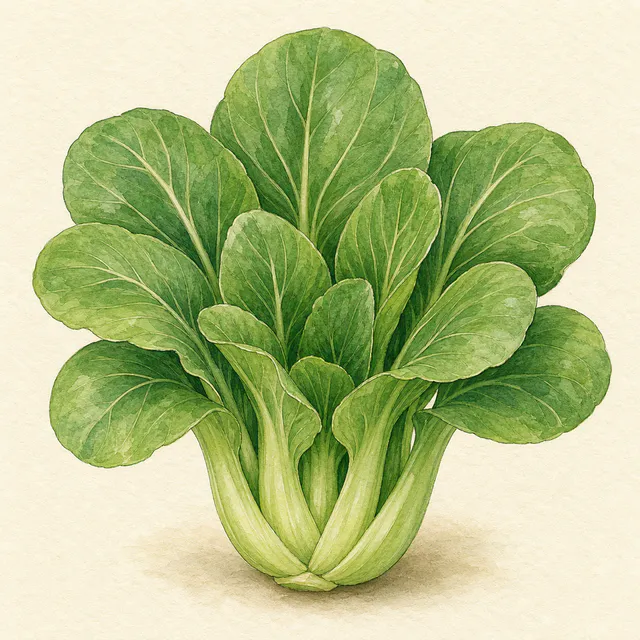
‘Summer Breeze’ is an AGM pak choi with useful resistance to bolting and good tolerance of both heat and cold. It can be harvested young for mild salad leaves or left to form upright heads with succulent pale-green leaf stalks for stir-fries. This adaptability makes it a dependable choice for sowings beyond the easiest cool spring and autumn periods.
Although more tolerant than many cultivars, it still performs best with fertile soil, steady moisture and protection from severe cold. Repeated small sowings give the longest harvest and reduce losses if one batch flowers.
Size
- Ultimate height
- 0.1–0.5 metre
- Ultimate spread
- 0.1–0.5 metre
- Time to ultimate size
- one year
Space plants 8–10cm apart for baby leaves, 20cm for semi-mature heads or 25–30cm for full rosettes. Mature pak choi commonly reach 30–45cm tall.
Growing conditions
- Suitable soils
- Chalk, clay, loam or sand
- Moisture
- Moist but well drained
- Preferred pH
- Acid, neutral or alkaline
Enrich soil with garden compost or well-rotted manure before sowing. Consistent moisture keeps stalks succulent and further reduces bolting risk, but roots must not remain waterlogged.
Position and hardiness
- Light
- Full sun; light shade is useful during hot summer weather
- Aspect
- East-, south- or west-facing
- Exposure
- Sheltered
- Hardiness
- H3
Use a warm sunny position for early and late crops and a cooler lightly shaded place during summer. Cloches or fleece protect young spring plants from temperature shocks.
Colour and seasonal interest
The columnar upright rosette carries fresh-green leaves on broad succulent green to pale-green stems. Its clean leafy form is attractive in containers as well as productive. Harvest before yellow brassica flower stems develop.
Botanical details
- Family
- Brassicaceae
- Native to Great Britain and Ireland
- No
- Foliage
- Deciduous
- Habit
- Columnar upright
- Name status
- Unresolved
How to grow
Cultivation
Sow from spring in modules, one or two seeds per cell, or outdoors after frost risk in drills 2cm deep. Thin seedlings gradually and keep well watered throughout growth. Use 25–30cm spacing for mature plants, as specified by the RHS cultivar profile.
Baby leaves may be ready in about 30 days and heads in 45–75 days. Pick a few outside leaves for repeated salad harvests, or cut compact heads at the base. Summer shade and steady moisture support the cultivar's bolt resistance.
Propagation
Propagate by seed.
Suggested locations
- Patio container
- Raised salad bed
- Vegetable plot
- Growing bag
- Unheated greenhouse for autumn cropping
Pruning
No pruning is required. Remove a flower stem before its buds open and harvest the plant promptly.
Pests
May be susceptible to flea beetle, slugs, snails, cabbage caterpillars and pigeons. Fine mesh protects young foliage.
Diseases
May be susceptible to powdery mildews. Maintain spacing, moisture and airflow and remove declining plants.