
Pak Choi · Variety guide
Brassica rapa (Chinensis Group) ‘Red Choi’
Pak choi ‘Red Choi’
This Allotment Pro editorial draft summarises the cited RHS cultivar profile and its linked crop guidance. Check the sources and adjust cultivation decisions for local conditions.Read the original RHS source
Overview
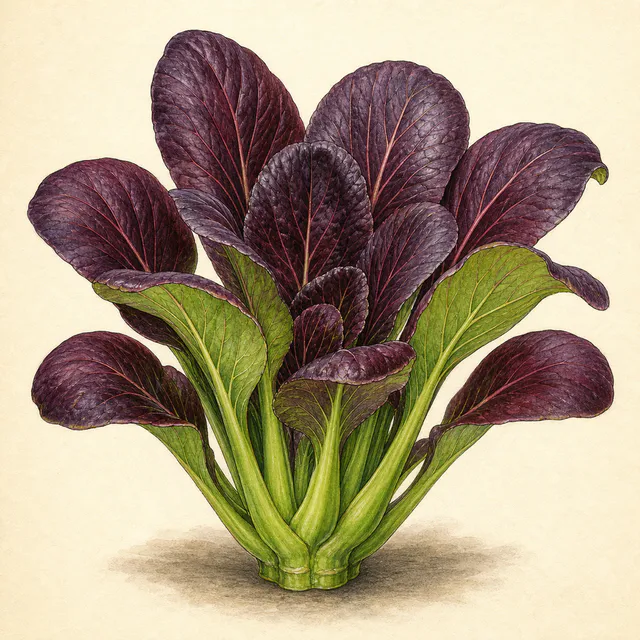
‘Red Choi’ is an AGM annual brassica grown for edible fleshy green stems and paddle-shaped leaves. Their upper surfaces are dark red to purple while the undersides remain green, giving the upright head an eye-catching two-tone appearance. It is decorative in beds and containers as well as useful in salads and cooking.
Harvest young leaves for their colour or allow plants to form compact heads. Maintain moisture carefully, as drought and heat encourage bolting and shorten the display.
Size
- Ultimate height
- 0.1–0.5 metre
- Ultimate spread
- 0.1–0.5 metre
- Time to ultimate size
- 1–2 years in the profile; cultivated and harvested as an annual
Space 8–10cm apart for baby leaves, 20cm for semi-mature rosettes or 25–30cm for full heads.
Growing conditions
- Suitable soil
- Loam
- Moisture
- Moist but well drained
- Preferred pH
- Neutral or alkaline
Use deep fertile ground improved with organic matter. Consistent moisture keeps green stems fleshy and limits premature flowering, while drainage prevents decay.
Position and hardiness
- Light
- Full sun; light shade during hot weather
- Aspect
- South- or west-facing
- Exposure
- Sheltered
- Hardiness
- H3
Full light develops the richest purple-red upper surfaces. During hot summer spells, light shade and morning watering reduce stress without making the foliage dull.
Colour and seasonal interest
Bright-green succulent stems support broad paddle-shaped leaves with dark-red to purple upper surfaces and contrasting green undersides. The colour is strongest during healthy summer and autumn growth. Prevent bolting so yellow flowers do not interrupt the leafy form.
Botanical details
- Family
- Brassicaceae
- Native to Great Britain and Ireland
- No
- Foliage
- Deciduous
- Habit
- Columnar upright
- Name status
- Unresolved
How to grow
Cultivation
Sow thinly from late spring into summer in deep fertile, moist but well-drained soil. Direct sow 2cm deep in rows at least 30cm apart or raise one or two seedlings per module. Thin to the required harvest spacing.
Keep well watered to avoid bolting. Harvest individual baby leaves from about 30 days or cut compact heads at the base after 45–75 days. Fine insect-proof mesh preserves unmarked decorative foliage.
Propagation
Propagate by seed.
Suggested locations
- Decorative vegetable bed
- Patio container
- Raised salad bed
- Cottage edible border
- Growing bag
Pruning
No pruning is required. Remove flower stems and harvest the plant as soon as bolting begins.
Pests
Susceptible to flea beetle, aphids, cabbage caterpillars, cabbage whitefly and cabbage root fly.
Diseases
Susceptible to club root, powdery mildew and downy mildew. Rotate brassicas, maintain spacing and avoid stagnant conditions.