
Broad Beans · Variety guide
Vicia faba ‘Dreadnought’
Bean (broad) ‘Dreadnought’
This Allotment Pro editorial draft summarises the cited RHS cultivar profile. Check the source and adjust cultivation decisions for local conditions.Read the original RHS source
Overview
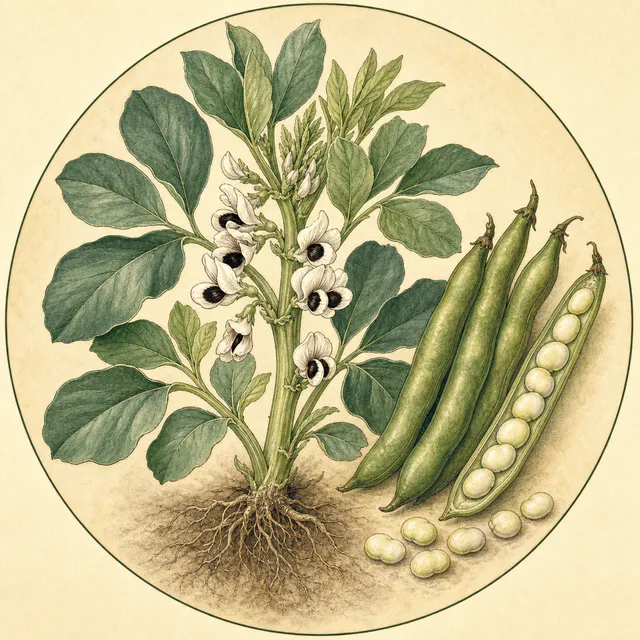
‘Dreadnought’ is an RHS Award of Garden Merit heritage broad bean. It is an upright, bushy, half-hardy annual grown for edible seeds, with glaucous green leaves and clusters of contrasting black-and-white flowers.
Slender green pods reach up to 20cm long and typically hold seven or eight beans. The beans have green skin over white interiors, giving this tall heritage cultivar a useful combination of recognisable foliage, flowers, pods and seed colour.
Size
- Ultimate height
- 1–1.5 metres
- Ultimate spread
- 0.1–0.5 metres
- Time to ultimate size
- 1 year
The plants complete their growth in one season. They are tall but relatively narrow, with a bushy rather than strictly columnar habit, and may need support as the pods develop.
Growing conditions
- Suitable soils
- Chalk, clay, loam and sand
- Moisture
- Moist but well-drained or well-drained
- Soil pH
- Acid, neutral or alkaline
‘Dreadnought’ accepts the full range of soil textures and pH values listed by the profile. For the best crop, use fertile ground that stays usefully moist without waterlogging.
Position and hardiness
- Light
- Full sun
- Aspect
- South- or west-facing
- Exposure
- Sheltered
- Hardiness
- H3 — hardy in coastal and relatively mild UK districts, with protection advisable for overwintering plants
Choose a sunny, sheltered bed. The H3 rating and half-hardy description mean autumn sowing is most suitable where winters are mild and cloche protection can be provided.
Colour and seasonal interest
| Season | Flowers | Foliage | Fruit |
|---|---|---|---|
| Spring | White and black | Green | — |
| Summer | White and black | Green | Green |
| Autumn | — | — | — |
| Winter | — | — | — |
Black-and-white flowers appear against glaucous green foliage in spring and summer. Green pods are recorded in summer. An em dash means the profile supplies no colour for that field and season.
Botanical details
- Family
- Fabaceae
- Native to Great Britain and Ireland
- No
- Foliage
- Deciduous
- Habit
- Bushy
- Name status
- Accepted
How to grow
Cultivation
Grow in fertile, moist but well-drained soil in full sun and shelter. For an early crop, sow in October or November and protect the plants over winter with cloches. Otherwise sow into pots in a cold greenhouse in February, or directly outdoors in March or April. Provide support if the tall, pod-bearing stems begin to lean.
Propagation
Propagate by seed. Protected pot sowing reduces losses where outdoor conditions are unsuitable, while direct spring sowing lets plants establish in their final row.
Suggested locations
The flowers are included by the RHS as a source of nectar and pollen for bees and other pollinating insects.
- Patio and container plants
- Wildlife gardens
Pruning
Remove tender shoot tips once the lowest flowers have set pods. This can delay and reduce black bean aphid infestation while helping the plants direct energy into the bean crop.
Pests
‘Dreadnought’ may be susceptible to pea and bean weevil and black bean aphid. Broad bean seed beetle may affect stored seed.
Diseases
The profile lists possible susceptibility to broad bean rust and broad bean chocolate spot. Maintain airflow through the bushy crop and inspect leaves, stems and pods during damp weather.