
Chard · Variety guide
Beta vulgaris subsp. cicla var. flavescens ‘White Silver’
Chard ‘White Silver’
This Allotment Pro editorial draft summarises the cited RHS cultivar profile. Check the source and adjust cultivation decisions for local conditions.Read the original RHS source
Overview
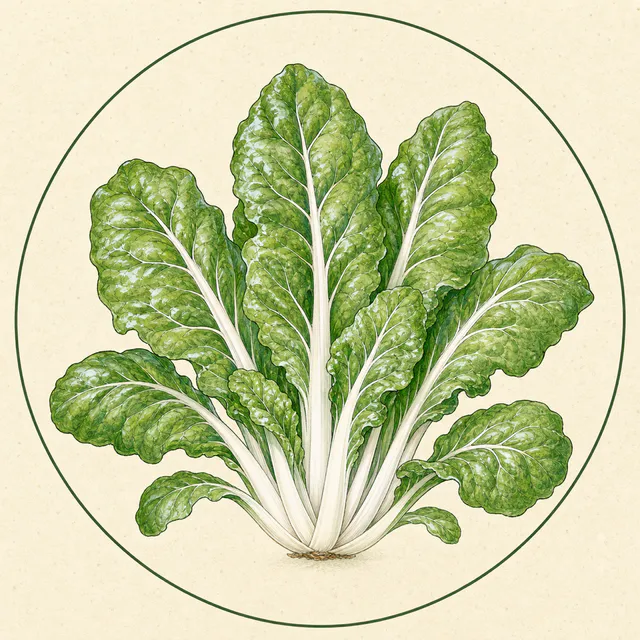
‘White Silver’ is a classic, easy-to-grow chard producing large glossy leaves with a sweet, succulent texture on thick white stems. It is a robust vegetable-garden staple that can be harvested young as baby leaf or allowed to mature for substantial stalks and blades. Established plants may continue supplying leaves into the New Year.
Unlike rainbow mixtures, this cultivar has a consistent green-and-white appearance. Its broad edible foliage, pale midribs and reliable growth suit traditional allotment rows, edible borders and large containers.
Size
- Ultimate height
- 0.1–0.5 metre
- Ultimate spread
- 0.1–0.5 metre
- Time to ultimate size
- 1 year
Full-sized plants form broad clumps, so give each enough space for air circulation and leaf expansion. Closely spaced sowings are suitable only where leaves will be cut young.
Growing conditions
- Suitable soils
- Clay, loam and sand
- Moisture
- Moist but well-drained
- Soil pH
- Neutral or alkaline
Use rich, fertile, free-draining soil that remains evenly moist. Incorporate organic matter before sowing or planting and water during dry periods. Steady growth supports the sweet succulent character of the leaves and helps the thick stems develop without becoming coarse.
Position and hardiness
- Light
- Full sun or partial shade
- Aspect
- East-, north-, south- or west-facing
- Exposure
- Sheltered
- Hardiness
- H3 — hardy in coastal and relatively mild parts of the UK, tolerating approximately -5°C to 1°C
‘White Silver’ adapts to every aspect where it receives sun or partial shade. A sheltered position protects the large leaf blades, while free drainage helps plants remain useful into winter.
Colour and seasonal interest
Thick white stems and midribs contrast with glossy green foliage in spring, summer, autumn and winter. The bold pale stalks are the defining feature and remain visible as outer leaves arch away from the centre. This clean green-and-white palette gives a classic silver-beet appearance throughout the harvest season.
Botanical details
- Family
- Amaranthaceae
- Native to Great Britain and Ireland
- No
- Foliage
- Deciduous
- Habit
- Clump forming
- Name status
- Unresolved
How to grow
Cultivation
Grow in fertile, rich and free-draining soil in full sun or partial shade. Sow directly from March to August, placing seed about 2.5cm deep and 10cm apart, or sow indoors in modules and transplant once seedlings are large enough to handle. Thin full-sized plants to allow broad rosettes to develop.
Water in dry weather and harvest outer leaves cleanly at their base while retaining central growth. Baby leaves can be picked young; mature plants supply larger sweet blades and substantial white stalks. Successive sowings extend the season, and later plants may crop into the New Year where winter conditions are suitable.
Propagation
Propagate by seed.
Pruning
No pruning is required. Regular harvesting removes mature outer leaves; clear damaged foliage before it decays around the crown.
Suggested planting locations
Suitable for patio and container planting, flower borders and beds, edible landscapes and conventional vegetable plots.
Pests
May be susceptible to birds, slugs and snails. Protect emerging seedlings and inspect beneath the broad leaves in damp conditions.
Diseases
May be susceptible to grey moulds and downy mildew. Maintain good spacing and ventilation, avoid persistent moisture on foliage and remove affected leaves promptly.