
Chilli Peppers · Variety guide
Capsicum annuum var. annuum (Longum Group) ‘Hot Thai’
Chilli pepper ‘Hot Thai’
This Allotment Pro editorial draft summarises the cited RHS cultivar profile. Check the source and adjust cultivation decisions for local conditions.Read the original RHS source
Overview
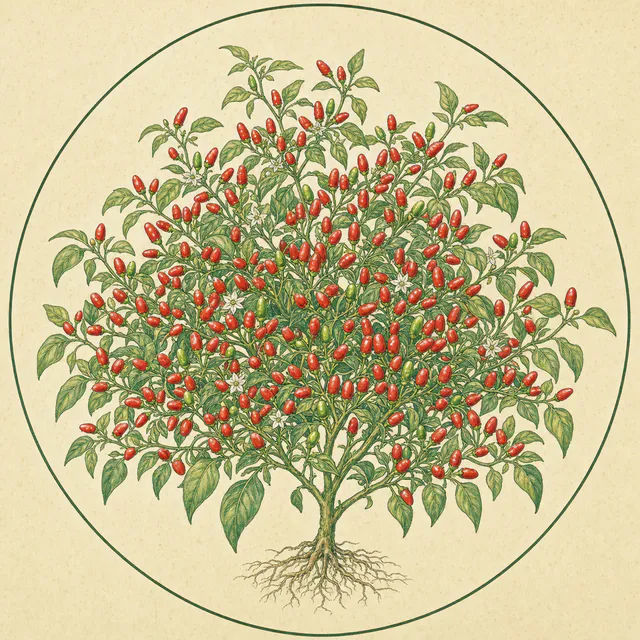
‘Hot Thai’ is a compact British-bred chilli pepper producing exceptionally heavy yields of small bullet-shaped fruits. One plant can carry as many as 200 chillies, maturing from green to fiery red. The fruits have a hot fruity flavour at around 50,000–70,000 Scoville Heat Units and can be used fresh or dried.
The cultivar holds the RHS Award of Garden Merit. Its dense, ornamental crop and compact spreading framework make it useful in small greenhouses and patio containers. Harvest runs from July to October.
Size
- Ultimate height
- 0.5–1 metre
- Ultimate spread
- 0.1–0.5 metre
- Trial size
- Approximately 60cm high by 65cm wide
- Time to ultimate size
- 1 year
The plant is broader than its apparent height suggests and needs room for many fruiting branches, despite its compact overall habit.
Growing conditions
- Suitable soils
- Sand and loam
- Moisture
- Well-drained or moist but well-drained
- Soil pH
- Acid or neutral
Use fertile, free-draining compost or soil and maintain even moisture. Feed weekly with a high-potassium liquid fertiliser after flowers begin to set fruit.
Position and hardiness
- Light
- Full sun
- Aspect
- South- or west-facing
- Exposure
- Sheltered
- Hardiness
- H1C — suitable outdoors in summer at approximately 5–10°C, but not frost hardy
Best results come from a sunny greenhouse or conservatory. Outdoor plants require a hot sheltered position and should not be moved outside until frost danger has passed.
Colour and seasonal interest
Small white flowers are followed by masses of short bullet-shaped green fruits that ripen to saturated glossy red. Green and red chillies often appear together from midsummer to autumn, creating a dense ornamental display above dark foliage.
Botanical details
- Family
- Solanaceae
- Group
- Longum Group
- Native to Great Britain and Ireland
- No
- Foliage
- Deciduous
- Habit
- Bushy and spreading branched
- Potentially harmful
- Fruits and sap may irritate skin or eyes; wear gloves and protective equipment when handling
How to grow
Cultivation
Sow indoors from late winter to mid-spring in quality seed compost and cover with a fine layer of vermiculite. Germinate warm, then transplant seedlings at about 2.5cm tall into individual pots and keep them in a bright sunny position. Pot on as roots develop.
Grow under cover or harden plants off for a sheltered outdoor site after all frost risk. Water evenly, feed after fruit set and harvest frequently from July to October. Use the small chillies sparingly because of their concentrated heat.
Propagation
Propagate by seed.
Pruning
Pinch out growing tips to encourage bushiness. Avoid removing too much growth once flower buds appear.
Pests
May be susceptible to aphids and glasshouse whitefly. Check undersides of leaves and tender shoot tips regularly.
Diseases
May be susceptible to grey moulds. Maintain ventilation and remove damaged or decaying material promptly.