
Peas · Variety guide
Pisum sativum ‘Hurst Green Shaft’
Pea ‘Hurst Green Shaft’
This Allotment Pro editorial draft summarises the cited RHS cultivar profile and its linked crop guidance. Check the sources and adjust cultivation decisions for local conditions.Read the original RHS source
Overview
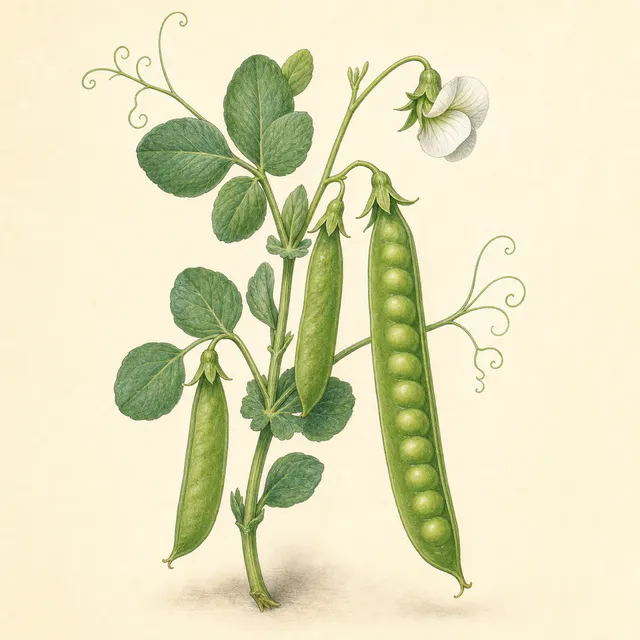
‘Hurst Green Shaft’, also known as ‘Hurst Greenshaft’, is a popular AGM maincrop shelling pea. It is an annual climber reaching about 1m at picking time and produces a heavy, progressive yield. Medium-sized green pods reach about 9cm and average nine well-flavoured peas, although particularly good pods may hold more.
Harvest can begin in late June according to sowing date. The peas are suitable for eating fresh or freezing, making the cultivar useful where a dependable maincrop and an extended rather than abrupt yield are wanted.
Size
- Ultimate height
- 0.5–1 metre
- Ultimate spread
- 0.1–0.5 metre
- Time to maturity
- one year
- Pod size
- medium-sized pods up to about 9cm
Provide support to the full expected height. Space seeds about 7.5cm apart, with 30cm between the two lines of a double row, so air can move through the crop.
Growing conditions
- Suitable soils
- Chalk, clay, loam or sand when fertile and well structured
- Moisture
- Moist but well drained
- Preferred pH
- Acid, alkaline or neutral
Choose humus-rich, moisture-retentive soil that does not become waterlogged. Incorporate mature compost ahead of sowing and maintain moisture once flowering starts so pods fill evenly.
Position and hardiness
- Light
- Full sun
- Aspect
- South- or west-facing
- Exposure
- Sheltered
- Hardiness
- H2
This is a cool-season annual rather than a frost-persistent perennial. Wait for soil near 10°C for reliable outdoor germination, or raise the earliest batch indoors.
Colour and seasonal interest
Climbing green stems carry compound green leaves ending in grasping tendrils. White butterfly-shaped summer flowers develop into straight medium-green pods, each showing the rounded forms of its developing peas when ready to shell.
Botanical details
- Family
- Fabaceae
- Native to Great Britain and Ireland
- No
- Foliage
- Deciduous
- Habit
- Climbing
- Name status
- Accepted
How to grow
Cultivation
Sow outdoors from March to June when soil is at least 10°C. Place seed 5cm deep and about 7.5cm apart in a flat-bottomed drill. Use a single row or a double row 30cm apart and install netting or wire support early.
Water at flowering and again two weeks later, then keep root-level moisture steady while pods swell. Pick from late June onward, selecting full but still green pods every few days to maintain the progressive yield. Eat promptly or blanch and freeze surplus peas.
Propagation
Propagate by seed. Indoor modules can protect early sowings from cold wet soil and mice.
Suggested locations
- Productive vegetable plot
- Cottage or informal garden
- Sunny edible border
- Supported raised bed
- Allotment maincrop row
Pruning
No pruning is required. Pick pods regularly, then cut spent stems at ground level and leave healthy roots to decay in the soil.
Pests
May be susceptible to mice, slugs, pea moth and pigeons. Protect seed and seedlings, and inspect peas during shelling.
Diseases
May be susceptible to pea wilt and powdery mildew. The cultivar has some resistance to downy mildew. Good spacing, root-level watering and rotation help preserve plant health.