
Brussels Sprouts · Variety guide
Brassica oleracea (Gemmifera Group) ‘Crispus’
Brussels sprout ‘Crispus’
This Allotment Pro editorial draft summarises the cited RHS cultivar profile. Check the source and adjust cultivation decisions for local conditions.Read the original RHS source
Overview
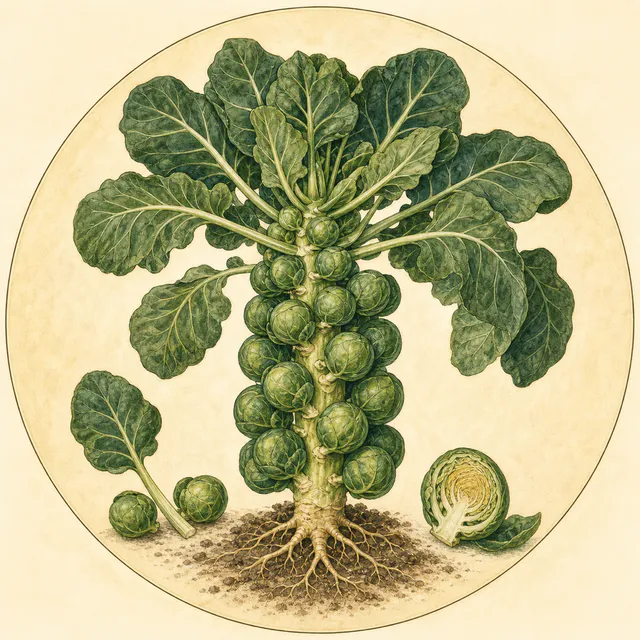
‘Crispus’ is an upright Brussels sprout cultivar with an RHS Award of Garden Merit. Tall, sturdy stalks carry smooth, dark-green buttons with a sweet flavour and crunchy texture. The mature sprouts remain in good condition on the plant for several weeks from autumn into winter, giving the grower a useful picking window.
Its defining practical trait is resistance to clubroot. This does not replace sound rotation and soil care, but it makes ‘Crispus’ especially valuable on sites where this persistent brassica disease is a known risk.
Size
- Ultimate height
- 0.5–1 metre
- Ultimate spread
- 0.5–1 metre
- Time to ultimate size
- 1–2 years
The broad spread and tall stalks require full Brussels sprout spacing. Firm soil around the roots and shelter from strong wind help the plants stand securely while the buttons develop.
Growing conditions
- Suitable soils
- Loam and sand
- Moisture
- Moist but well-drained or well-drained
- Soil pH
- Neutral or alkaline
Plant into fertile ground that retains moisture without becoming waterlogged. Neutral or alkaline soil suits this brassica, while the cultivar's clubroot resistance adds protection where disease pressure remains despite good soil preparation.
Position and hardiness
- Light
- Full sun
- Aspect
- East-, south- or west-facing
- Exposure
- Sheltered
- Hardiness
- H4 — hardy through average UK winters, with protection useful on colder or especially exposed sites
Use a sunny, sheltered position protected from strong winds. The sturdy stalks have good standing ability, but firm planting reduces rocking and supports an even winter crop.
Colour and seasonal interest
| Season | Flowers | Foliage | Fruit |
|---|---|---|---|
| Spring | — | Green | — |
| Summer | — | Green | — |
| Autumn | — | Green | — |
| Winter | — | — | — |
Green foliage is recorded from spring through autumn. The overview separately identifies the edible buttons as dark green, but the live seasonal table does not assign a fruit colour. An em dash indicates that no colour is supplied for that field and season.
Botanical details
- Family
- Brassicaceae
- Native to Great Britain and Ireland
- No
- Foliage
- Deciduous
- Habit
- Columnar upright
- Name status
- Accepted
How to grow
Cultivation
Grow ‘Crispus’ in fertile, well-drained soil in full sun, protected from strong winds. Plant firmly and keep the crop evenly watered while establishing. Its clubroot resistance is a cultivar trait, but rotation, suitable pH and clean transplants remain worthwhile safeguards.
Propagation
Propagate by seed, sown indoors or outdoors before plants are moved to their final spacing.
Pruning
No pruning is required. Remove ageing lower foliage as necessary for airflow and access during harvesting.
Pests
The profile lists cabbage root fly, caterpillars, cabbage whitefly and mealy cabbage aphid as possible problems. Use securely fitted fine mesh and inspect the undersides of leaves regularly.
Diseases
‘Crispus’ is resistant to clubroot but may be susceptible to downy mildew and powdery mildew. Maintain spacing and airflow and avoid unnecessary wetting of the foliage.