
Soya Beans · Variety guide
Glycine max ‘Black Jet’
Soya bean ‘Black Jet’
This Allotment Pro editorial draft summarises the cited RHS cultivar profile and its linked crop guidance. Check the sources and adjust cultivation decisions for local conditions.Read the original RHS source
Overview
‘Black Jet’ is a tough soya bean cultivar recommended by the RHS because it crops well in poor summers. That resilience makes it an appealing option for UK gardeners whose season may not provide the consistently high temperatures preferred by many soya varieties.
The exact RHS cultivar profile confirms the identity Glycine max ‘Black Jet’ but currently contains only a small botanical record. It does not provide a cultivar description, measurements or individual cultivation panel. This guide therefore identifies linked parent-guide information clearly instead of presenting generic crop advice as fields from the sparse profile.
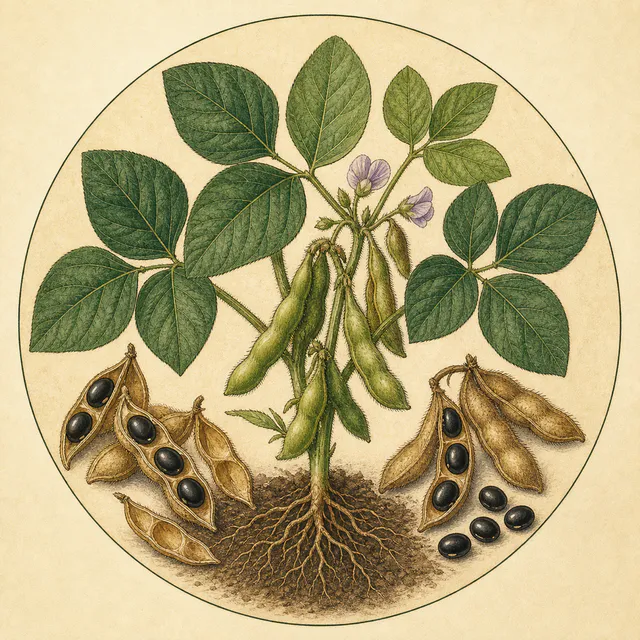
The name and seed-catalogue history of ‘Black Jet’ are associated with dark mature beans, which provide the key visual distinction for the cultivar plate. Growers should still use the exact RHS crop guide’s green-pod and dry-bean harvest stages rather than assuming seed colour alone proves ripeness.
Size
- Ultimate height
- not stated on the exact cultivar profile
- Ultimate spread
- not stated on the exact cultivar profile
- Habit
- not stated on the exact cultivar profile
- Lifecycle
- cultivated as an annual crop
Plan the row using the parent crop’s 15cm plant and 45cm row spacing. Soya plants are generally compact, self-supporting bushes, although short canes and surrounding string are useful if ‘Black Jet’ grows tall or begins to lean in a windy position.
Growing conditions
The cultivar profile provides no individual soil, moisture or pH entries. For cultivation, follow the linked soya bean guide: prepare fertile, moisture-retentive but freely drained soil with at least two bucketfuls of mature manure or garden compost per square metre.
Water consistently, with particular attention when flowers open and pods begin to swell. A mulch applied after the ground warms helps hold moisture and reduces weed competition. Cold, saturated soil can rot seed, so direct sowing should wait until suitable temperatures arrive even though the cultivar is described as tough.
Position and hardiness
The exact profile does not state a light requirement, aspect, exposure or hardiness code for ‘Black Jet’. Its reported ability to crop in poor summers should not be interpreted as frost hardiness. Treat it as a heat-loving annual and give it full sun in a warm, sheltered position.
Indoor sowing in April or May at 18–20°C gives plants a head start. Harden seedlings off and plant only when frost risk has passed and conditions are around 15°C or warmer. Outdoor seed should go into soil that has reached at least 15°C.
Colour and seasonal interest
| Season | Foliage | Pods and seed |
|---|---|---|
| Spring | Green seedlings raised in warmth | — |
| Summer | Green trifoliate foliage | Hairy green pods filling on the plant |
| Autumn | Foliage yellows as the annual crop ripens | Dry tan pods enclosing distinctive dark mature beans |
| Winter | Crop cleared | Fully dry beans may be stored |
The profile does not publish its own seasonal-colour record. The plant should remain recognisable as soya through its trifoliate leaves, short hairy pods and rounded beans. For ‘Black Jet’, mature dark seed shown beside attached green and dry pods supplies the clearest cultivar-level cue while also explaining the two harvest stages.
Botanical details
- Family
- Fabaceae
- Native to Great Britain and Ireland
- No
- Name status
- Unresolved
How to grow
Cultivation
The exact cultivar page has no dedicated How to Grow fields. Use the linked crop guide: sow seed 5cm deep under cover in April or May, or outdoors from May to June once the soil is at least 15°C. Set plants 15cm apart in rows 45cm apart, maintain regular moisture and protect the crop from cold winds.
Harvest plump green pods when the beans are about pea-sized for edamame. For mature beans, wait until pods are dry and papery from late September into autumn, then shell them and finish drying the seed before cool, dark, airtight storage.
Propagation
Raise from seed. Keep early sowings warm and avoid disturbing roots during planting.
Pruning
The cultivar profile gives no pruning field. Pruning is not normally needed for an annual soya crop; cut stems at soil level after harvest and leave healthy legume roots to decompose.
Pests and diseases
No cultivar-specific susceptibility is listed. Watch for downy and powdery mildews, plant viruses, slugs and snails as identified by the linked crop guide. Crop rotation, good airflow, suitable drainage and prompt removal of seriously affected material support healthy growth.