
Celeriac · Variety guide
Apium graveolens var. rapaceum ‘Asterix’
Celeriac ‘Asterix’
This Allotment Pro editorial draft summarises the cited RHS cultivar profile. Check the source and adjust cultivation decisions for local conditions.Read the original RHS source
Overview
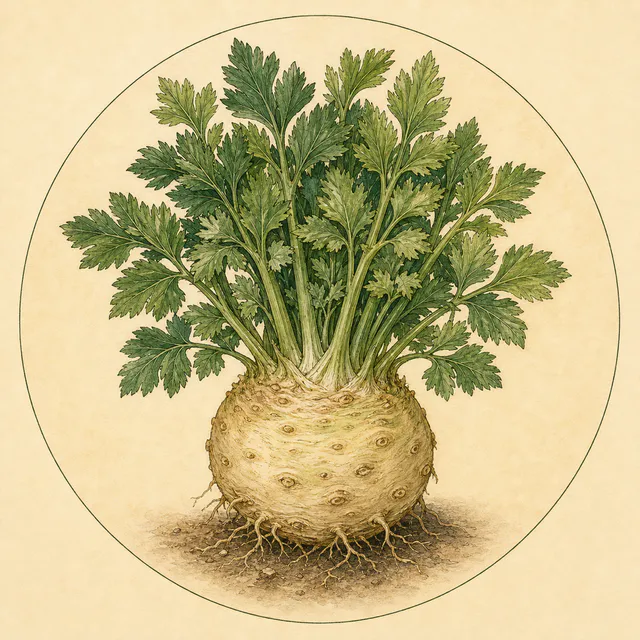
‘Asterix’ is grown as an annual celeriac, forming a clump of bright-green upright leaves above a swollen edible stem often described as a root. It reaches cropping size earlier than many varieties and combines resistance to bolting with resistance to disease, making it useful where the long celeriac season can be challenging.
Size
- Ultimate height
- 0.1–0.5 metres
- Ultimate spread
- 0.1–0.5 metres
- Time to ultimate size
- 1–2 years
In vegetable cultivation it is normally harvested within its first annual growing cycle.
Growing conditions
- Suitable soils
- Chalk, clay, loam and sand
- Moisture
- Moist but well-drained
- Soil pH
- Acid, neutral or alkaline
Reliably moist, rich soil supports continuous leaf growth and expansion of the swollen stem.
Position and hardiness
- Light
- Full sun
- Aspect
- East-, north-, south- or west-facing
- Exposure
- Sheltered
- Hardiness
- H6 — hardy throughout the UK and northern Europe
A sheltered position helps young plants establish, while mature plants tolerate severe winter cold.
Colour and seasonal interest
No seasonal colour values are assigned. The recognisable crop has a pale, rounded and knobbly swollen stem beneath a columnar clump of fresh bright-green divided foliage.
Botanical details
- Family
- Apiaceae
- Native to Great Britain and Ireland
- No
- Foliage
- Semi-evergreen
- Habit
- Columnar and upright
- Name status
- Accepted
- Potentially harmful
- Plant sap may harm skin in sunlight; wear gloves and protective clothing when handling
How to grow
Cultivation
Grow in full sun in rich, reliably moist but well-drained soil. Prevent interruptions to growth and keep the crown at soil level so the swollen edible stem develops cleanly.
Propagation
Propagate by seed, sown indoors for the long growing season.
Pruning
No pruning is required, although collapsed outer leaves may be removed during normal crop care.
Pests
Plants may be susceptible to slugs and snails and celery leaf miner.
Diseases
Plants may be susceptible to celery leaf spot, although this cultivar has general disease resistance.