
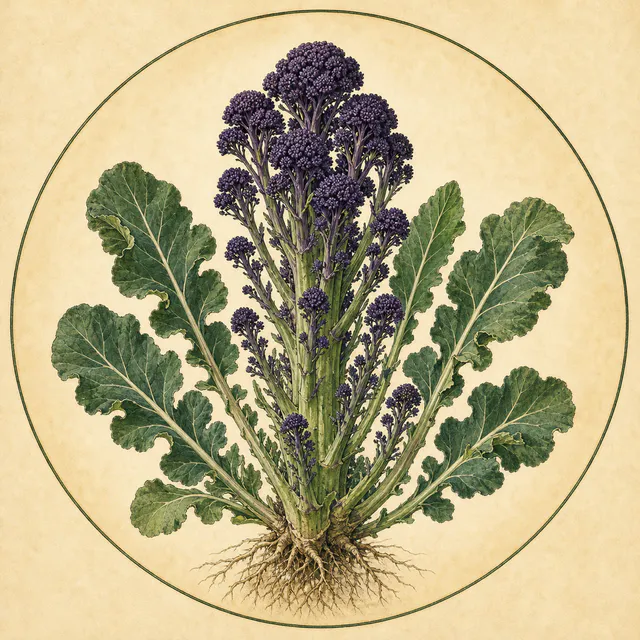
Cardinal AGM
A very hardy cultivar with a long cropping period, producing large deep-purple spears with good flavour.
The crop growing guide
This Allotment Pro editorial draft summarises the cited RHS guide. Check the source and adjust timings for local conditions.Read the original RHS source
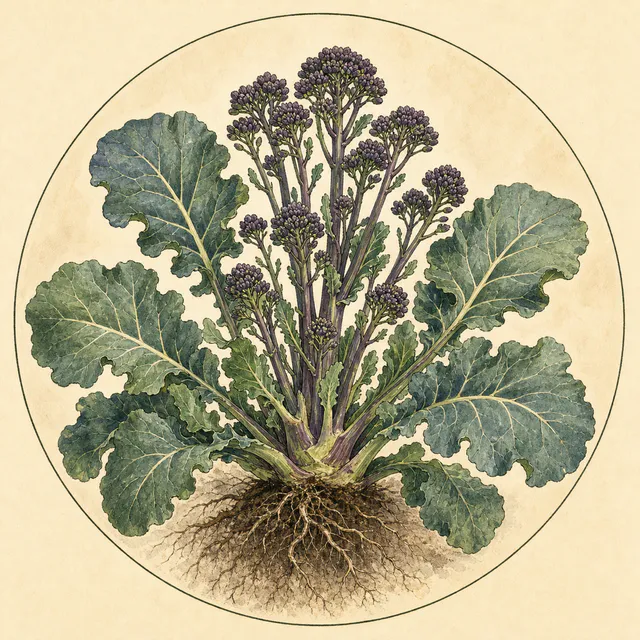
Your season at a glance
Indoors
Module Sow — Start batches in a greenhouse or on a sunny windowsill for an earlier crop
Outdoors
Direct Sow — Sow in a seedbed for transplanting or in the final position
Indoors
Microgreens — Sow on a sunny windowsill for shoots in about two weeks
Outdoors
Transplant — Move well-rooted plants once they are 10–15cm (4–6in) tall
Outdoors
Cut — Successive sowings and suitable varieties can crop from summer through the following early spring
Broccoli, also called sprouting broccoli, is a cabbage-family crop that produces repeated small clusters of purple or creamy-white flower buds on long leafy shoots. It differs from calabrese, which forms one large central green head even though shops and recipes often call that crop broccoli.
Variety and sowing time determine whether plants crop in summer, autumn, winter or early spring. Compact modern cultivars mature more quickly and suit smaller plots, while traditional overwintering kinds can occupy the ground for eight months or more and grow into large plants. Once picking begins, regular cutting can keep side-shoots forming for up to two months.
Broccoli belongs with other brassicas in a crop rotation and shares their common pests and diseases. A small number of plants can still provide generous pickings at a time when fresh allotment harvests may otherwise be limited.
Choose varieties by sowing and harvest season, final size, hardiness and spear colour. Traditional hardy cultivars are usually sown in spring or early summer, become large plants and crop in winter or the following spring. Faster, more compact cultivars can be ready from mid-summer to late autumn and make better use of limited space.
Most cultivars carry purple buds, while a smaller number produce creamy-white spears. Purple types are generally hardier and more productive. Hot summers can make developing buds open prematurely, so bolt-resistant cultivars are useful in warmer areas.
Seed is widely available from garden centres and online suppliers, including seed intended specifically for microgreens. Young plants are commonly sold in spring and early summer, although the cultivar choice is usually narrower. Check each packet for its own sowing window, harvest period, final size and spacing.
A very hardy cultivar with a long cropping period, producing large deep-purple spears with good flavour.
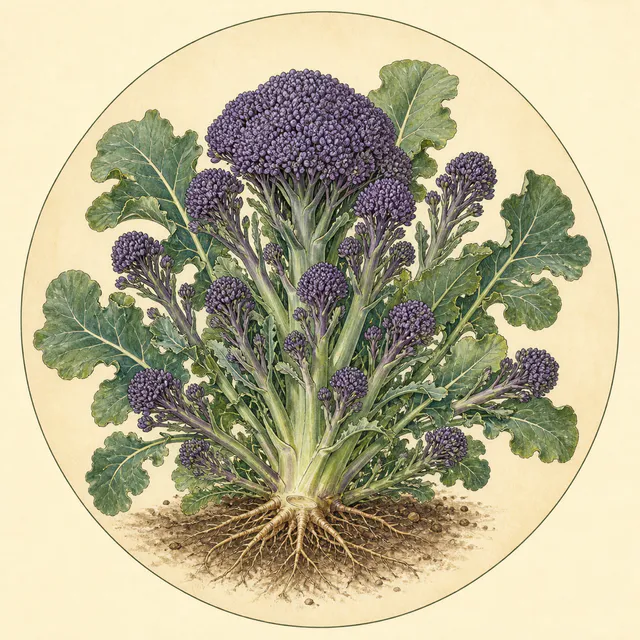
An exceptionally vigorous, heavy-cropping cultivar whose large tender shoots and numerous side-shoots support an extended harvest.
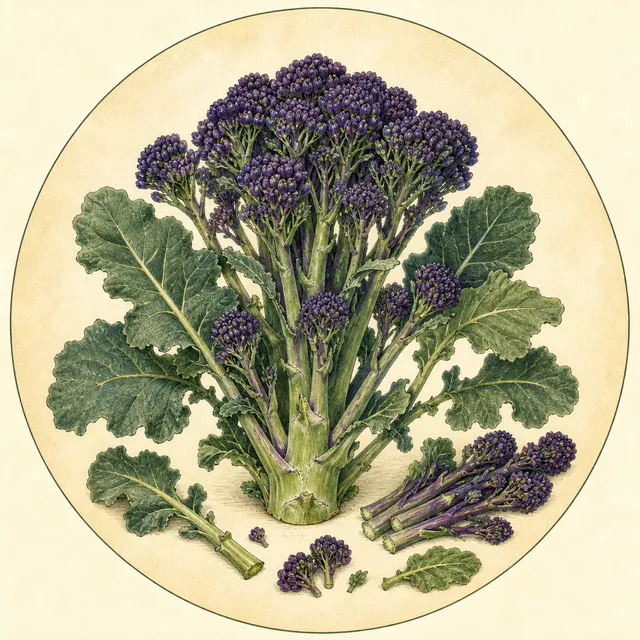
An early maincrop cultivar producing high yields of uniform, good-quality purple spears.
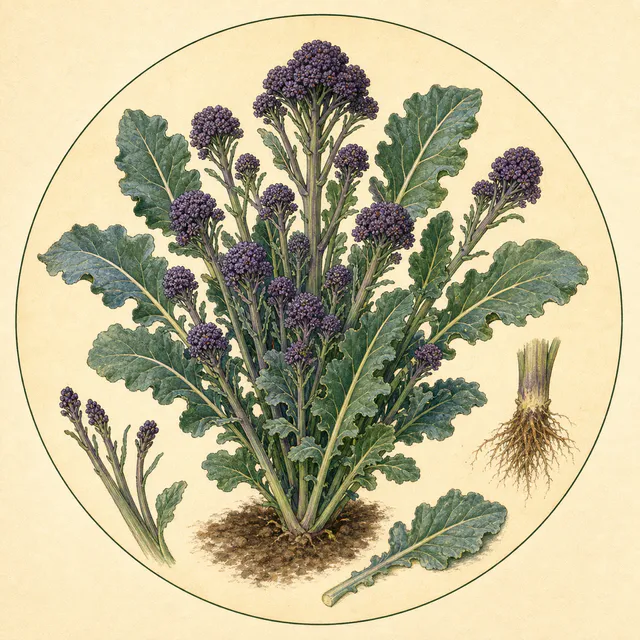
A vigorous cultivar that can start cropping as early as November, with uniform, good-flavoured spears.
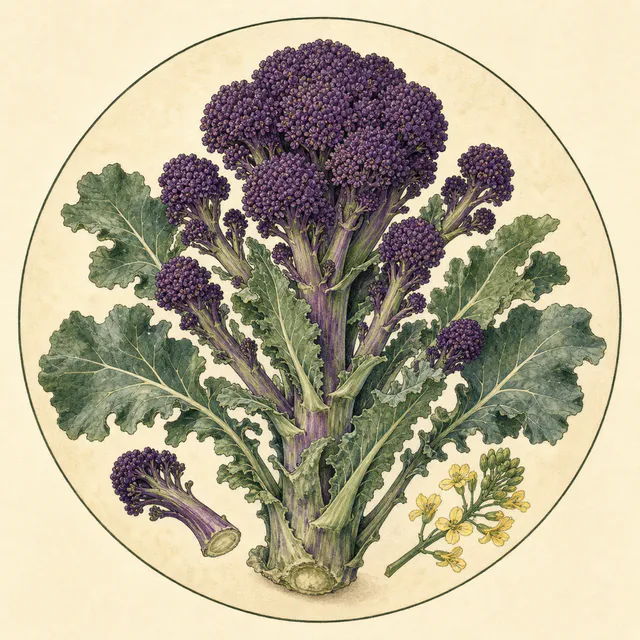
An upright cultivar for late-winter and early-spring picking, with accessible medium-sized dark-purple spears.
Choose a sheltered position in full sun or very light shade, with fertile soil that drains freely. Avoid waterlogged ground, particularly for a crop that will stand through winter. Broccoli prefers a soil pH of 6 to 7; where soil is very acidic, applying lime during the preceding winter can raise the pH and help deter club root.
Clear weeds thoroughly and add well-rotted manure or garden compost, ideally several months before sowing or planting so the soil can settle. If preparation happens immediately before planting, firm the ground by treading it with shuffling steps and rake the surface smooth. In a no-dig system, spread organic matter ahead of sowing and plant through the mulch.
Sow small batches several weeks apart to extend the picking season. Indoor sowing can begin in February for a head start, while outdoor sowing starts in April. Broccoli seed can also be sown year-round for microgreens.
Fill a modular tray with damp peat-free seed compost and sow two seeds in each module. Modules limit root disturbance when plants are moved. Seed should germinate within two weeks without extra heat; remove the weaker seedling and retain one plant per module. Transplant outdoors when plants have a strong root system and reach 10–15cm (4–6in).
Starting plants indoors is particularly useful where club root is present because a developed root system can make the later infection less damaging.
From April to July, sow into a prepared seedbed for transplanting later or direct into the final growing position. Make and water a shallow drill before sowing. In a seedbed, space seeds at 7.5cm (3in), thinning to the same distance if necessary. At the final spacing, place three seeds at each station and thin each cluster to its strongest seedling. Protect emerging plants from slugs and snails.
At any time of year, sow seed into a small tray of damp peat-free seed compost on a sunny windowsill. Water regularly and cut the fresh green shoots when ready in about two weeks or less.
Plant indoor-raised, seedbed-grown or bought plug plants in their final position once they are 10–15cm (4–6in) tall and well rooted. Harden off indoor-grown plants first, minimise root disturbance, and water before and after moving them.
Set plants slightly deeper than before, with their lowest leaves at soil level, to encourage deep, firm rooting. Provide generous spacing for good air movement and abundant side-shoots, following the individual seed packet where a cultivar needs a different distance. Cover young plants with insect-proof mesh or biodegradable fleece and continue protecting them from slugs and snails.
Keep broccoli protected with fine mesh, remove competing weeds, water during dry spells and support tall plants before autumn gales. These measures help large plants stay rooted and keep brassica pests away from the leaves and developing spears.
Water seedlings and young plants during dry weather until they establish. Mature plants usually need extra water only through prolonged dry spells.
Spread a thick layer of garden compost or other organic matter over the soil to retain moisture and suppress weed germination.
On poor soil, apply an organic high-nitrogen fertiliser when plants reach about 20cm (8in) tall.
Keep the ground clear while broccoli is young so vigorous weeds do not overwhelm plants or compete for water and light.
Broccoli commonly grows into a top-heavy plant. Before strong autumn winds, earth up around the stem base and/or add a sturdy cane tied to the main stem. This prevents rocking that can loosen roots and restrict growth.
Keep insect-proof mesh or biodegradable fleece supported on canes and securely pinned down so pigeons and common brassica insects cannot reach the crop.
Depending on variety and sowing time, plants take four to ten months to start cropping. Successive sowings can provide harvests from June through the following March, and each plant may then give pickings for up to two months.
Cut spears when the clusters are well formed but the buds remain tightly closed. Remove the whole shoot at its base with about 10cm (4in) of edible stem and small leaves. Take the central spear first; side-shoots then develop for later pickings. Check frequently and cut before buds open, as regular harvesting encourages more shoots.
Use broccoli promptly for best quality. It can be refrigerated for a few days or frozen; purple buds generally become green during cooking.
Hot weather may make broccoli bolt before plants reach full size. Harvest any premature bud clusters immediately before they open. Fine-mesh netting provides important protection from pigeons and brassica insects. Where club root is present, raise plants indoors until they have strong root systems before putting them into affected ground.
This soil-borne disease produces swollen, distorted roots, weak growth and wilting. Start with healthy plants, avoid moving contaminated soil and improve drainage; liming acidic ground can reduce but not eliminate the disease.
Problem sourceSeveral moth and butterfly caterpillars feed on brassica foliage. Fine netting can prevent adults reaching the crop, while regular leaf checks help find eggs and young caterpillars before damage becomes extensive.
Problem sourceWhite maggots feed on brassica roots, weakening plants and sometimes causing them to collapse. Crop covers and root-fly collars can reduce the chance of eggs being laid at stem bases.
Problem sourceSmall white-winged insects gather beneath brassica leaves. They often cause little direct damage, although larger colonies produce sticky honeydew that supports sooty mould.
Problem sourceThese small jumping beetles make numerous rounded holes in leaves and can seriously check young seedlings. Keep plants growing strongly and use insect-proof mesh over vulnerable crops.
Problem sourceGrey-green aphids with a waxy coating form dense colonies on brassicas. Established plants may tolerate modest numbers, but heavy infestations can distort foliage and contaminate edible shoots.
Problem sourceThis foliar disease causes white raised pustules and may distort affected leaves and shoots. Remove badly affected material and reduce prolonged leaf wetness by providing good spacing and air movement.
Problem sourcePigeons tear brassica leaves and may strip plants back to their stalks and main veins. Secure netting over the crop so birds cannot land on or reach through it.
Problem sourceThese molluscs feed on tender seedlings and leaves, particularly in mild, damp conditions. Protect young plants, reduce nearby hiding places and inspect regularly after wet weather.
Problem source