
Beetroot · Variety guide
Beta vulgaris ‘Cheltenham Green Top’
Beetroot ‘Cheltenham Green Top’
This Allotment Pro editorial draft summarises the cited RHS cultivar profile. Check the source and adjust cultivation decisions for local conditions.Read the original RHS source
Overview
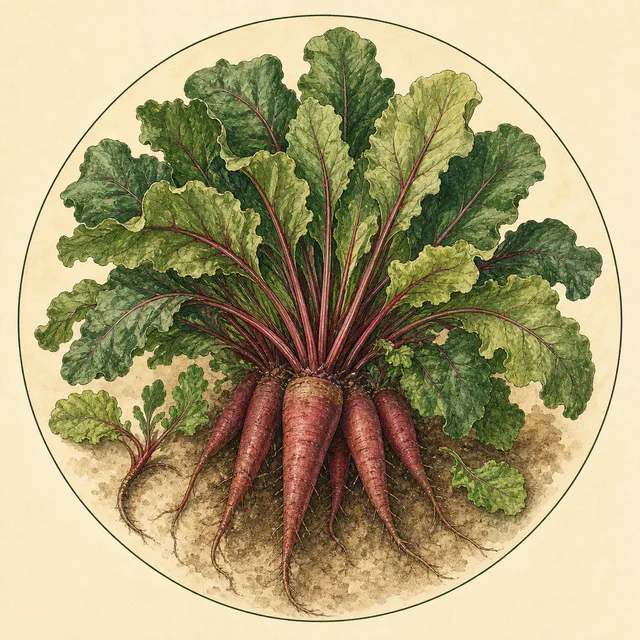
‘Cheltenham Green Top’ is an old beetroot cultivar with an RHS Award of Garden Merit. It produces an elongated, tapering edible taproot rather than the usual globe shape, combined with strong green foliage that makes mature roots easier to lift.
The root is noted for excellent flavour and good storage qualities, while young leaves can also be eaten. Its vigorous, bushy top and long tapered crop give the cultivar a readily recognisable silhouette.
Size
- Ultimate height
- 0.5–1 metre
- Ultimate spread
- 0.5–1 metre
- Time to ultimate size
- 1 year
The profile assigns a substantial 0.5–1 metre range to both height and spread. The bushy annual reaches this full size in one growing season above its long developing root.
Growing conditions
- Suitable soils
- Sand, loam, chalk and clay
- Moisture
- Moist but well-drained or well-drained
- Soil pH
- Acid or neutral
‘Cheltenham Green Top’ accepts all four listed soil textures, but its profile specifies acid or neutral conditions rather than alkaline soil. Use fertile ground that drains freely while retaining sufficient moisture for steady root development.
Position and hardiness
- Light
- Full sun
- Aspect
- South- or west-facing
- Exposure
- Sheltered
- Hardiness
- H3 — hardy in coastal and relatively mild UK districts, although grown and harvested as an annual vegetable
Place the crop in a sunny, sheltered bed. Its H3 rating indicates some cool-weather tolerance in mild districts, but the edible root and foliage are produced within one season.
Colour and seasonal interest
| Season | Flowers | Foliage | Fruit |
|---|---|---|---|
| Spring | — | Green | — |
| Summer | — | Green | — |
| Autumn | — | Green | — |
| Winter | — | — | — |
Green foliage is listed from spring through autumn and is especially strong on this cultivar. The elongated, tapering root below ground is its main crop and identifying form. An em dash means that no colour is supplied for that field and season.
Botanical details
- Family
- Amaranthaceae
- Native to Great Britain and Ireland
- No
- Foliage
- Deciduous
- Habit
- Bushy
- Name status
- Accepted
How to grow
Cultivation
Grow in fertile, freely drained soil in full sun. Sow at fortnightly intervals from March to July for a succession of harvests. The long taproot benefits from prepared soil without obstructions that could distort its tapering shape.
Propagation
Propagate by seed. Direct sowing avoids disturbing the developing taproot and lets each plant establish in its final position.
Pruning
No pruning is required. Young leaves may be taken for eating, while the strong remaining foliage can be used to help lift mature roots.
Pests
The profile lists possible susceptibility to aphids, flea beetles and mangold fly, also known as beet leaf miner. Check green leaves for colonies, feeding holes and translucent mines.
Diseases
‘Cheltenham Green Top’ may be susceptible to beetroot heart rot, black leg and leaf spot. Maintain suitable drainage and inspect the vigorous foliage and roots as the crop develops.