
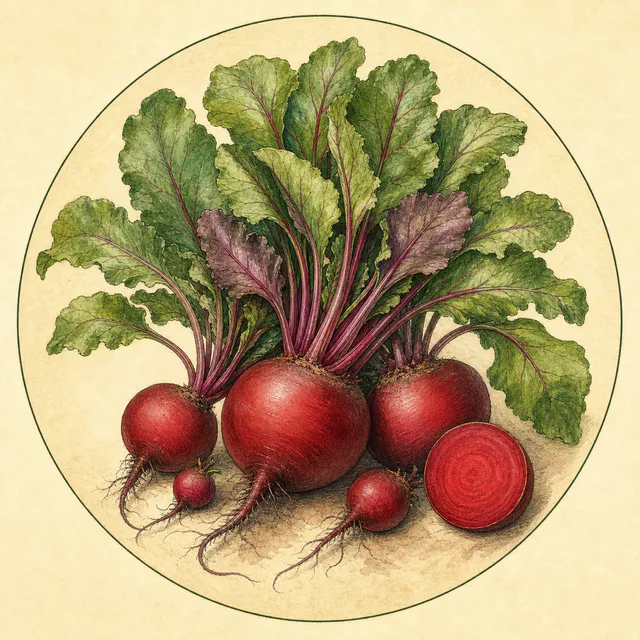
‘Wodan’ AGM
An early cultivar producing bright-red, round roots that are particularly suitable for pickling.
The crop growing guide
This Allotment Pro editorial draft summarises the cited RHS guide. Check the source and adjust timings for local conditions.Read the original RHS source
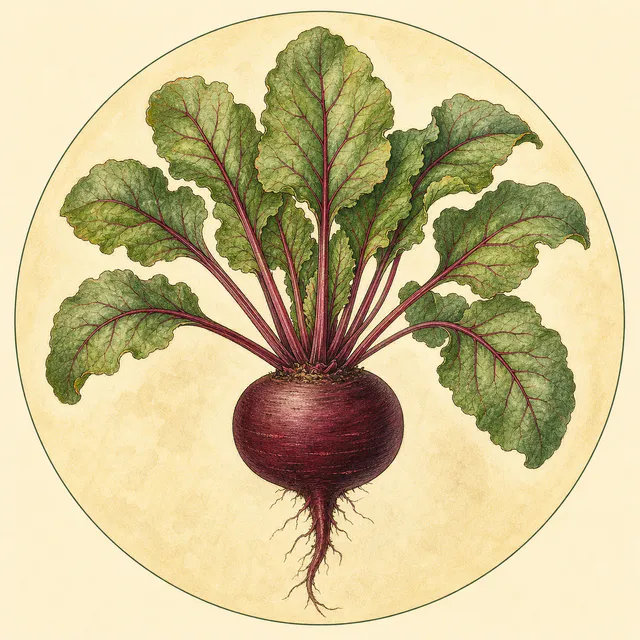
Your season at a glance
Outdoors · Protected sowing
Use a bolt-resistant cultivar and cover the row with biodegradable fleece or cloches.
Outdoors · Direct sowing
Sow once soil reaches at least 7°C (45°F), repeating short rows every few weeks for a long harvest.
Indoors · Modules
Start seed clusters under cover for an earlier crop, particularly in colder districts.
Outdoors · Transplant
Harden off module-grown or purchased plug plants and move them outside once they are at least 5cm (2in) tall and well rooted.
Outdoors · Lift
Harvest from golf-ball size for tender roots, taking mature roots before they grow larger than a cricket ball.
Outdoors · Storage crop
Carefully lift later sowings for winter storage, or leave them in unfrozen ground in mild locations.
Beetroot, or beet, is a compact and beginner-friendly root crop that fits easily into small beds and containers. Sow little and often from spring to mid-summer and the same patch can provide tender young roots from early summer, mature roots into autumn, and a stored crop for winter.
The roots may be ready in as little as 40 days, although 50–60 days is more usual. For the best texture and flavour, lift them at about 4–7cm (1⅓–3in) across. Roots can range from golf-ball to cricket-ball size, but those left to grow much larger may become woody. The leaves are edible too: use young leaves raw and cook larger ones like spinach.
Beetroot cultivars vary substantially in shape, skin and internal colour. Most are round or oval, while others form long or tapering roots. Colours include deep purple-red, crimson, orange, yellow and white, as well as pink-and-white rings. Darker roots generally have a richer, earthier taste; paler ones tend to be milder and sweeter and cause less staining during preparation.
Bolt-resistant cultivars are valuable for early sowings because cold conditions can trigger premature flowering before the root has swollen. An RHS Award of Garden Merit indicates strong performance in the Society’s trials. Seed packets are widely available, including mixed-colour collections, while a smaller choice of plug plants is sold in spring and early summer.
An early cultivar producing bright-red, round roots that are particularly suitable for pickling.
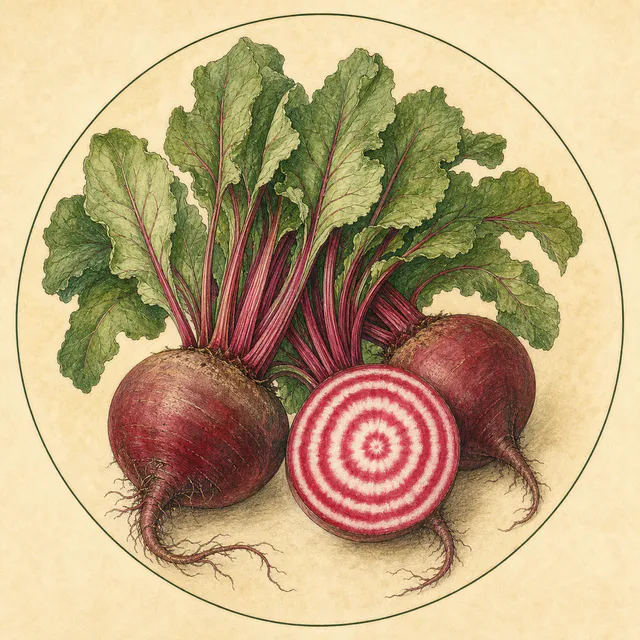
An Italian beetroot with rounded, mild-tasting roots whose flesh reveals striking concentric pink-and-white rings when sliced.
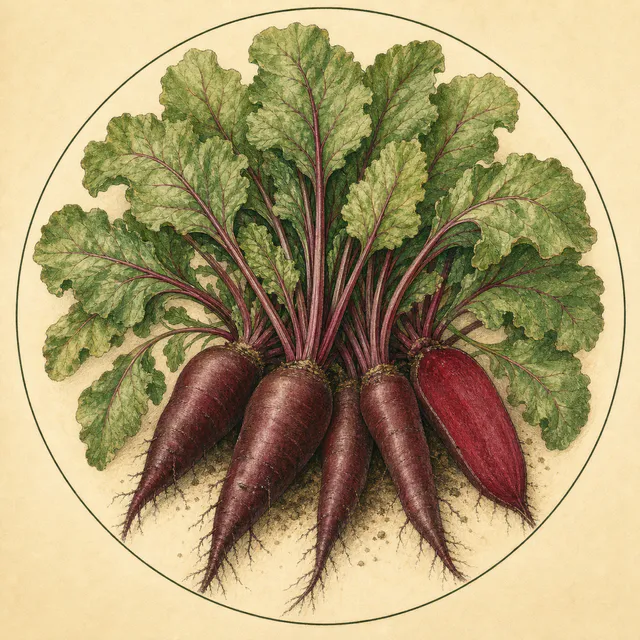
A bolt-resistant cultivar with elongated, dark-red roots that are sweet and easy to peel; its young leaves are edible as well.
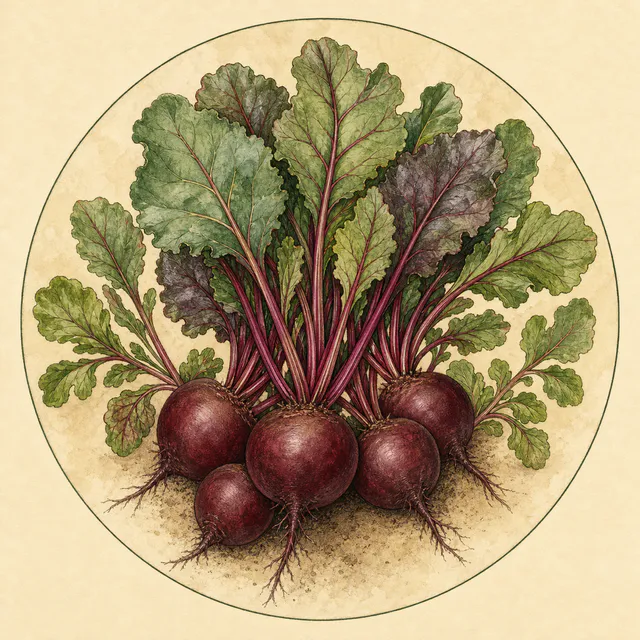
A smooth-skinned, flavoursome choice with good resistance to bolting, making it useful for early cropping.
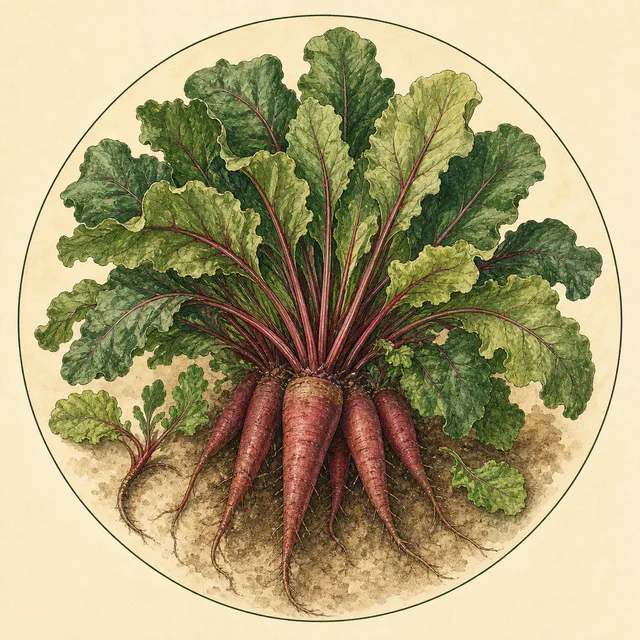
An old cultivar with vigorous foliage and a long, tapering root. It lifts readily, has excellent flavour and stores well.
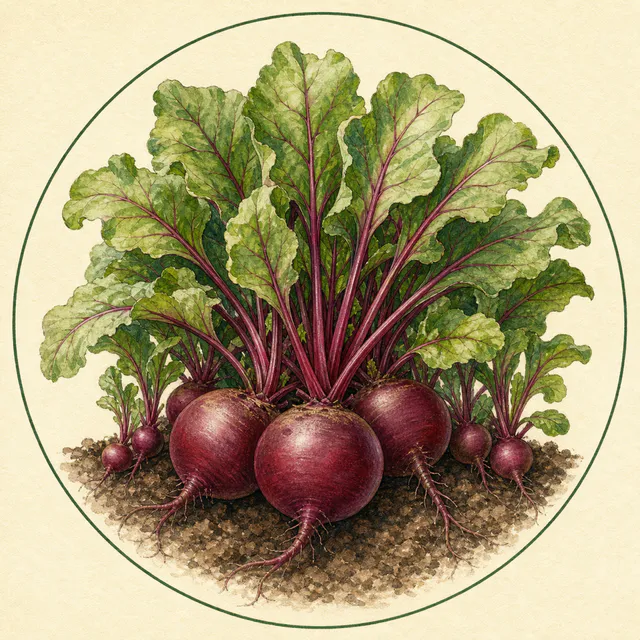
A versatile cultivar for sowing throughout the season, producing round, dark-red roots that can also be harvested as baby beetroot.
Choose a sunny site with fertile, freely drained soil. Remove weeds thoroughly and incorporate garden compost or well-rotted manure to improve structure, fertility and drainage. In a no-dig bed, spread the organic matter over the surface and sow or plant through it instead.
For an early start on heavy clay, cover the prepared soil with cloches for about two weeks before sowing so it can warm. Light sandy soil warms more quickly and should not usually need this treatment.
Most beetroot “seeds” are corky clusters containing more than one true seed, so a single cluster may produce several seedlings. They can be reluctant to germinate; soaking them in warm water for one hour before sowing can improve the result.
For early crops, especially in colder areas, fill modular trays with peat-free seed compost. Sow one cluster in the centre of each module, 2.5cm (1in) deep. If several seedlings emerge, remove the weaker ones and retain the strongest.
For clumps of baby roots, sow up to four clusters per module and leave the seedlings together. When planting out, transfer the intact clump rather than separating its roots.
From late March or April until July, sow once the soil is at least 7°C (45°F). A late-February sowing is possible with a bolt-resistant cultivar under fleece or cloches. Make short rows at intervals of a few weeks rather than sowing the whole crop at once.
Draw drills 2.5cm (1in) deep with 30cm (1ft) between rows, water along each drill, then place individual seed clusters 10cm (4in) apart. For groups of baby roots, sow two or three clusters together and leave 15cm (6in) between groups. Cover with soil and water if the ground is dry.
Use a sunny container at least 40cm (16in) wide and choose a rounded rather than long-rooted cultivar. Fill it with peat-free multipurpose compost, water well, space clusters 10cm (4in) apart and cover them with about 2.5cm (1in) of compost.
Closely spaced seedlings can be left unthinned when roots will be harvested around golf-ball size. For roots up to cricket-ball size, wait until seedlings are about 2.5cm (1in) tall, then remove weaker plants to leave 10cm (4in) between the strongest. The tender thinnings can be added to salads.
Harden off module-raised seedlings or purchased plug plants before planting. They are ready once at least 5cm (2in) tall, well rooted and accustomed to outdoor conditions. Move every module with its root ball intact to minimise disturbance.
Space single plants 10cm (4in) apart. If a module contains a deliberate cluster, keep it together and leave 15cm (6in) between clumps. Firm gently and water thoroughly. For containers, use one at least 40cm (16in) both wide and deep, filled with peat-free multipurpose compost.
Water seedlings during dry spells until they are strongly established. Mature plants need less attention, but fairly moist soil produces more tender roots. Drought can make beetroot woody and uneven watering can split roots, while excessive water encourages leaves at the expense of the crop.
In dry weather or very free-draining soil, water every 10–14 days. Container crops need more frequent attention throughout growth because their limited compost dries rapidly.
Most prepared garden soils provide enough nutrients. If growth is weak, apply an organic high-nitrogen liquid fertiliser as a boost rather than feeding routinely.
Remove weeds regularly, especially while seedlings are small, so they do not compete for water and nutrients. Hand-weed close to beetroot plants because a hoe can easily cut the exposed crown of the swelling root.
Lift beetroot from early summer through to mid-autumn according to sowing date and cultivar. Loosen the soil with a hand fork and take alternate plants as soon as their roots reach golf-ball size, leaving neighbours to expand. Harvest the remaining crop before individual roots become larger than a cricket ball.
Young roots can be eaten raw, while larger ones can be steamed or roasted. Red cultivars stain, so gloves can be useful during preparation. Harvest leaves with the root, or pick a few through the season for salads and cooking, always leaving at least four or five leaves on each plant so it can keep swelling its root.
Sowings made from June onwards can supply roots for autumn lifting and winter storage. Larger undamaged roots keep better than small ones. Brush off loose soil, then cut or twist the leaves away about 2.5cm (1in) above their base.
Pack roots into a container of dry sand, potting compost or coir and keep it in a garage or shed. They should remain usable for at least a couple of months. In mild districts where the soil will not freeze, a late crop can instead remain in the ground until required.
Beetroot is generally resilient. Prevent woody or split roots with timely harvesting and reasonably even moisture. Very cool sowing conditions, or hot and dry weather later, can prompt plants to flower before forming a useful root, so favour bolt-resistant cultivars for the earliest rows.
Bolting is premature flowering and seed formation. In beetroot it diverts growth away from the swollen root, leaving the crop poor or unusable. Cold spells, hot dry conditions and changes in day length can contribute, so protect early sowings, avoid drought and select bolt-resistant cultivars.
Problem sourceBeet leaf miner is a fly whose larvae feed between the upper and lower leaf surfaces. Their tunnels merge into conspicuous irregular blotches on beetroot and related crops, reducing useful leaf area and spoiling leaves intended for eating.
Problem sourceDowny mildew diseases can disfigure foliage and reduce the yield or quality of edible crops. They are managed mainly through cultivation and prevention, including good growing conditions and prompt attention to affected material, rather than relying on a curative treatment.
Problem source