
Cabbages · Variety guide
Brassica oleracea (Capitata Group) ‘Duncan’
Cabbage ‘Duncan’
This Allotment Pro editorial draft summarises the cited RHS cultivar profile. Check the source and adjust cultivation decisions for local conditions.Read the original RHS source
Overview
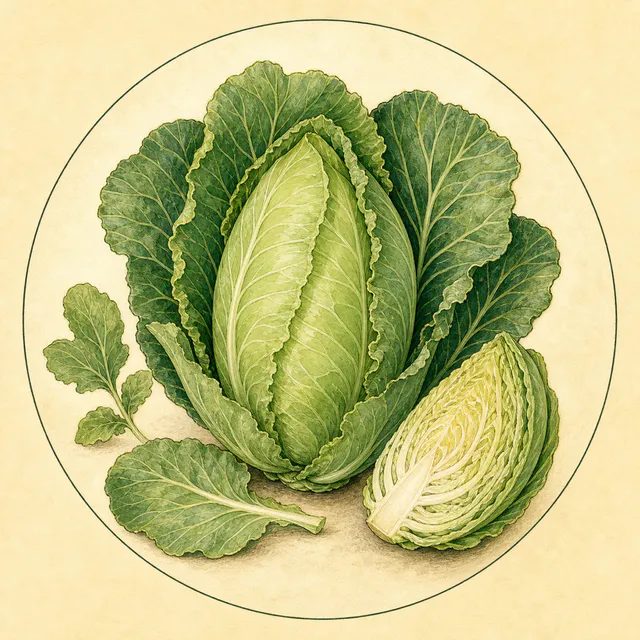
‘Duncan’ is a fast-growing, traditional hearted spring cabbage with an RHS Award of Garden Merit. Its upright, compact habit suits small plots and containers. Plants can be cut from March for tender spring greens or retained until June to produce full, pointed spring hearts.
This dual harvest makes ‘Duncan’ particularly versatile: closely watched plants can supply early loose leaves, while selected specimens mature into compact heads later in spring.
Size
- Ultimate height
- 0.1–0.5 metres
- Ultimate spread
- 0.1–0.5 metres
- Time to ultimate size
- 1 year
The compact height and spread suit container culture and limited ground space. Still allow each plant enough room for its upright heart and lower leaves to remain well ventilated.
Growing conditions
- Suitable soils
- Sand, loam and chalk
- Moisture
- Well-drained
- Soil pH
- Neutral or alkaline
Plant into fertile ground or compost that drains freely. Neutral or alkaline conditions suit the cultivar and are preferable to acidic soil where clubroot risk is greater.
Position and hardiness
- Light
- Full sun
- Aspect
- South- or west-facing
- Exposure
- Sheltered
- Hardiness
- H5 — hardy in most UK locations even in severe winters, supporting autumn sowing and an overwintered spring crop
Use a sunny, sheltered site and plant firmly. H5 hardiness supports the early spring harvest, while netting protects the overwintering foliage from pigeons.
Colour and seasonal interest
| Season | Flowers | Foliage | Fruit |
|---|---|---|---|
| Spring | — | Green | — |
| Summer | — | — | — |
| Autumn | — | Green | — |
| Winter | — | Green | — |
The profile records green foliage in spring, autumn and winter, but supplies no summer foliage colour. An em dash indicates that the live table does not state a colour for that field and season.
Botanical details
- Family
- Brassicaceae
- Native to Great Britain and Ireland
- No
- Foliage
- Deciduous
- Habit
- Clump-forming
- Name status
- Accepted
How to grow
Cultivation
Grow ‘Duncan’ in fertile, moist but well-drained soil in full sun. Sow directly from September to October, placing seed 1cm deep in rows 30cm apart. Move or thin plants to their final spacing so they can overwinter before the March-to-June harvest.
Propagation
Propagate by seed, direct-sown or raised before transplanting.
Suggested locations
The compact upright habit makes this cultivar appropriate for large containers with sufficient depth, light and regular moisture.
- Patio and container plants
Pruning
No pruning is required. Harvest tender loose greens from March or wait for complete hearts in June.
Pests
Potential pests include birds, cabbage caterpillars, cabbage gall weevil, cabbage root fly, cabbage whitefly, cutworms, flea beetles, mealy cabbage aphid, slugs, snails and swede midge. Use secure mesh and inspect plants regularly.
Diseases
The profile lists possible susceptibility to black rot, clubroot, downy mildew, foot and root rot, leaf spot and white blister. Rotate brassicas and maintain good drainage and airflow.