
French Beans · Variety guide
Phaseolus vulgaris ‘Algarve’
Bean (climbing French) ‘Algarve’
This Allotment Pro editorial draft summarises the cited RHS cultivar profile. Check the source and adjust cultivation decisions for local conditions.Read the original RHS source
Overview
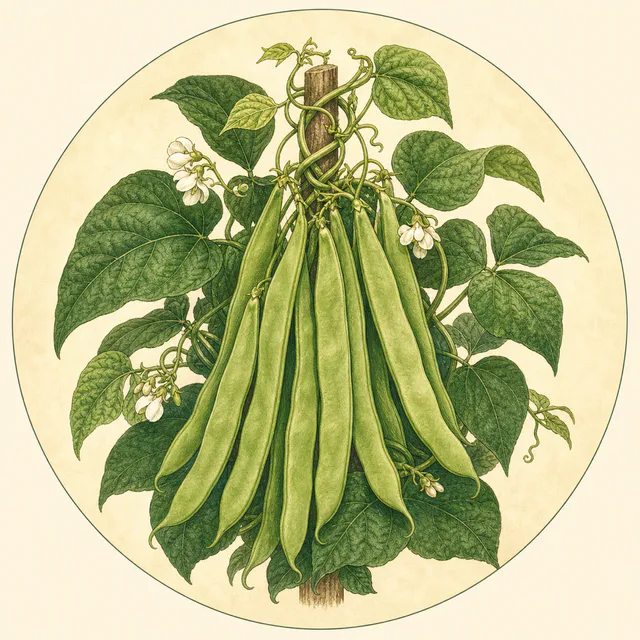
‘Algarve’ is a quick-maturing annual climbing French bean with green trifoliate leaves. White flowers develop into a good crop of straight, flat, pale to mid-green pods. The pods are entirely stringless, making their broad flattened form useful for picking young and cooking whole or sliced.
Its vigorous climbing habit makes efficient use of a narrow bed when trained vertically. The RHS profile displays the Award of Garden Merit, reflecting its useful combination of early maturity, pod quality and productive garden performance.
Size
- Ultimate height
- 2.5–4 metres
- Ultimate spread
- 0.5–1 metre
- Time to ultimate size
- 1 year
Install tall, stable supports before sowing or planting. The vine can substantially exceed the usual two-metre cropping height if it is allowed to continue unchecked, so pinch or cut the leader at the support top to keep pods within reach.
Growing conditions
- Suitable soils
- Chalk, clay, loam or sand
- Moisture
- Moist but well-drained
- Soil pH
- Acid, neutral or alkaline
‘Algarve’ tolerates a wide range of soil textures and pH values. Fertility and moisture retention matter more than soil category: prepare generous organic matter while ensuring excess water can drain, then maintain steady moisture as flowers and flat pods form.
Position and hardiness
- Light
- Full sun
- Aspect
- East-, south- or west-facing
- Exposure
- Sheltered
- Hardiness
- H2 — tolerant of low temperatures but unable to survive freezing
Treat this as a tender summer crop. Sow or plant outside only after frost danger has passed, choosing the warmest sheltered position available so the quick-maturing habit is not checked by cold or wind.
Colour and seasonal interest
| Season | Flowers | Foliage | Fruit |
|---|---|---|---|
| Spring | — | Green | — |
| Summer | White | Green | Pale to mid-green |
The straight, flat green pods are the key identifying feature. They should be harvested before seeds become prominent through the pod wall, while their surface is smooth and their stringless texture remains tender.
Botanical details
- Family
- Fabaceae
- Native to Great Britain and Ireland
- No
- Foliage
- Deciduous
- Habit
- Climbing
- Name status
- Accepted
How to grow
Cultivation
Grow up a sturdy support in fertile, moisture-retentive soil with good light. Guide young shoots to the canes or trellis, water reliably from flowering onwards and harvest the straight pods regularly to sustain production. A sheltered site reduces wind damage to the tall leafy vine.
Propagation
Propagate by seed.
Suggested locations
- Cottage or informal garden
- Climber and wall planting
- Edible garden or allotment
Pruning
The profile requires no formal pruning. For practical cropping, stop the leader when it reaches the available support and continue picking pods while young.
Pests
May be susceptible to slugs, snails and blackfly. Protect young growth from molluscs and inspect tender shoot tips and leaf undersides for aphid colonies.
Diseases
May be susceptible to runner and French bean rust. Give foliage adequate airflow, avoid crowding and clear infected crop debris after harvest.